Basilica of Notre-Dame de l'Épine: planning your visit
Basilica of Notre-Dame de l'Épine at a glance
- Admission
- Free
- Time needed
- about 30 min
- Where
- L'Épine
Facts checked on 11 November 2026. Full opening hours, reduced prices and access
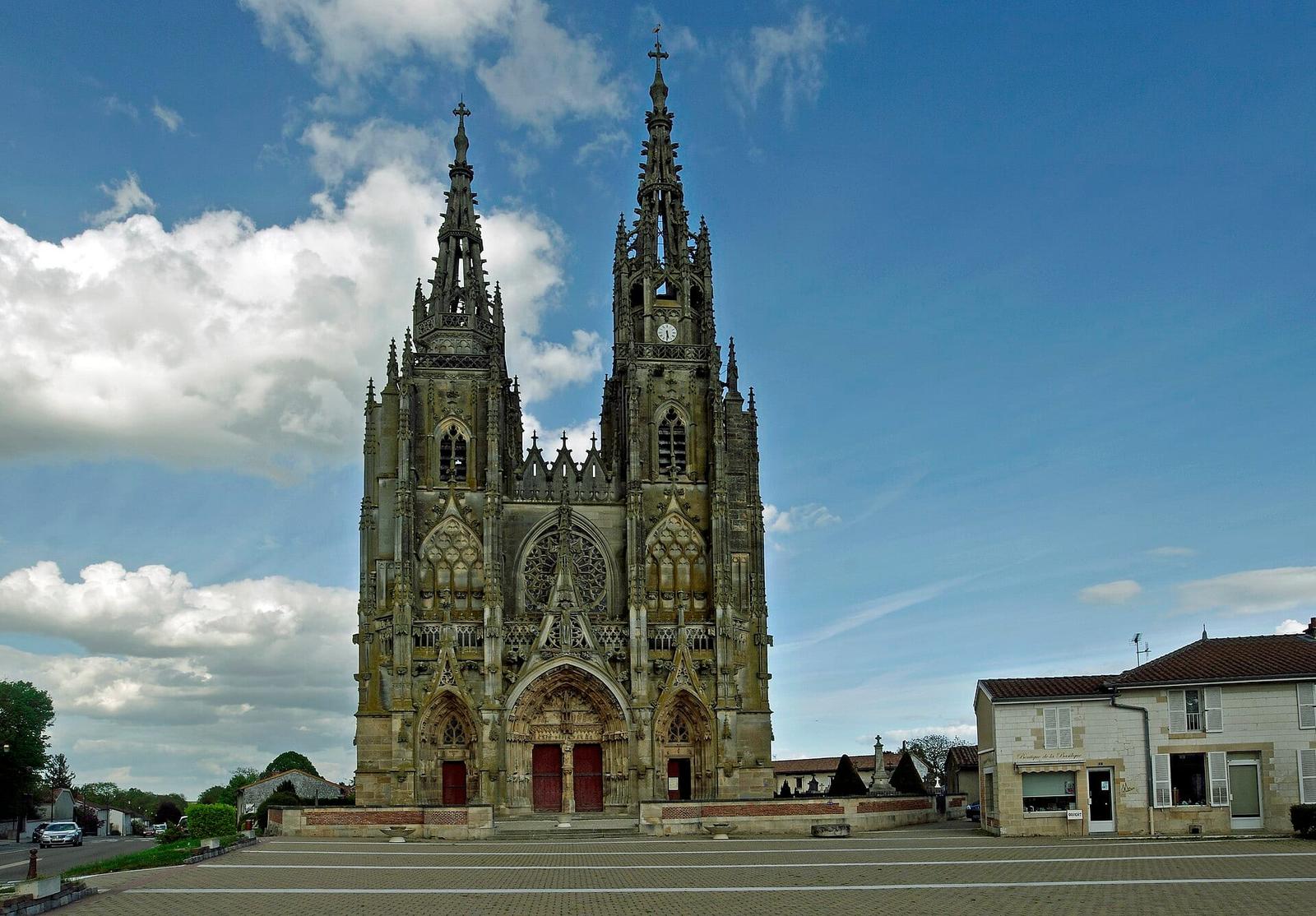

In the middle of the Marne farmland, a few kilometres from Châlons-en-Champagne, a village of a few hundred people has a church the size of a cathedral. The Basilica of Notre-Dame de l'Épine, completed in 1527, is famous for its Flamboyant Gothic facade and its gargoyles. Entry is free. Here are the opening hours, what to look for and our tips.
L'Épine Basilica at a glance
- Where: in the heart of the village of L'Épine (Marne), about 8 km east of Châlons-en-Champagne, on the road to Sainte-Menehould and Verdun.
- Price: free entry, and the audio guide is free too.
- Opening hours: open every day, 9:00 – 18:00 on Mondays, 7:15 – 21:15 Tuesday to Saturday and 7:45 – 20:45 on Sundays, according to the tourist office.
- Time needed: the Marne tourist board gives an average of 30 min; allow twice that to walk around the outside and see the gargoyles.
- What to see: the facade and its two spires, the gargoyles, the rood screen and the statue of the Virgin, the Entombment, the organ gallery and the well.
- Status: a basilica since 1914, listed as a UNESCO World Heritage Site in 1998 as part of the Routes of Santiago de Compostela in France.
Why visit L'Épine Basilica
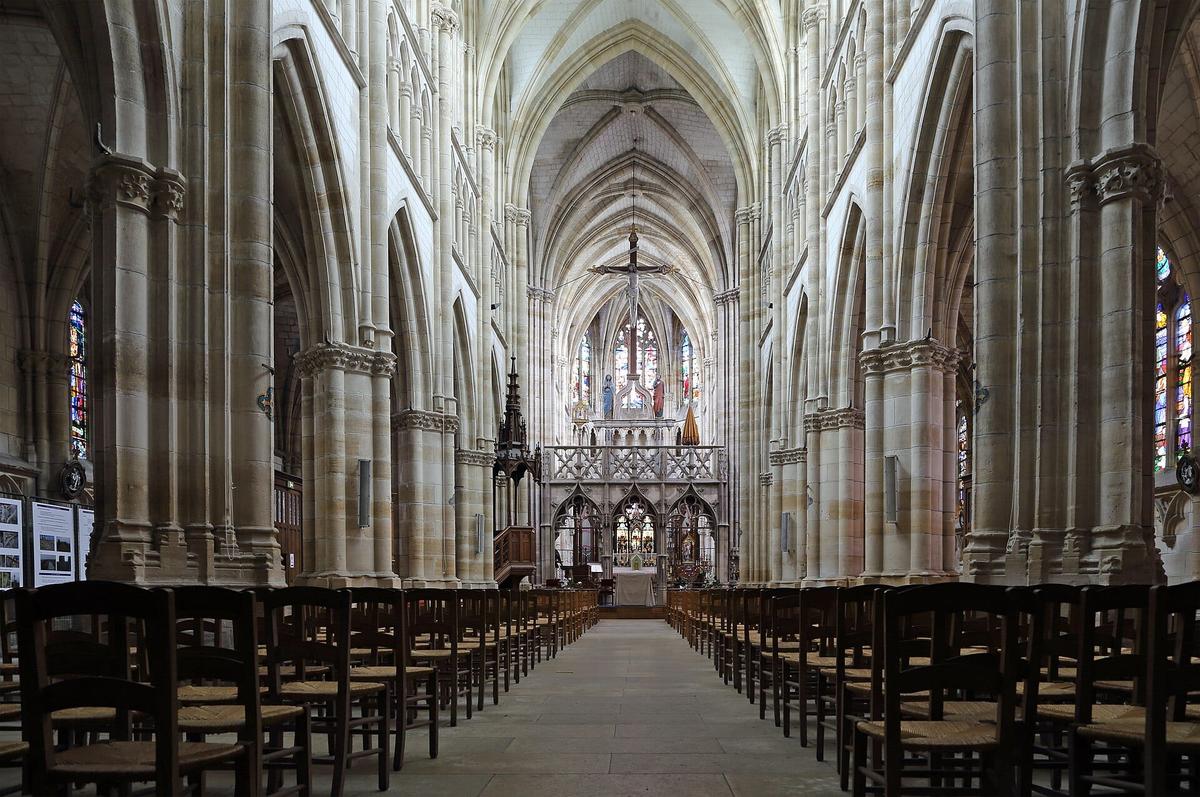
The first surprise is the scale. L'Épine is a farming village, yet its basilica has the plan and structure of a small cathedral. Seen from the road, its three-portal facade and two spires dominate the Champagne plain for miles.

The building is explained by a pilgrimage. According to the Châlons tourist office, a small chapel has stood on the site since 1200. Around 1400, shepherds are said to have found a statue of the Virgin and Child in a burning thorn bush ("épine" means thorn). The legend, known by the 17th century, gave the village its name. The cult grew and became one of the great pilgrimages of northern France.
It was mainly the pilgrims' donations that paid for the new church. Work began around 1405 and was completed in 1527. The result is one of the most consistent examples of Flamboyant Gothic in Champagne: the spires, cut like stone lace, look like flames.
The basilica has been a listed historic monument since 1840. It has struck many travellers and inspired several writers, including Victor Hugo, Alexandre Dumas, Joris-Karl Huysmans, Paul Claudel and Paul Fort.
How much does it cost to visit?
Nothing. Entry to the basilica is free, as both the Châlons-en-Champagne tourist office and the Marne tourist board state. You can walk in freely during opening hours, as long as you respect services.
The audio guide is free. The Châlons tourist office offers an audio tour in 8 stops: welcome, the facade, the gargoyles, the interior architecture, the statue of the Virgin and the pilgrimages, the Entombment, the treasury, then the organ and the well. You listen to the tracks directly from the tourist office web page. Download them before you set off: mobile reception can be weak inside a stone building.
The basilica shop has its own opening hours, shorter than the church's, with a lunchtime closure and closing an hour earlier in winter.
Opening hours 2026
Opening hours published by the Châlons-en-Champagne tourist office, valid all year:
- Monday: 9:00 – 18:00.
- Tuesday to Saturday: 7:15 – 21:15.
- Sunday: 7:45 – 20:45.
The tourist office itself warns that these hours are not guaranteed. They are the church's opening hours for prayer, not guided tour times. During Mass, avoid walking around the nave. If you are coming from far away on a religious feast day, call first on the number given at the bottom of the page.
The main religious dates. Two events draw the faithful: the diocesan pilgrimage in May and the Feast of the Assumption on 15 August, the basilica's patronal feast. On those days, the atmosphere is different and sightseeing comes second.
Our tip: come in the late afternoon on a sunny day. The facade faces west and catches the low evening light, which brings out the detail of the carvings and gargoyles. On weekday mornings, the church is almost empty.
Can you climb the spire?
Yes, but only on special tours. During the European Heritage Days in September 2026, the Friends of the Basilica association ran guided tours that included a climb up the south-west spire: 100 steps to the platform, and a 360-degree view stretching up to 40 km across the Châlons plain.
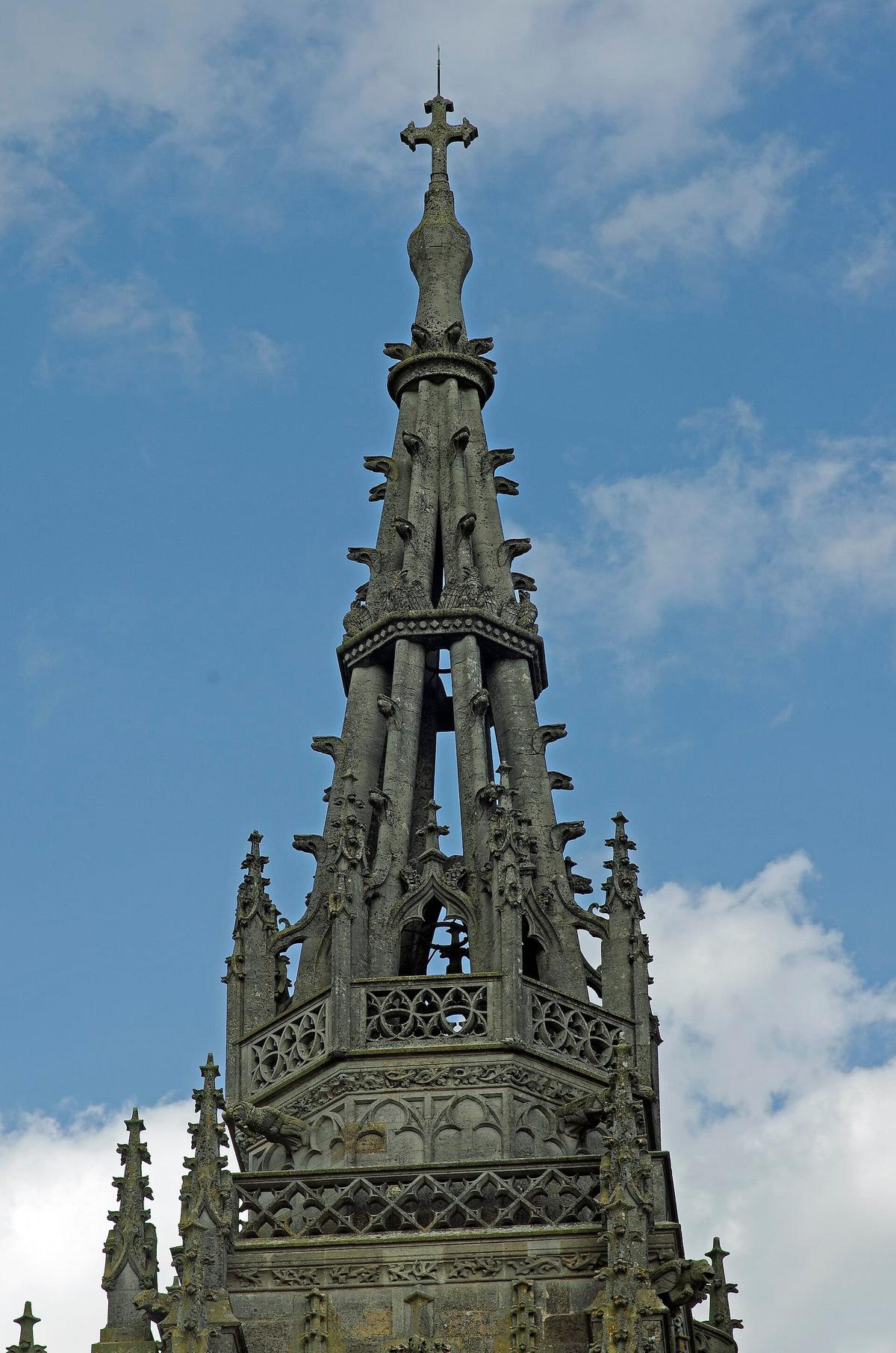

The conditions were strict: adults and children over 12 only, in groups of no more than 7 people, booked through the Châlons-en-Champagne tourist office. Places go quickly. Keep an eye on the tourist office's events calendar from the summer.
What to see at Notre-Dame de l'Épine

The gargoyles
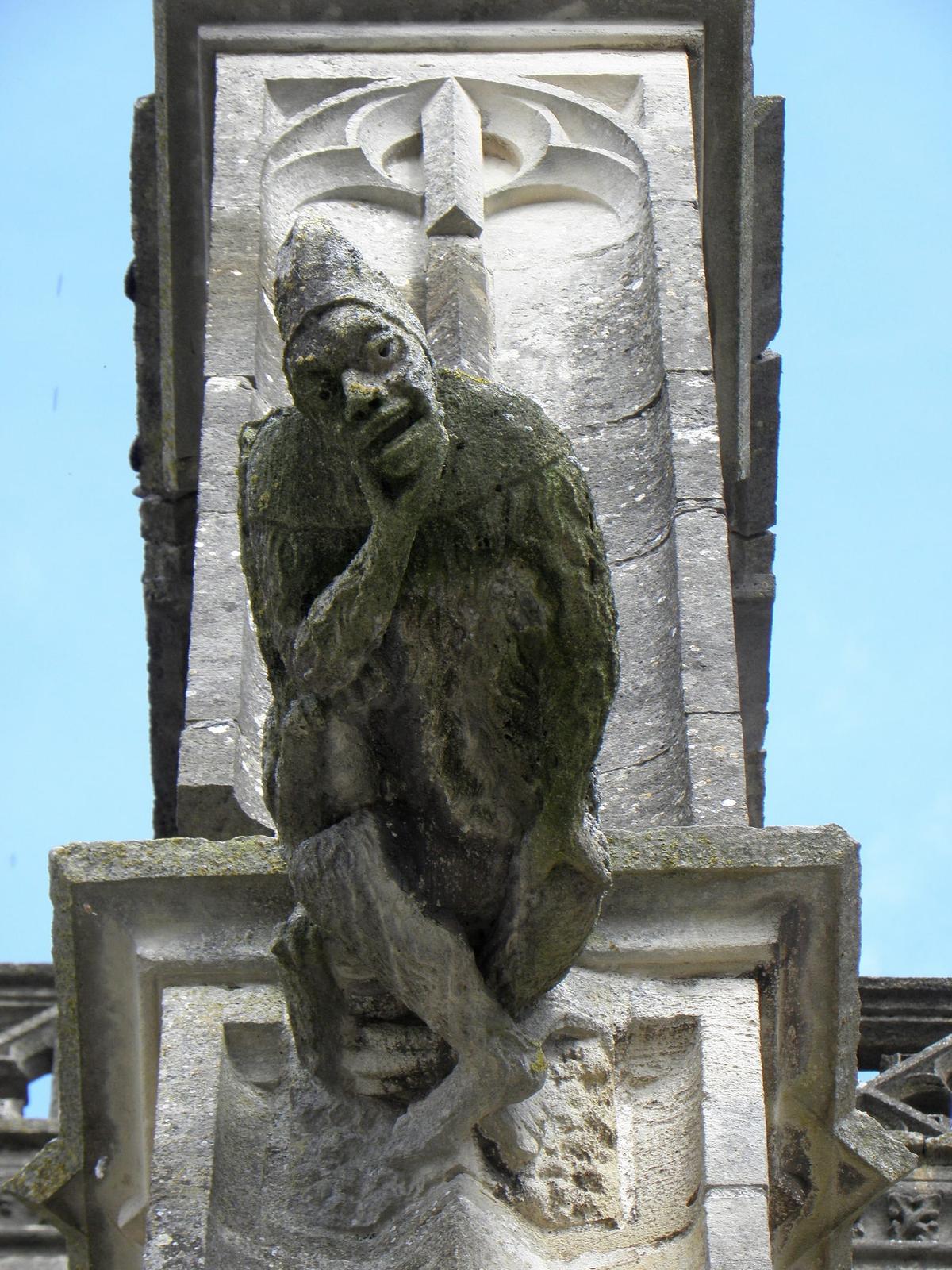
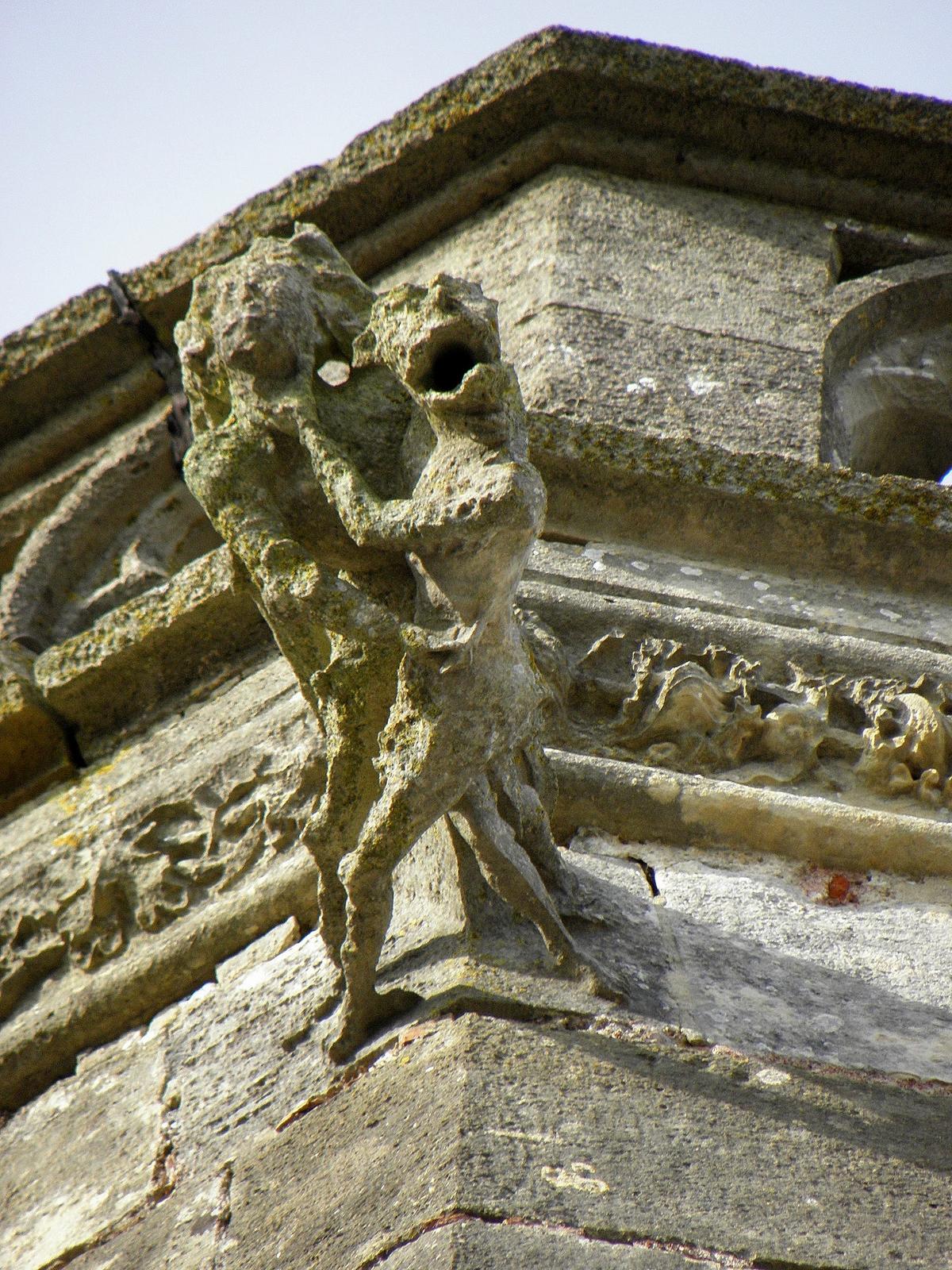
This is why many visitors come. The basilica is famous for its gargoyles, which are numerous and very varied. Some have human shapes, others show animals, including a crocodile, or creatures fighting each other. Walk all the way around the outside of the building: the most surprising ones are not all on the facade.
A gargoyle has two jobs. The first is practical: it throws rainwater away from the walls. The second is symbolic: these hideous figures were meant to drive evil spirits away from the church. Bring binoculars or a camera with a good zoom, as they are set high up.
The facade and the two spires
The west facade has three portals topped by two spires. The right-hand spire is 55 m high. The left-hand one has a turbulent history: in 1798, it was cut down to make room for a Chappe telegraph, the optical signalling system that relayed government messages across France. It was only rebuilt in 1868. Looking at it closely, you can see why such a tall spire, on such a flat plain, made an ideal relay.
The rood screen and the statue of the Virgin
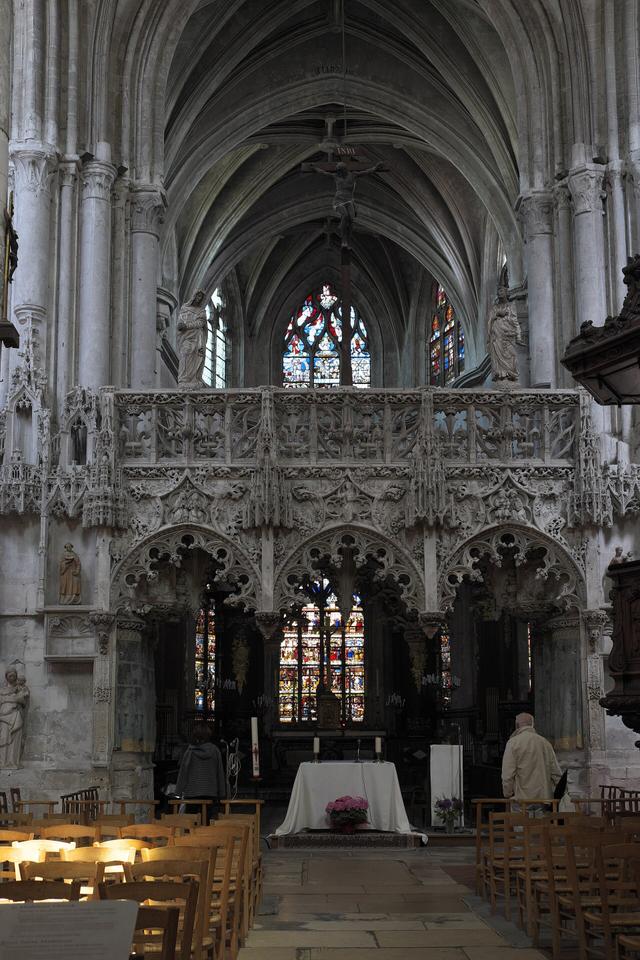
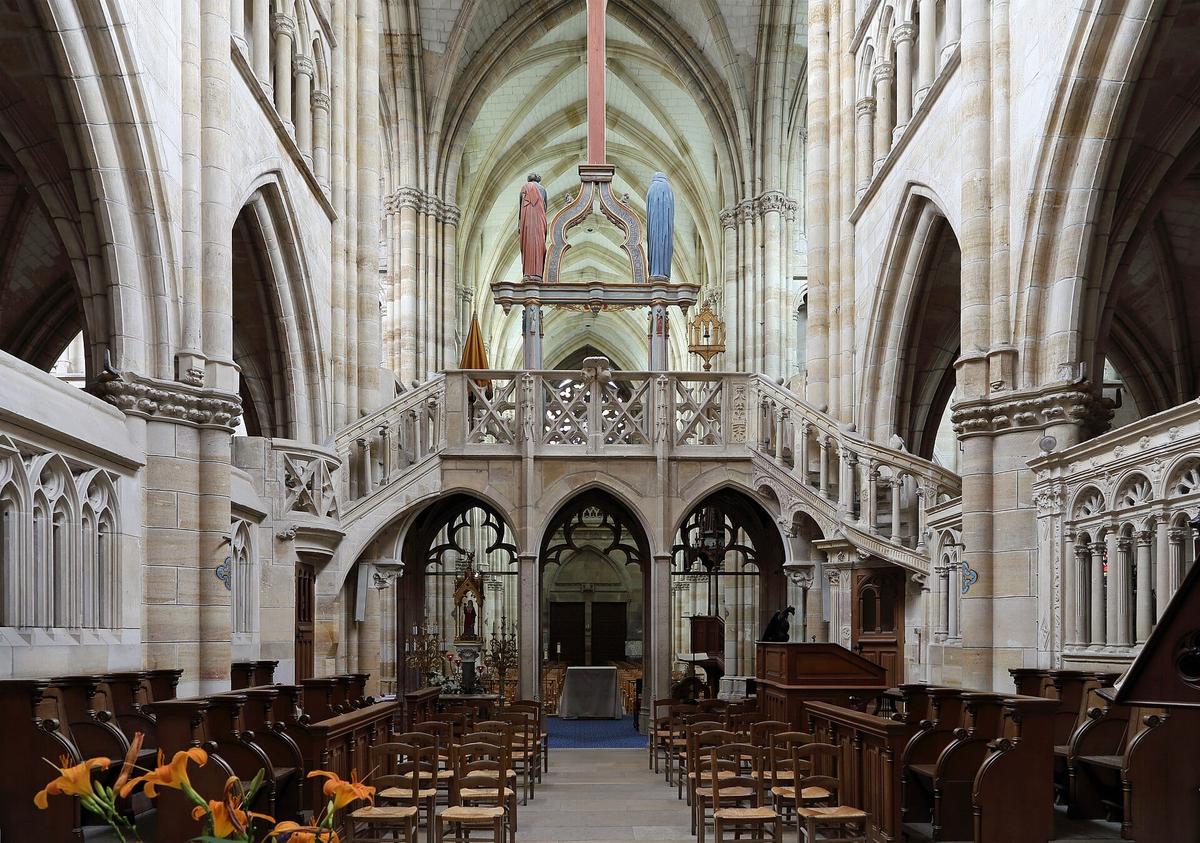
Inside, a late 15th-century stone rood screen separates the nave from the choir. Rood screens have become rare in France: many were taken down from the 17th century onwards to open up the view of the altar. The one at L'Épine stayed in place.
In the right-hand arch of the rood screen stands the statue of the Virgin that made the place famous. Wikipedia dates this venerated Virgin to around 1300. The church also holds a 15th-century seated Virgin and a 16th-century wooden statue of Saint James, a reminder of the pilgrims on their way to Compostela.
The Entombment
This carved group shows Christ's followers around his body as it is laid in the tomb. It is one of the audio guide stops, and one of the most moving works in the church.
The organ gallery and its pagan gods
Look up towards the entrance. The gallery and the organ case date from the 16th century. The gallery is decorated with 8 apostles and 7 pagan gods, a rare combination in a church. The inscriptions that go with them were added in 1825 by Abbé Brisson. In the choir, a second organ, built by the Merklin firm, dates from 1889.
The well
This is the detail people miss most often: there is a well inside the basilica itself. It allowed pilgrims to drink when they arrived. The audio guide covers it in its last stop.
The altars, the rood beam and the stained glass
The 16th-century altars bear the date 1542. A rood beam, also 16th century, spans the choir. The stained glass is more recent: it dates from the 19th and 20th centuries and comes mostly from the Champigneulle and Lorin workshops. The contemporary liturgical furniture was made in 2008 by the sculptor Jacques Dieudonné.
How long does it take to visit?
The Marne tourist board gives an average of 30 min. That is enough for the interior. Allow an hour if you listen to the whole audio guide and walk around the outside for the gargoyles. With the spire climb during the Heritage Days, add the length of the guided tour.

Visiting with children
The basilica may seem austere for children, but the gargoyles change everything. Turn the visit into a hunt: who can find the crocodile, the fighting monsters, the human faces? Inside, the well and the pagan gods on the gallery also intrigue younger visitors.

The spire climb is only for children over 12.
On the first Sunday of the month, from May to October, the Friends of the Basilica hold a second-hand book sale with nearly 10,000 novels and old maps of the region. All year round, they also sell home-made apple juice produced by their volunteers. The proceeds go towards the upkeep of the basilica: restoring the stained glass, maintaining the organ and making the electrics safe.
How to get to L'Épine
By car. This is the easiest option. L'Épine is about 8 km east of Châlons-en-Champagne, on the old road to Verdun. From Reims, allow just under an hour via the A4 motorway, then follow signs for Châlons. The village is small and parking near the basilica is easy; a coach car park takes groups.
By train. The nearest station is Châlons-en-Champagne, served from Paris and Reims. From there, you need a taxi or a bike for the last 8 km or so, on a flat road.
Renting a car. To combine L'Épine with the cellars of Épernay and the sights of Reims, a rental car from Reims is the most practical option.
Partner links: if you book through these links, we earn a commission at no extra cost to you. Partner links · Learn more
Guided tours and day trips
The basilica does not offer regular guided tours at set times. The Marne tourist board says guided tours are available on request; for a group, contact the Châlons-en-Champagne tourist office. To see more of the region, day trips from Reims combine champagne cellars and vineyards.
What to combine on the same day
| Also worth seeing | Distance | Travel time |
|---|---|---|
| Fort de la Pompelle | 45 km | 40 min by car |
| Château Perrier Champagne museum (Épernay) | 45 km | 40 min by car |
| Verzenay Lighthouse | 40 km | 40 min by car |
Approximate road distances and travel times.
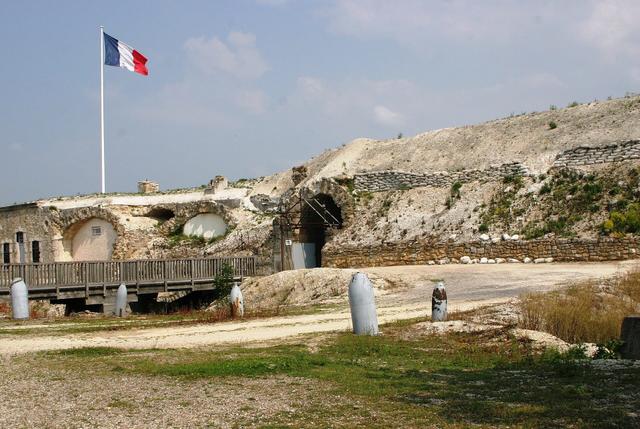
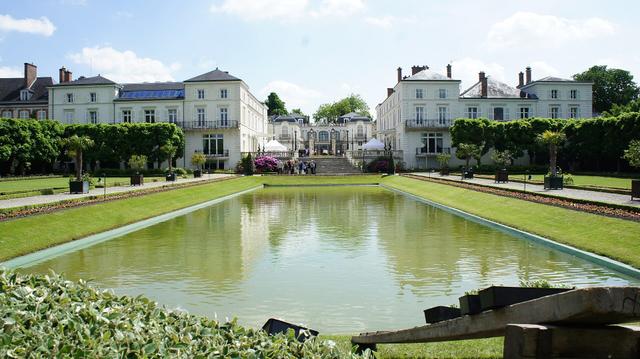
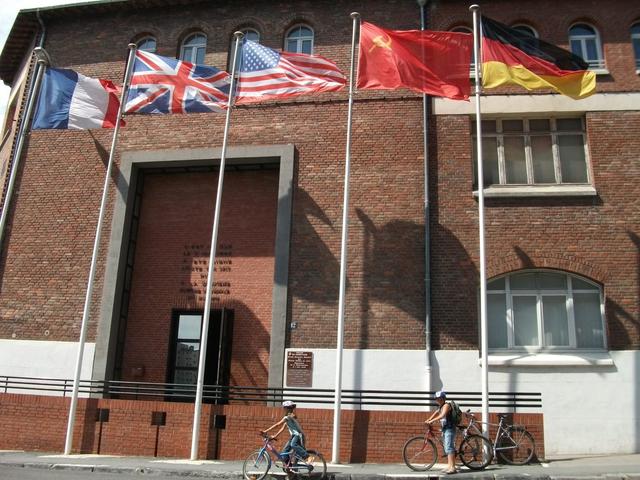
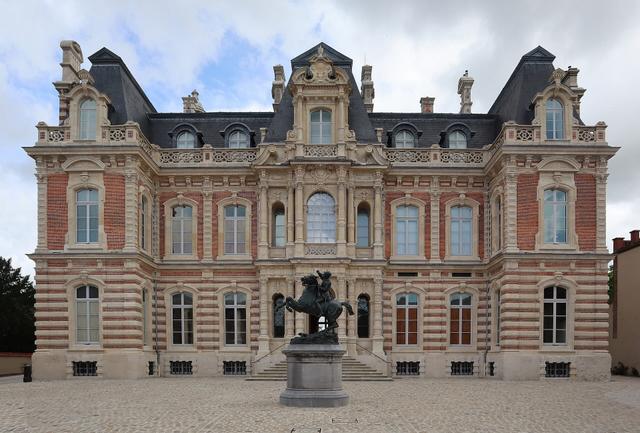
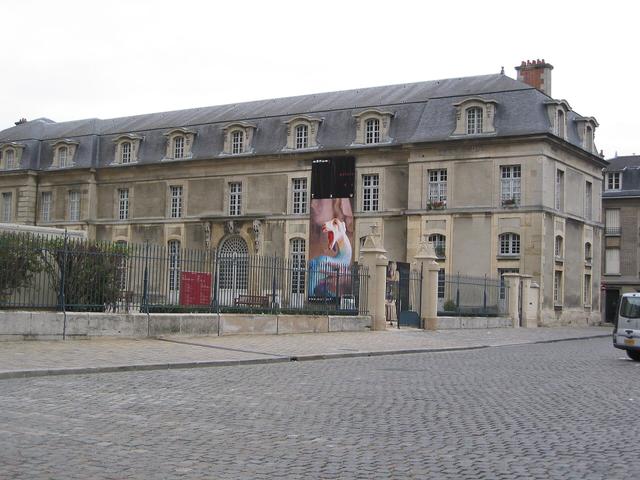
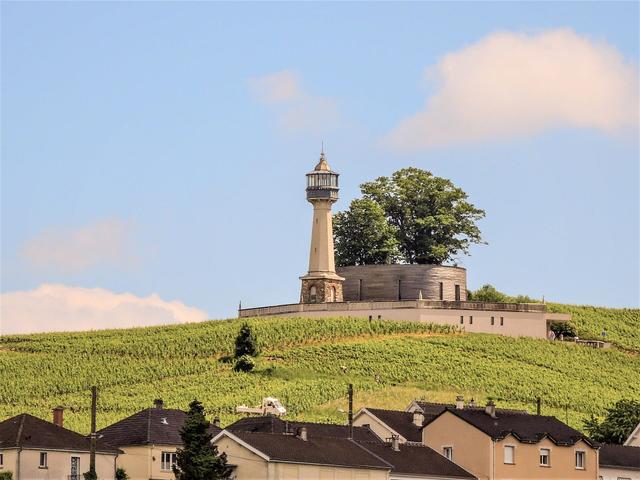
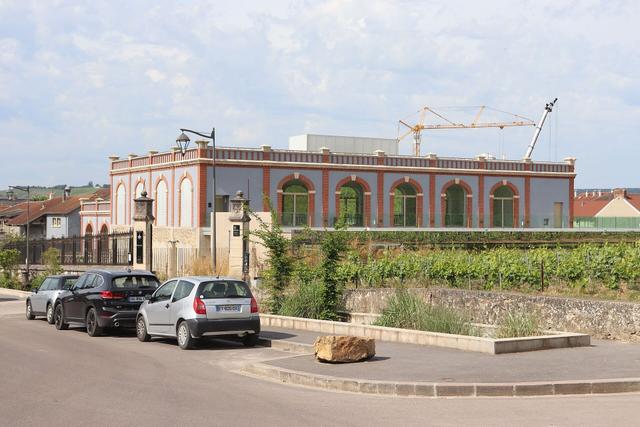
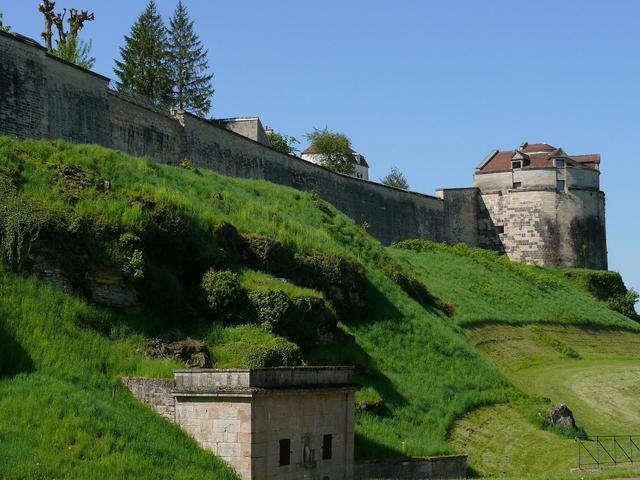
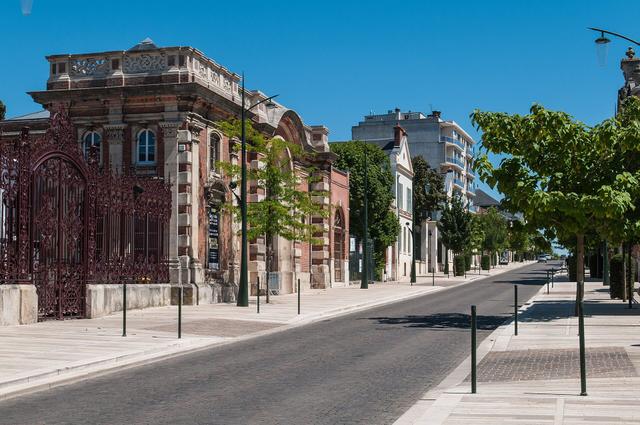
L'Épine fits easily into a trip along the Champagne route. To the north, Fort de la Pompelle tells the story of the defence of Reims during the First World War. See also: Fort de la Pompelle On the Montagne de Reims, the Verzenay lighthouse offers a view over the vineyards and a vineyard museum. See also: Verzenay Lighthouse In Épernay, the Museum of Champagne Wine and Regional Archaeology is housed in the Château Perrier, on the Avenue de Champagne. See also: Château Perrier Champagne museum (Épernay)
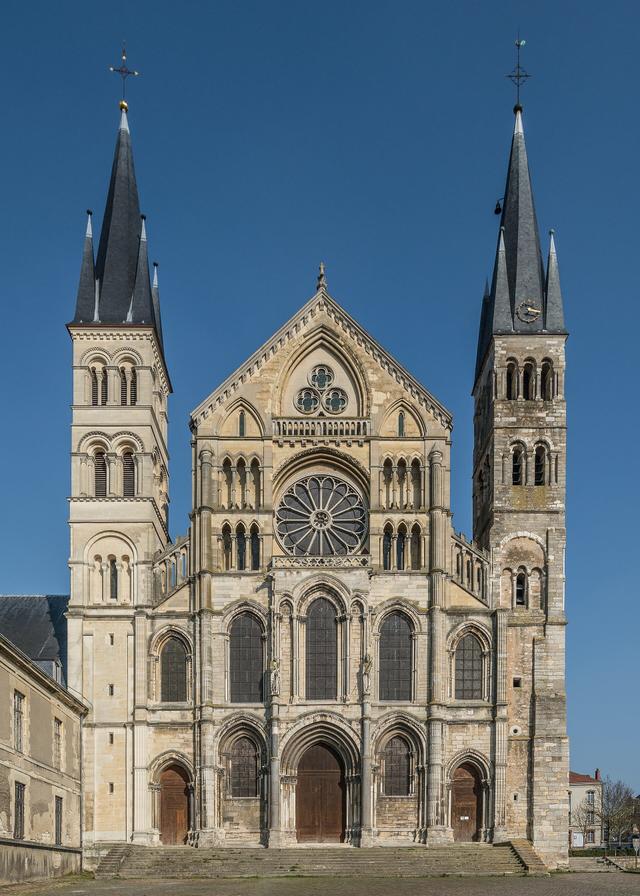
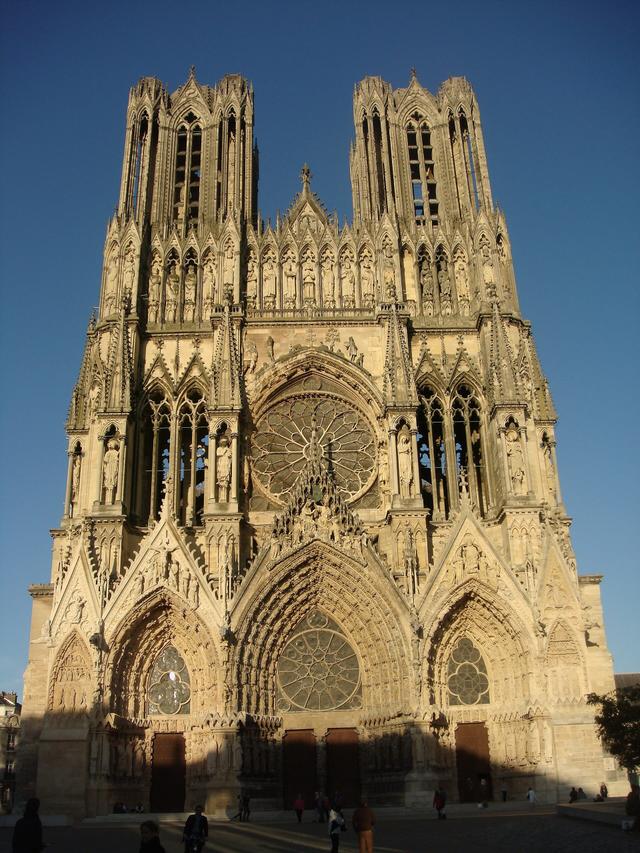
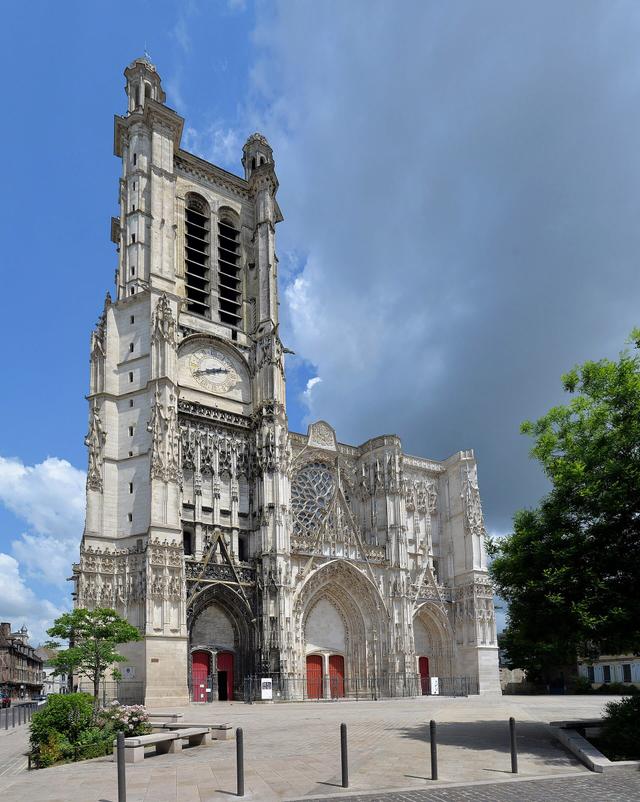
If you love Gothic architecture, carry on to Reims for the coronation cathedral and the Basilica of Saint-Remi, or head south to Troyes and its stained glass. See also: Reims Cathedral, Basilica of Saint-Remi, Reims, Troyes Cathedral All our ideas for visits in the region are on the Champagne page. See also: Champagne
In Châlons-en-Champagne itself, do not miss the collegiate church of Notre-Dame-en-Vaux, a World Heritage Site for the same reason as L'Épine, on the routes to Compostela.
Where to eat and stay
The village of L'Épine has few places to eat, but a hotel-restaurant, Aux Armes de Champagne, stands right opposite the basilica, about forty metres away. The Cuvée 31 restaurant is the same distance away. For more choice, Châlons-en-Champagne is ten minutes away by car, with brasseries in the centre and hotels near the station.
Staying in Châlons also lets you explore the town by boat on its canals, then head on to Épernay or Reims the next day.
Places to stay near Châlons-en-Champagne
FAQ
Do you have to pay to enter L'Épine Basilica?
No, entry is free, as is the audio guide offered by the Châlons-en-Champagne tourist office.
What are the opening hours of L'Épine Basilica?
According to the tourist office, it is open 9:00 – 18:00 on Mondays, 7:15 – 21:15 Tuesday to Saturday and 7:45 – 20:45 on Sundays. These hours are not guaranteed: avoid Mass times.
Why is the basilica so big for a village?
Because it was built for a major pilgrimage to the Virgin, which grew up around a statue said to have been found in a burning thorn bush. Pilgrims' donations paid for the building work, from 1405 to 1527.
Why is one spire different from the other?
The left-hand spire was cut down in 1798 to make room for a Chappe telegraph, then rebuilt in 1868.
Can you go up to the top of the basilica?
Only on special tours, such as during the European Heritage Days: 100 steps, children over 12 only, booking required through the Châlons tourist office.
Is L'Épine Basilica a UNESCO site?
Yes, since 1998, as one of the monuments on the Routes of Santiago de Compostela in France.
Practical information
Official ticket-office prices 2026
Free admission
Address
Basilique Notre-Dame de l'Épine, 1 rue Émile Barbier, 51460 L'Épine, France
Directions · Phone+33 7 57 40 28 08
On site and nearby
- Nearest shops and pharmacy: Courtisols, 4 km away Straight-line distance, based on OpenStreetMap.
- Emergencies: 112 (all emergencies, free from any phone), 15 (SAMU, medical emergency)
Around the site, on Google Maps
With children
Family days out nearby: Verzenay Lighthouse (31 km), Fort de la Pompelle (36 km), Champagne Mercier cellars (Épernay) (37 km)
Swimming pools and play areas nearby, on Google Maps
Swimming poolsPlaygroundsLeisure parks
Family activities around Châlons-en-Champagne on GetYourGuide
Facts checked on 11 November 2026. Sources: en.chalons-tourisme.com, en.chalons-tourisme.com, unidivers.fr, fr.wikipedia.org, en.chalons-tourisme.com, europeanheritagedays.com, chemins-compostelle.com, fr.francethisway.com, tourisme-en-champagne.com
Map
In the same region
- Taittinger Champagne cellars (Reims)from €40