Trois-Fontaines Abbey: planning your visit
Trois-Fontaines Abbey at a glance
- Admission
- Free
- Time needed
- about 1 h
- Where
- Trois-Fontaines-l'Abbaye
Facts checked on 12 November 2026. Full opening hours, reduced prices and access
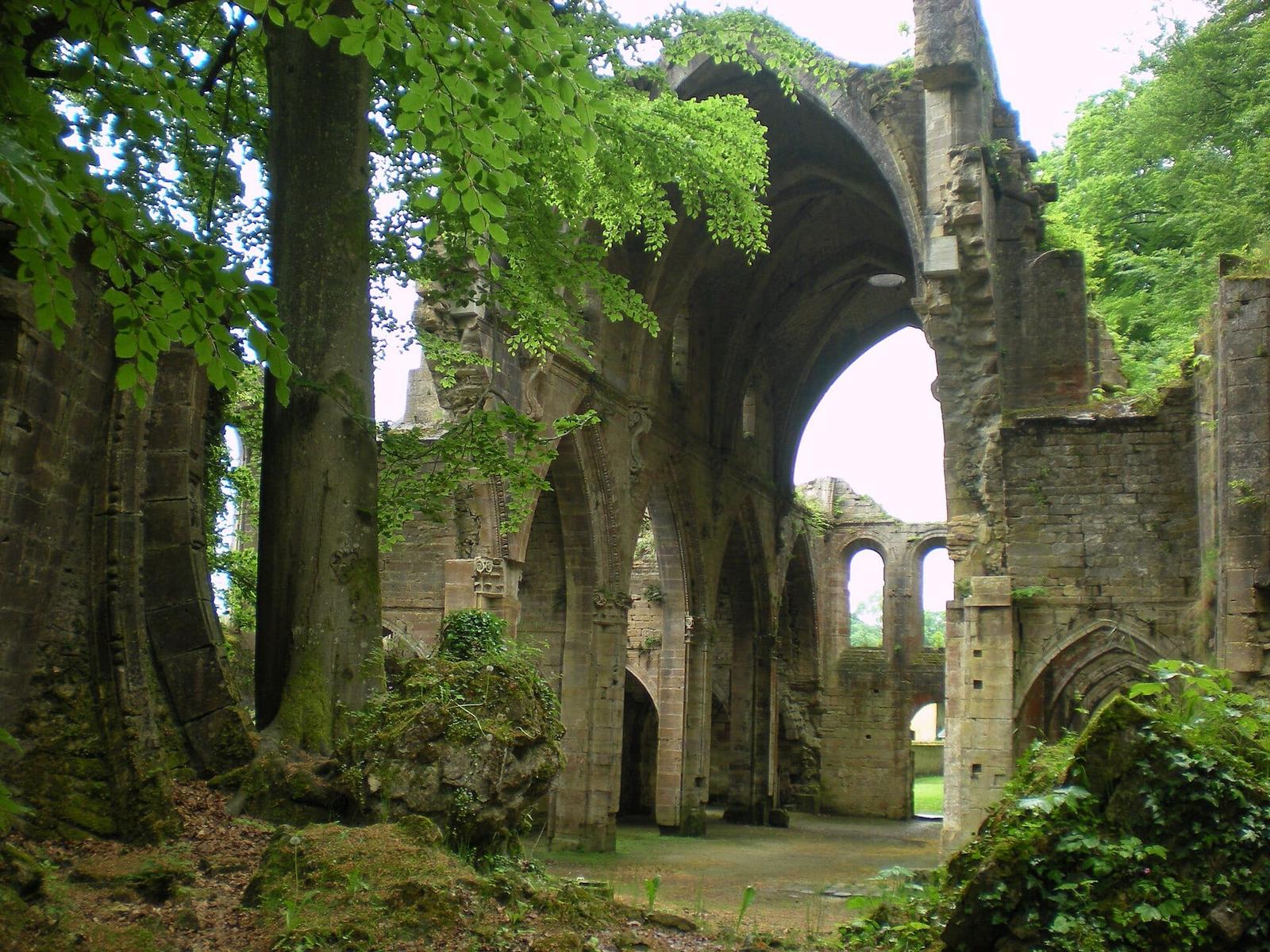

Between Vitry-le-François and Saint-Dizier, on the edge of the Trois-Fontaines forest, stand the ruins of the first daughter house of Clairvaux. A Romanesque nave open to the sky, an 18th-century gateway, a seven-hectare park and a museum of nearly 200 bicycles: here is when to come, what is free, what you pay for and how to plan your visit.
Trois-Fontaines Abbey at a glance
- Where: in Trois-Fontaines-l'Abbaye, in the south-east of the Marne, near the Haute-Marne and the Meuse.
- Price: the park and ruins are free to explore. The bicycle museum costs €3 per adult and €2 for under-12s.
- When: the main opening days are summer Sundays, from 12 July 2026 to 23 August 2026 in 2026, 14:00 – 18:30.
- Time needed: about 60 minutes for the ruins and the park, twice that with the bicycle museum.
- Best for: lovers of Cistercian abbeys, romantic ruins and fine trees, and families who like bikes.
- Good to know: the site is private. It is opened and looked after by a volunteer association, and picnics are not allowed in the park.

Why visit Trois-Fontaines Abbey
Trois-Fontaines is one of the oldest Cistercian abbeys in France. In 1118, Saint Bernard sent twelve monks from Clairvaux, led by Abbot Roger, to settle in a marshy valley in the forest of Luiz. It was the first abbey founded by Clairvaux. The name ("three springs") comes from the three springs in the valley: the Saint-Blaise spring, the Lentilles spring and the Loup spring.

The abbey in turn spread further. It founded or took over several houses, including Cheminon, La Chalade in the Argonne, Orval in what is now Belgium and Szentgotthárd in Hungary.
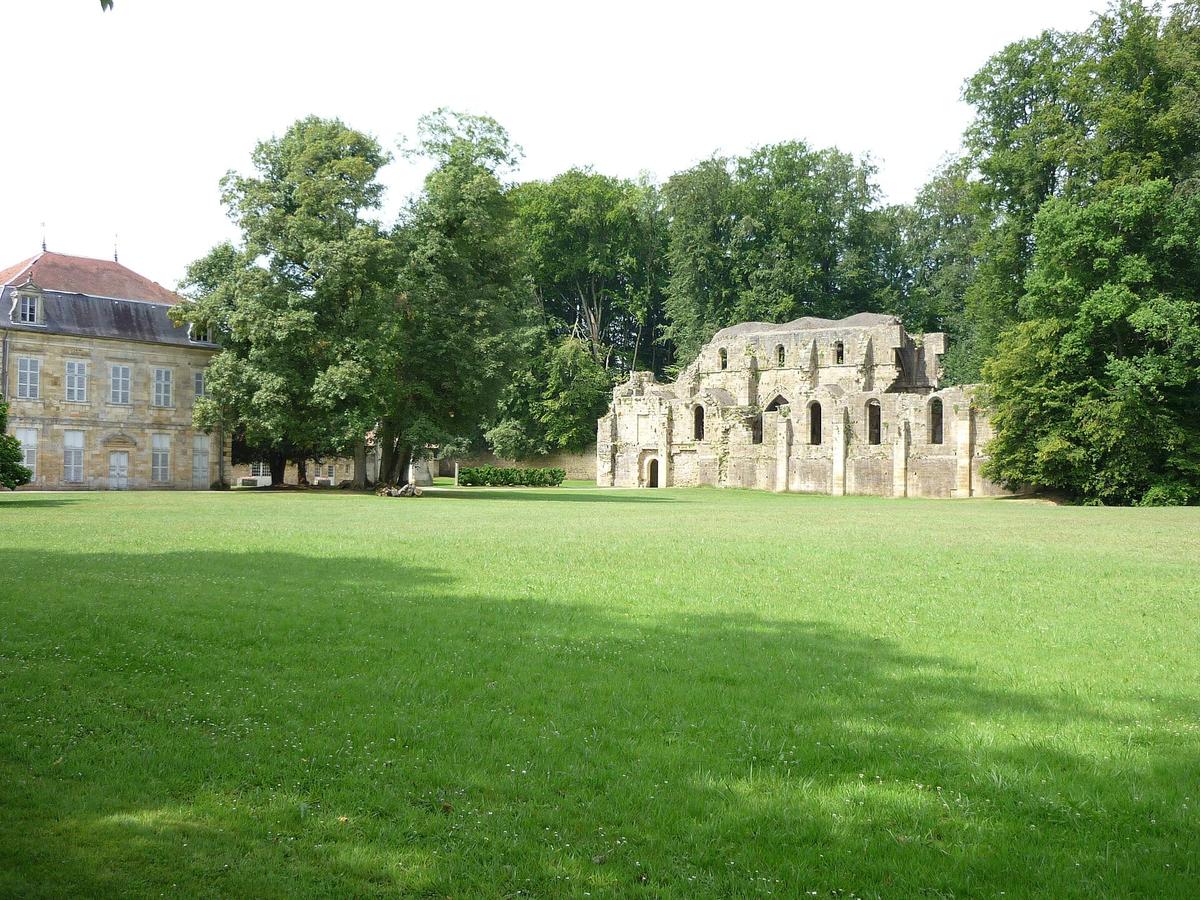
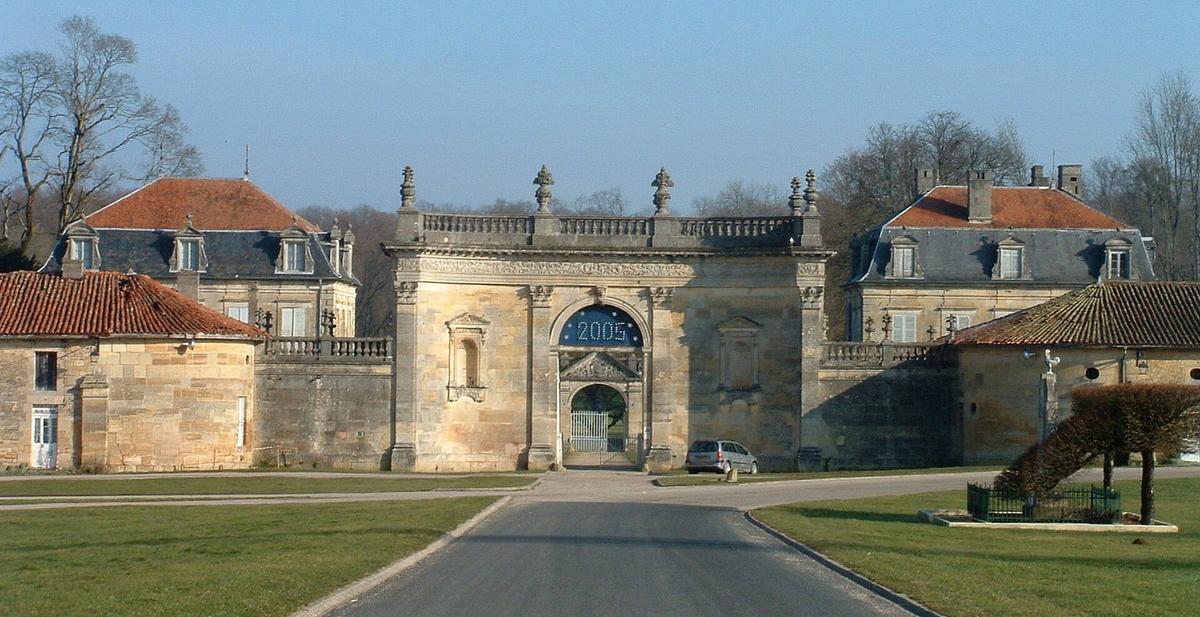
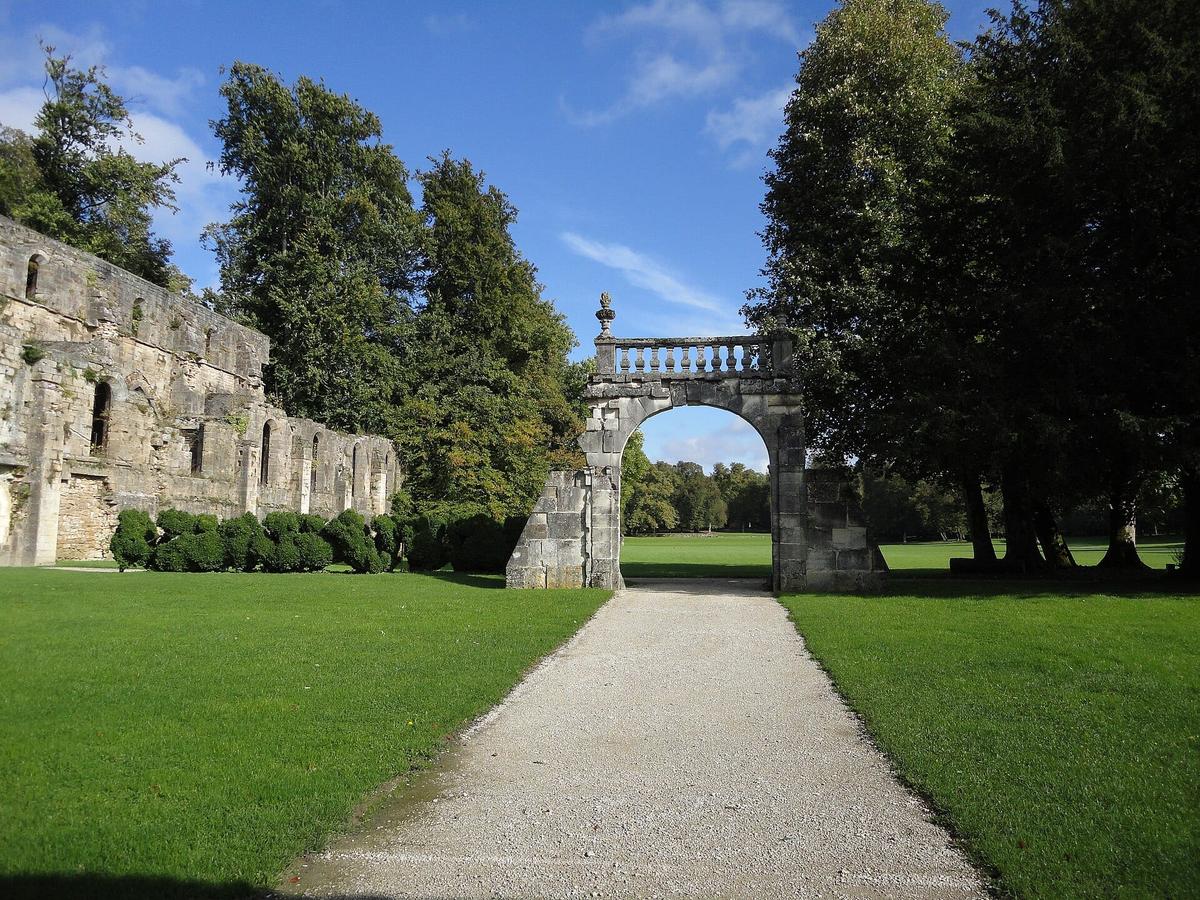
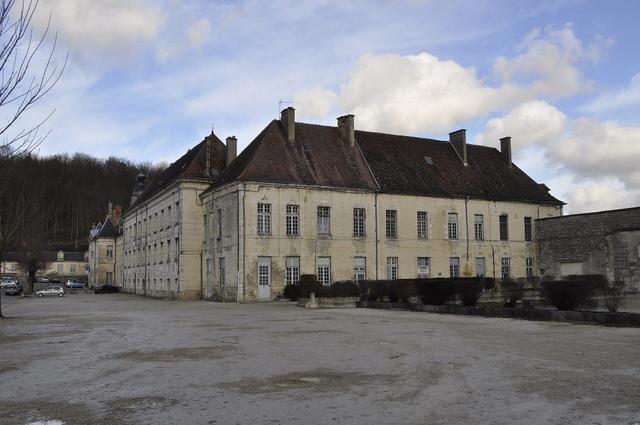
What you see today mostly tells the story of its end. The abbey church, built from 1160 to 1190, is now just a nave open to the sky. Of the 18th-century buildings, only two pavilions linked by a gallery remain. The contrast between the ruined Romanesque stone and the classical architecture, among the tall trees, is what gives the place its charm.
A history of fire, absentee abbots and a stone quarry
The age of absentee abbots. In 1536, the abbey came under the commendam system: the king appointed abbots who drew the income but did not live there. Among them were Louis de Lorraine-Guise, Cardinal de Tencin and Cardinal de Bernis, the last commendatory abbot.

Fire and rebuilding. A fire destroyed part of the abbey in 1703. Rebuilding began in 1717. Cardinal de Tencin, abbot from 1739 to 1753, launched a complete remodelling in the classical style around 1740. The great entrance gateway, completed in 1741, was designed like a triumphal arch.
The Revolution. In 1790, the last fifteen monks were expelled. In 1794, the abbey was sold as national property. Within about ten years, most of the monastic buildings had been demolished and their stone sold off: the abbey was used as a quarry. The church, which became a parish church, survived, but for lack of upkeep it began to fall into ruin in 1825.
Furnishings scattered far and wide. Some of the 18th-century furnishings still exist, but elsewhere. The high altar is in Sermaize-les-Bains, the organ in the collegiate church of Vitry-le-François and a marble lectern in Cheminon. The abbey's manuscripts, moved to Vitry-le-François, were destroyed in the bombing of 1940.
The rescue. The abbey has been a listed historic monument since 1944. It is still privately owned. Since 1965, the Association des Amis des Sites de Trois-Fontaines has looked after it, run events and opened it to the public with volunteers. The roof of the Grand Pavilion was restored from 2020 to 2024, with help from the regional cultural affairs office (DRAC) and the Fondation du Patrimoine.
How much does it cost to visit?
Prices published by the abbey for 2026:
- Park and ruins, self-guided: free.
- Visitor guide booklet: €1, on sale on site. It is worth buying, as signage is sparse.
- Bicycle museum: €3 per adult, €2 for under-12s.
- Botanical and historical tour of the park, on certain days: pay what you like, in a donation box.
Groups. For groups of more than 15 people, the abbey lists guided tours by appointment: €3 per person for the abbey (1 hour), and €6 per adult or €5 per child for the abbey and the bicycle museum (2 hours). Note that the site says these group tours are currently suspended. Organised groups (schools, clubs, outings) must also ask for permission to enter the park, in return for a contribution to its upkeep.
Photographers. Photo and video shoots for commercial use, including all wedding shoots, require permission and a fee per session. Write to the association before you come.
When is the abbey open?
This is the key question before you make the journey. The site has no daily opening hours like a state-run monument: it mostly opens on days organised by the association. For 2026, the abbey published these dates:
- Rendez-vous aux Jardins (national garden open days): Sunday 7 June 2026, 14:00 – 18:00.
- Summer Sundays: every Sunday from 12 July 2026 to 23 August 2026, 14:00 – 18:30, and on Saturday 15 August 2026.
- European Heritage Days: Sunday 20 September 2026, 14:00 – 18:00, with a botanical and historical tour of the park lasting about 120 minutes.
On those days, the bicycle museum is open, and an art and craft market sets up in the 18th-century pavilion, with a refreshment stall.
Outside these dates. The Lac du Der tourist office describes the abbey as open all year round, with no guaranteed hours. The 2027 programme is listed as "in preparation" on the official website at the time of writing. Before making a trip out of season, call the association on +33 3 26 73 03 94 or +33 7 80 34 39 37.
Our tip: come in spring if you can. The park's large magnolia, listed as a remarkable tree, is then covered in pink flowers. In summer, a Sunday afternoon lets you see everything at once: ruins, park, museum and market.
How long does the visit take?
Allow about 60 minutes to walk around the ruins and the park without rushing. That is the time the association gives for a visit to the abbey. The bicycle museum adds roughly an hour, about 120 minutes in all. If a botanical tour of the park is scheduled, set aside the afternoon.
What to see at Trois-Fontaines Abbey
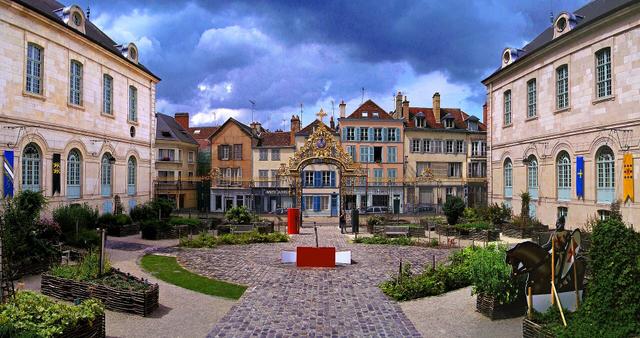
The great gateway. This is how you enter. In Louis XV style, it was inaugurated in 1741 by Cardinal de Tencin. Two statues stand in its niches: Saint Hubert and Saint Louis.
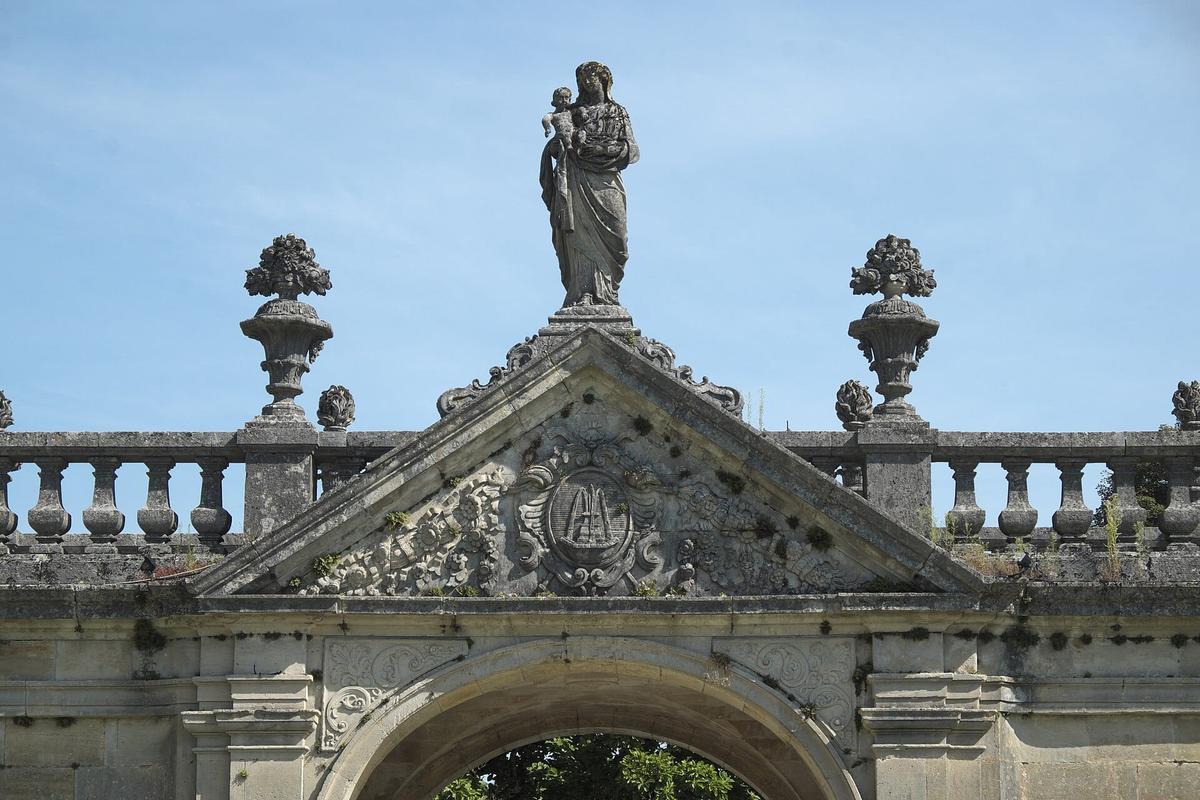

The main courtyard and the Virgin and Child. On the Louis XV gallery, a statue of the Virgin holds her child on her right arm, which is rare. The gallery itself was carefully restored under the supervision of the Beaux-Arts administration.
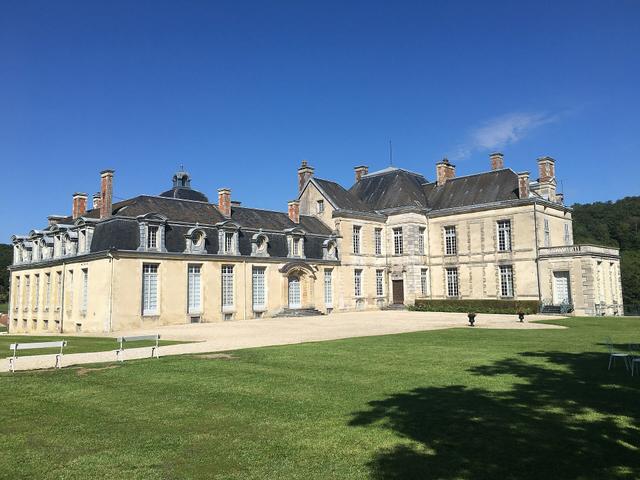
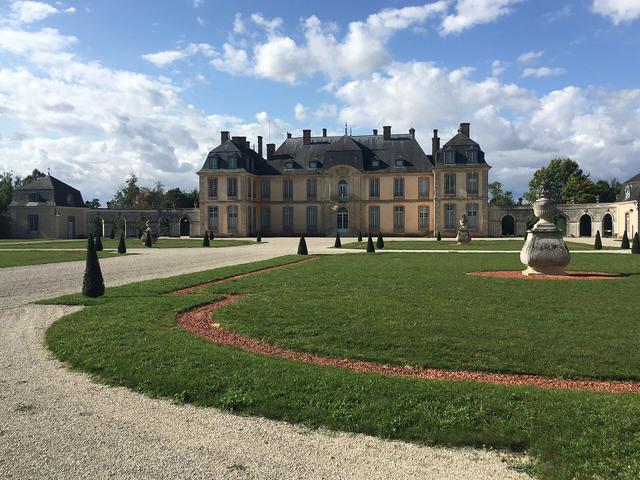
The 18th-century pavilions. With their mansard roofs, they are the only remains of the buildings rebuilt after the fire of 1703.
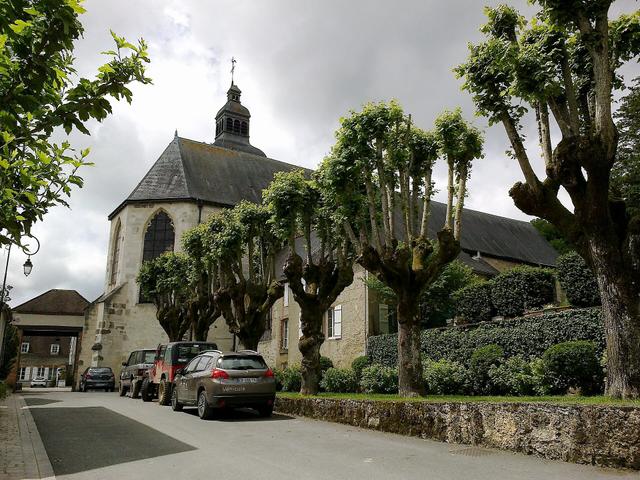
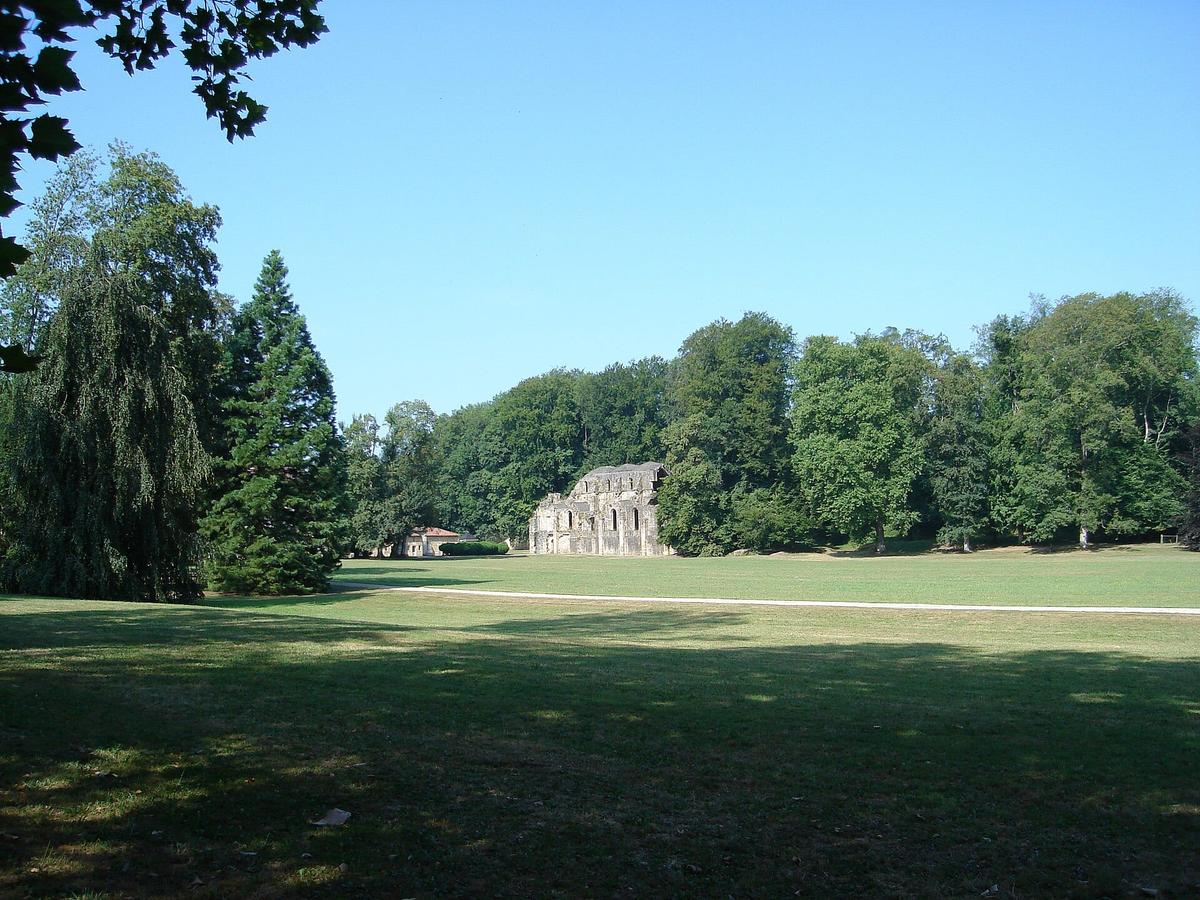
The ruined abbey church. This is the heart of the visit. The original Latin cross plan was about 70 metres long. The transept and choir were removed as early as 1785, and by 1825 only three of the nave's eight bays were still vaulted. The arches and vaults still standing give a good idea of Cistercian simplicity. In the 19th century, these ruins were already drawing Romantic artists.
The cellar and the ice house. Together with the church, these are the only 12th-century remains. The vaulted cellar stretches about forty metres under the bank. The ice house, buried under an earth dome, was used to keep winter ice until summer.
The park. It covers seven hectares, with some twenty tree species, allegorical statues and an avenue of lime trees planted in 1741. A pond crossed by the Bruxenelle stream, first a fishpond for the monks, became an ornamental pool.
The iron-rich spring. The water from one of the springs in the park has the same mineral composition as that of the nearby spa town of Sermaize-les-Bains.
The dog cemetery. A path behind the ice house leads to the dog cemetery of the Comte de Fontenoy. His family owned the abbey from 1891 to 1956.
The bicycle museum
Housed in the abbey, it tells the story of the pedal velocipede, invented in 1861 by Pierre Michaux, who was born in Bar-le-Duc, in the neighbouring Meuse. The collection includes nearly 200 bicycles, from the early draisine (dandy horse) to recent models, along with hundreds of objects and old posters, over about 200 m².
The museum calls itself a "living" museum: replicas of the Michaux velocipede and other unusual machines can be tried out along the park paths. Tours are guided depending on visitor numbers. The museum only opens on the days listed above.
Visiting with children
The site works well for children, especially on a summer Sunday. Trying out the old bikes along the paths is the highlight, and the museum is cheap. The park has room to run around, and the dog cemetery, the ice house and the cellar make good goals for a walk.

Two practical points. Picnics are not allowed in the park: the association points to picnic areas in the village, along the river, on the Allée des Tilleuls towards Baudonvilliers. And the ruins are still ruins, so keep an eye on young children near the walls.
How to get to Trois-Fontaines Abbey
By car. This is the only realistic option. Trois-Fontaines-l'Abbaye lies between Saint-Dizier and Vitry-le-François, near the border with the Haute-Marne. The abbey is in the centre of the village, on Place du Château.
By public transport. No convenient bus or train serves the village. The nearest stations are in Saint-Dizier and Vitry-le-François, and from there you need a car or a bike.
By bike. The village is a stop for cycle tourists: the abbey is one of the checkpoints for the French Cycle Touring Federation's "Brevet des Provinces Françaises" in the Marne. The Lac du Der is close enough for a day loop.
Renting a car. Reims is the most convenient large city for hiring a car to explore the south of the Marne and the Lac du Der.
Partner links: if you book through these links, we earn a commission at no extra cost to you. Partner links · Learn more
What to see nearby on the same day
| Also worth seeing | Distance | Travel time |
|---|---|---|
| Village-musée du Der (Lac du Der) | 35 km | 40 min by car |
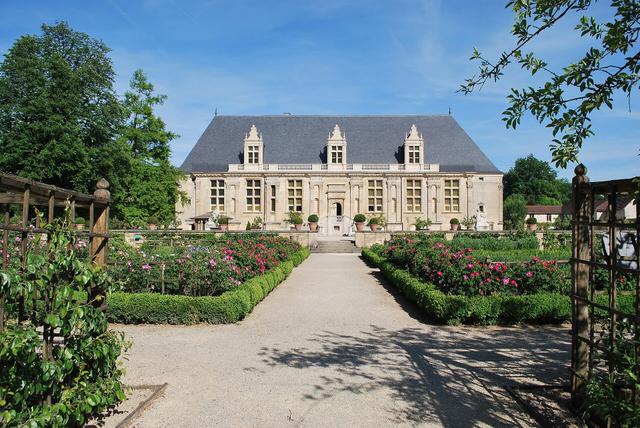
| Château du Grand Jardin (Joinville) | 45 km | 45 min by car |
| Châlons-en-Champagne Cathedral (Saint-Étienne) | 60 km | 55 min by car |
Approximate road distances and travel times.
The Village Musée du Der, on the lakeshore, displays Champagne half-timbered houses rebuilt piece by piece: it is the easiest outing to combine with the abbey for families. See also: Village-musée du Der (Lac du Der) To the south, the Château du Grand Jardin in Joinville offers another Renaissance garden. See also: Château du Grand Jardin (Joinville) To the north, Châlons-en-Champagne and its Saint-Étienne cathedral, then the basilica of Notre-Dame de l'Épine, make a Gothic day out. See also: Châlons-en-Champagne Cathedral (Saint-Étienne), Basilica of Notre-Dame de l'Épine
If you are interested in Cistercian history, the mother abbey of Clairvaux can be visited in the Aube. See also: Clairvaux Abbey, Champagne For another Romanesque abbey in a completely different setting, see Boscodon in the Hautes-Alpes or Murbach Abbey in Alsace. See also: Boscodon Abbey, Murbach Abbey
Where to eat and stay
On opening days, a refreshment stall runs on site. For a proper meal, Saint-Dizier and Vitry-le-François are the nearest towns, with the most choice. Picnics are fine in the village, by the river, but not in the park.
To stay, Saint-Dizier is the most convenient base. Accommodation around the Lac du Der suits you if you are combining the abbey with water sports or watching the common cranes in autumn.
Places to stay near Saint-Dizier
FAQ
Is Trois-Fontaines Abbey free to visit?
Yes, the park and ruins are free to explore. Only the bicycle museum charges for entry: €3 per adult and €2 for under-12s.
When is the abbey open?
Mainly on days organised by the association: in 2026, on Sundays from 12 July 2026 to 23 August 2026, 14:00 – 18:30, on 15 August 2026, 7 June 2026 and 20 September 2026. At other times, call before you come.
Who founded Trois-Fontaines Abbey?
Saint Bernard, in 1118. He sent twelve monks from Clairvaux, and it was Clairvaux's first daughter house.
Can I picnic in the park?
No, picnics are not allowed there, except for authorised groups. There are picnic areas in the village, by the river.
How long does the visit take?
About an hour for the ruins and the park, two hours with the bicycle museum.
Can I have wedding photos taken in the park?
Yes, but only with permission from the association and for a fee per session.
Practical information
Official ticket-office prices 2026
Free admission
Address
Abbaye de Trois-Fontaines, place du Château, 51340 Trois-Fontaines-l'Abbaye, France
Directions · Phone+33 3 26 73 03 94
On site and nearby
- Nearest shops and pharmacy: Bettancourt-la-Ferrée, 7 km away Straight-line distance, based on OpenStreetMap.
- Emergencies: 112 (all emergencies, free from any phone), 15 (SAMU, medical emergency)
Around the site, on Google Maps
With children
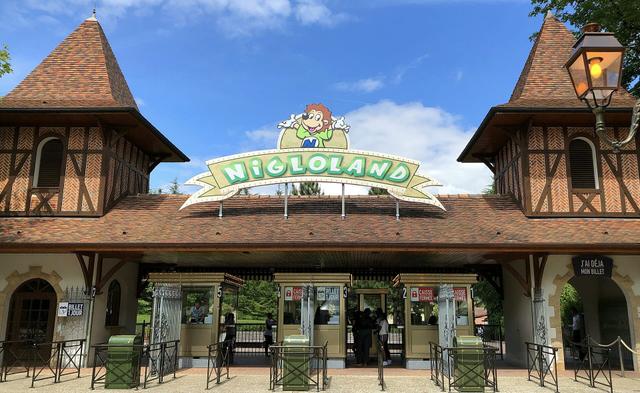
Family days out nearby: Village-musée du Der (Lac du Der) (18 km), Château du Grand Jardin (Joinville) (33 km), Nigloland (57 km)
Swimming pools and play areas nearby, on Google Maps
Facts checked on 12 November 2026. Sources: abbayedetroisfontaines.com, abbayedetroisfontaines.com, abbayedetroisfontaines.com, unidivers.fr, abbayedetroisfontaines.com, abbayedetroisfontaines.com, fr.wikipedia.org
Map
In the same region
- Taittinger Champagne cellars (Reims)from €40