Vieux Lyon and its traboules: planning your visit
Vieux Lyon and the traboules at a glance
- Opening hours 2026
- 7:00 – 19:00
- Admission
- Free
- Where
- Lyon
Facts checked on 29 October 2026. Full opening hours, reduced prices and access
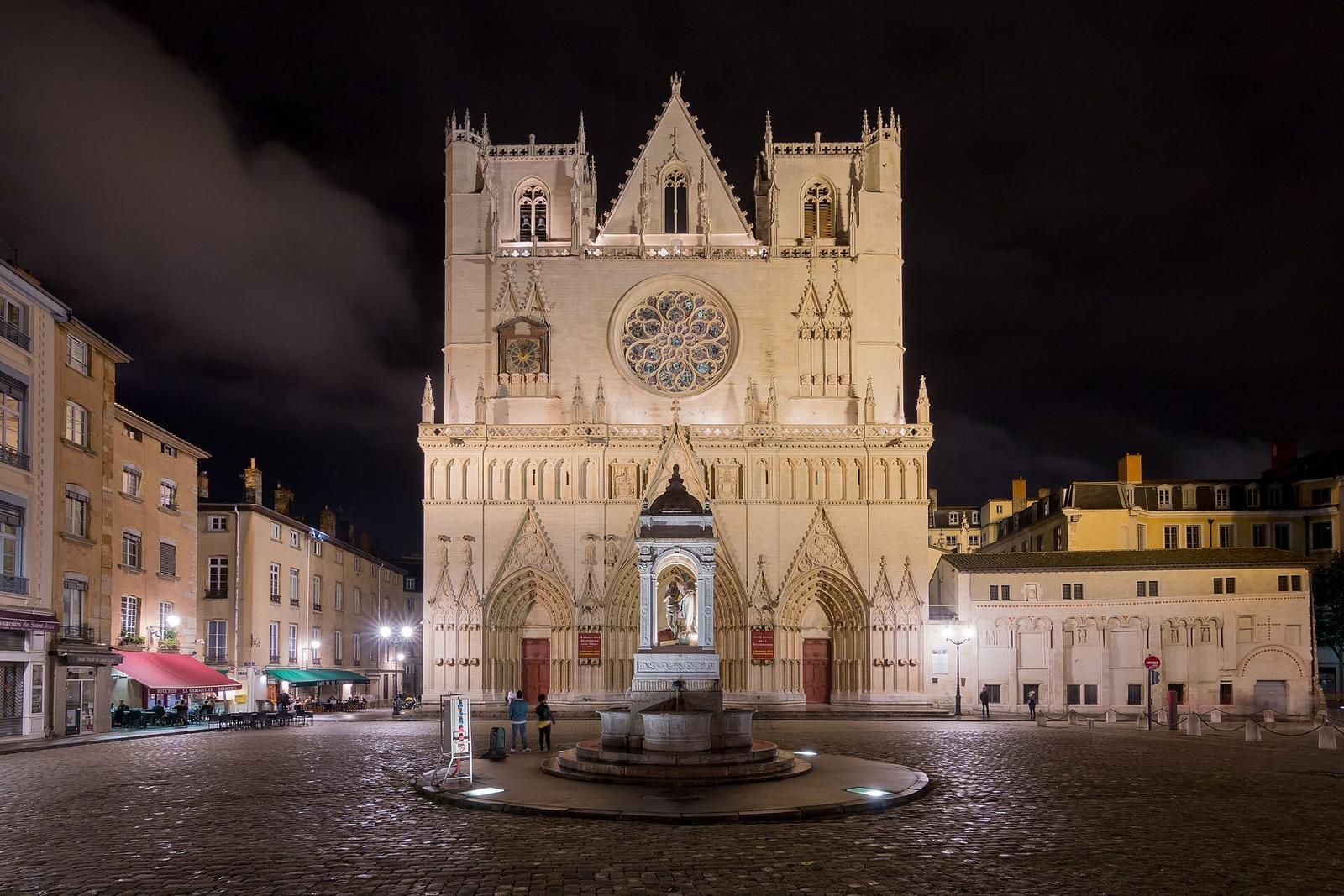
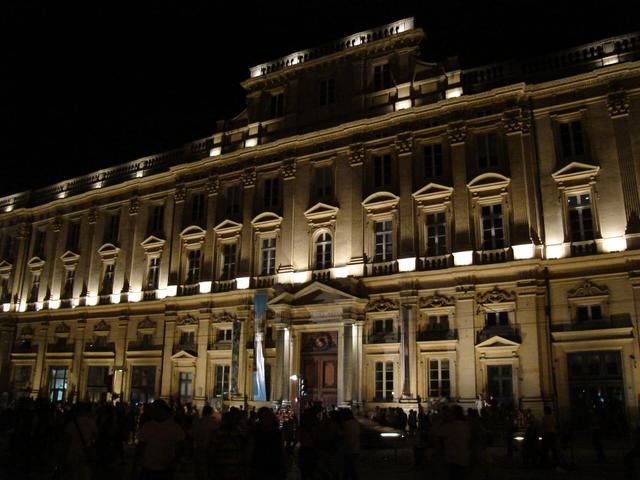
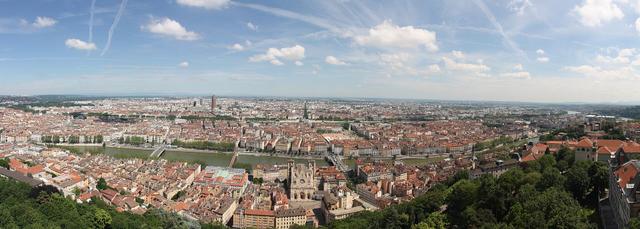
On the right bank of the Saône, at the foot of Fourvière, Vieux Lyon (Old Lyon) has kept its Renaissance streets and houses. Walking around is free, and you cross from one street to the next through the traboules, passageways that run through the buildings. Here is how to find the ones that are open, when to go and how to behave in places where people live.
Vieux Lyon at a glance
- Where: on the right bank of the Saône, in the 5th arrondissement, between the river and Fourvière hill.
- Price: walking the streets and the traboules open to the public is free.
- Traboule hours: the open traboules can be visited every day of the year, 7:00 – 19:00.
- Time needed: two hours are enough for a first walk; half a day if you add the cathedral and a guided tour.
- Status: the quarter is part of the Historic Site of Lyon, a UNESCO World Heritage Site since 1998.
- Good to know: the traboules run through buildings where people live. Go in quietly.
Understanding Vieux Lyon
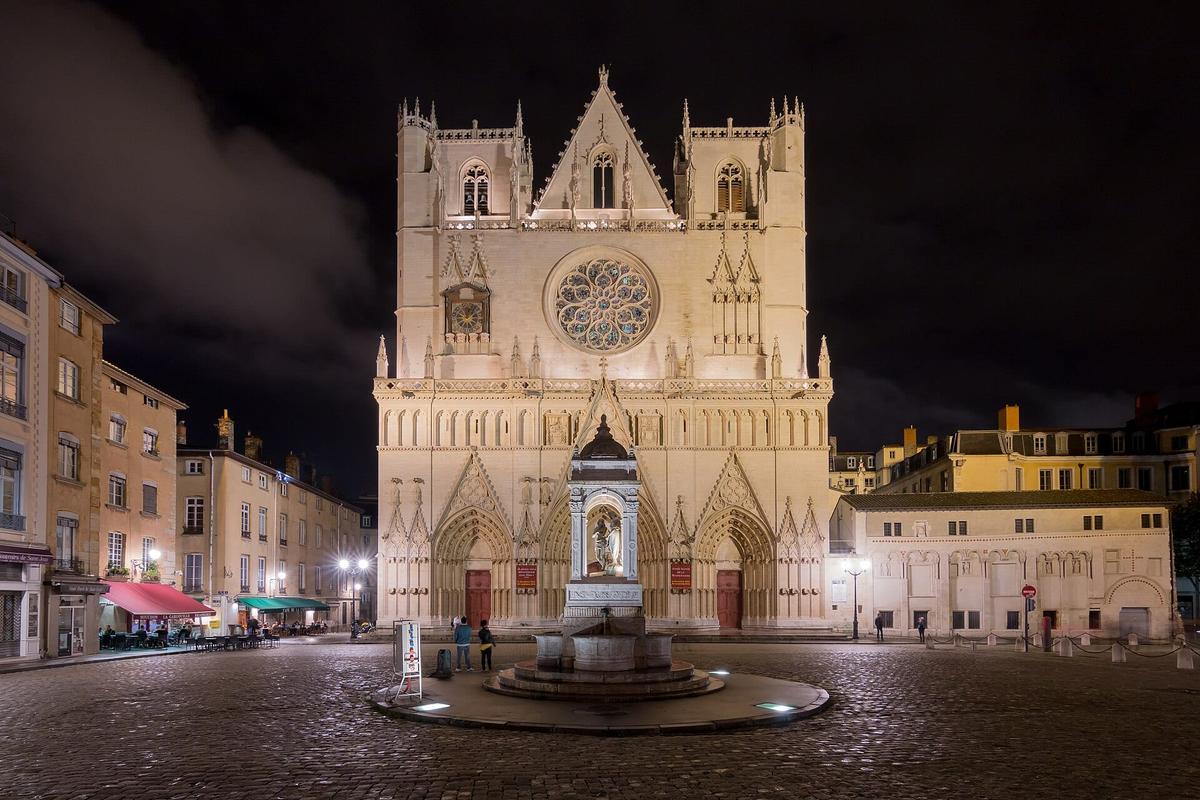
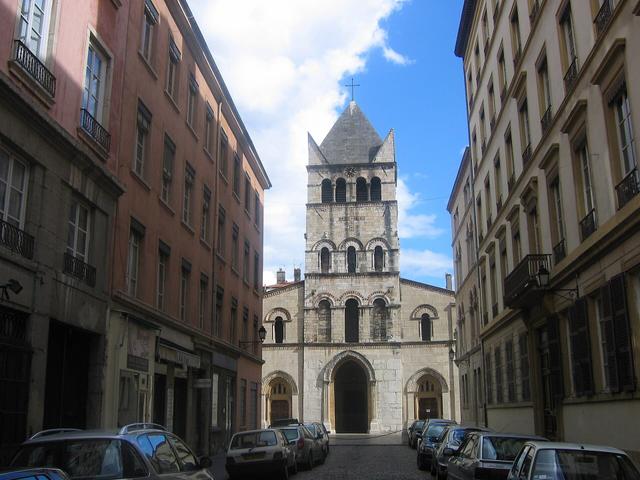
Vieux Lyon brings together three neighbourhoods lined up along the Saône. Saint-Paul, to the north, grew up around the church and the station of the same name. Saint-Jean, in the middle, is the best known, thanks to the Primatiale Saint-Jean, Lyon's cathedral. Saint-Georges, to the south, was the poorest area, home to the silk workers, the canuts.
The quarter nearly disappeared. In 1833, the writer Louis Boitel described it as "a dead quarter". In 1958, an urban renewal plan threatened some of the buildings, and an expressway was to link the montée du Chemin-Neuf to the future Maréchal-Juin bridge, cutting through the old houses. Residents formed an association to fight it. André Malraux, then France's Minister of Cultural Affairs, spoke up in 1962 to save the quarter, and Vieux Lyon became a protected conservation area on 12 May 1964. That status stopped the expressway.
In 1998, UNESCO added the Historic Site of Lyon to the World Heritage List. It covers Vieux Lyon, Fourvière hill, the slopes of the Croix-Rousse and part of the Presqu'île.
What is a traboule?
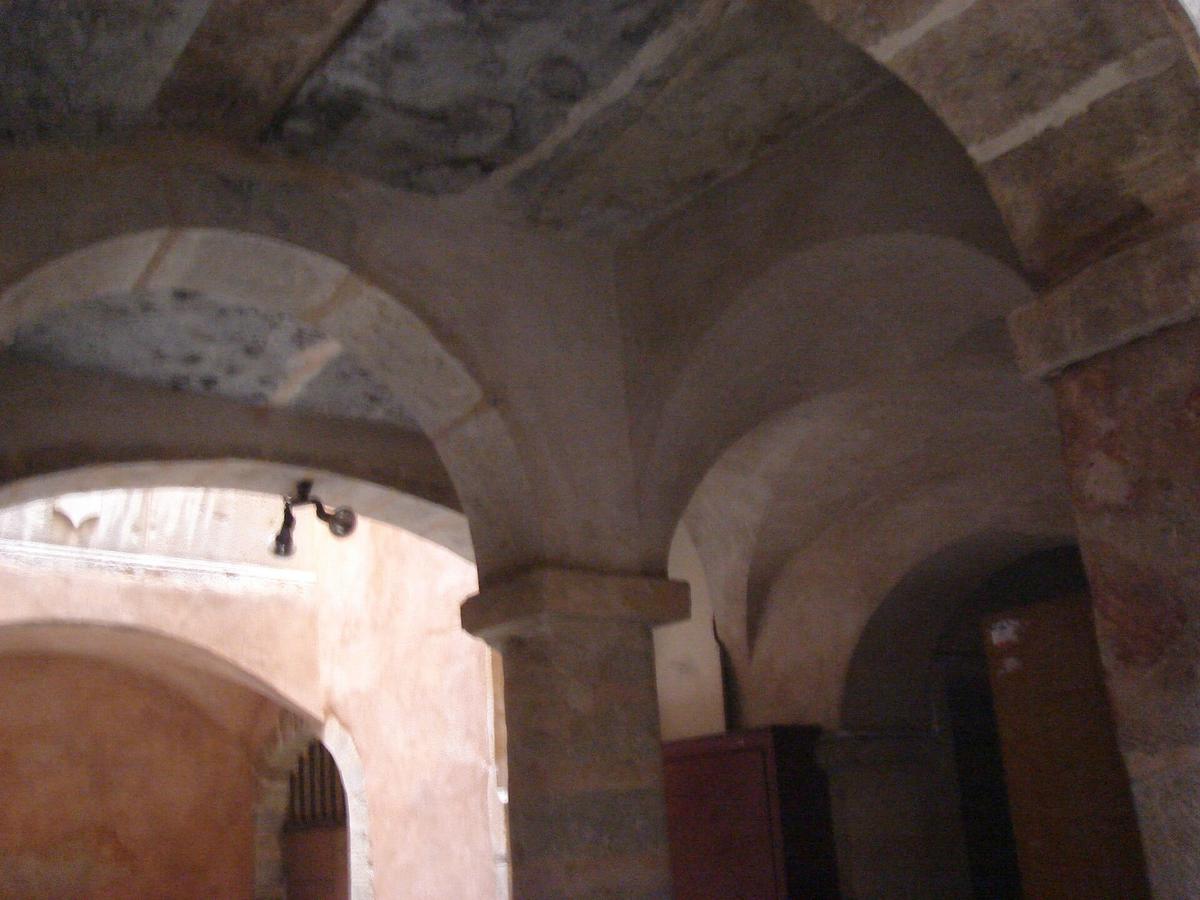
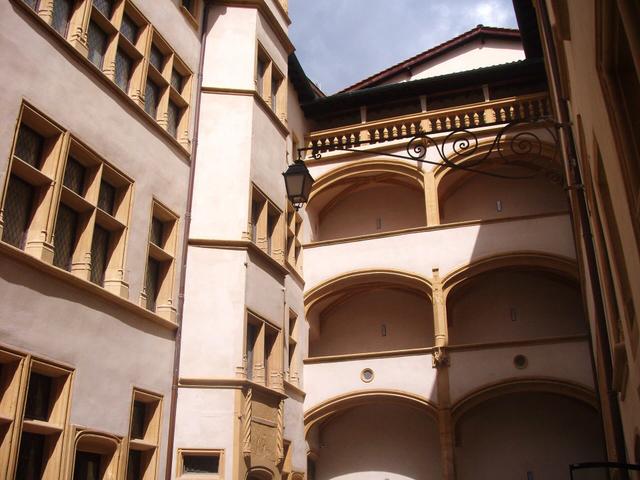
A traboule is a private passageway that goes through one or more buildings to link two streets. The word is said to come from the Latin trans ambulare, "to walk through". Residents used them as shortcuts, especially in a quarter stretched along the river, where the streets run parallel and cross streets are rare.
The tourist office counts about 500 traboules in more than 230 streets of Lyon, in Vieux Lyon, the Croix-Rousse and the Presqu'île. Only about 80 are open to the public.
Why so few? Because they are shared areas of buildings where people live. In 1990, a "cour-traboule" agreement was adopted: thanks to it, some co-owners leave the passage open to the public during the day.
There is also the word "miraboule". It was coined in the 1960s by the historian Félix Benoît for the fine inner courtyards that lead nowhere, with no way through to another street.
The traboules not to miss
The long traboule, from 54 rue Saint-Jean to 27 rue du Bœuf. This is the most famous one in Vieux Lyon. It crosses several courtyards in a row between the two parallel streets. It has been open to the public since an agreement signed in 1991.
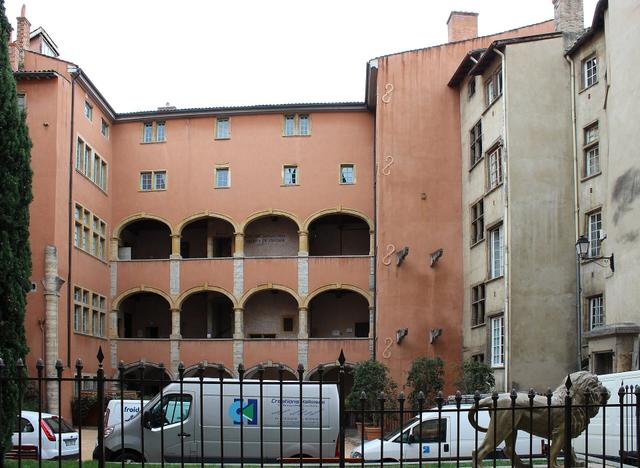
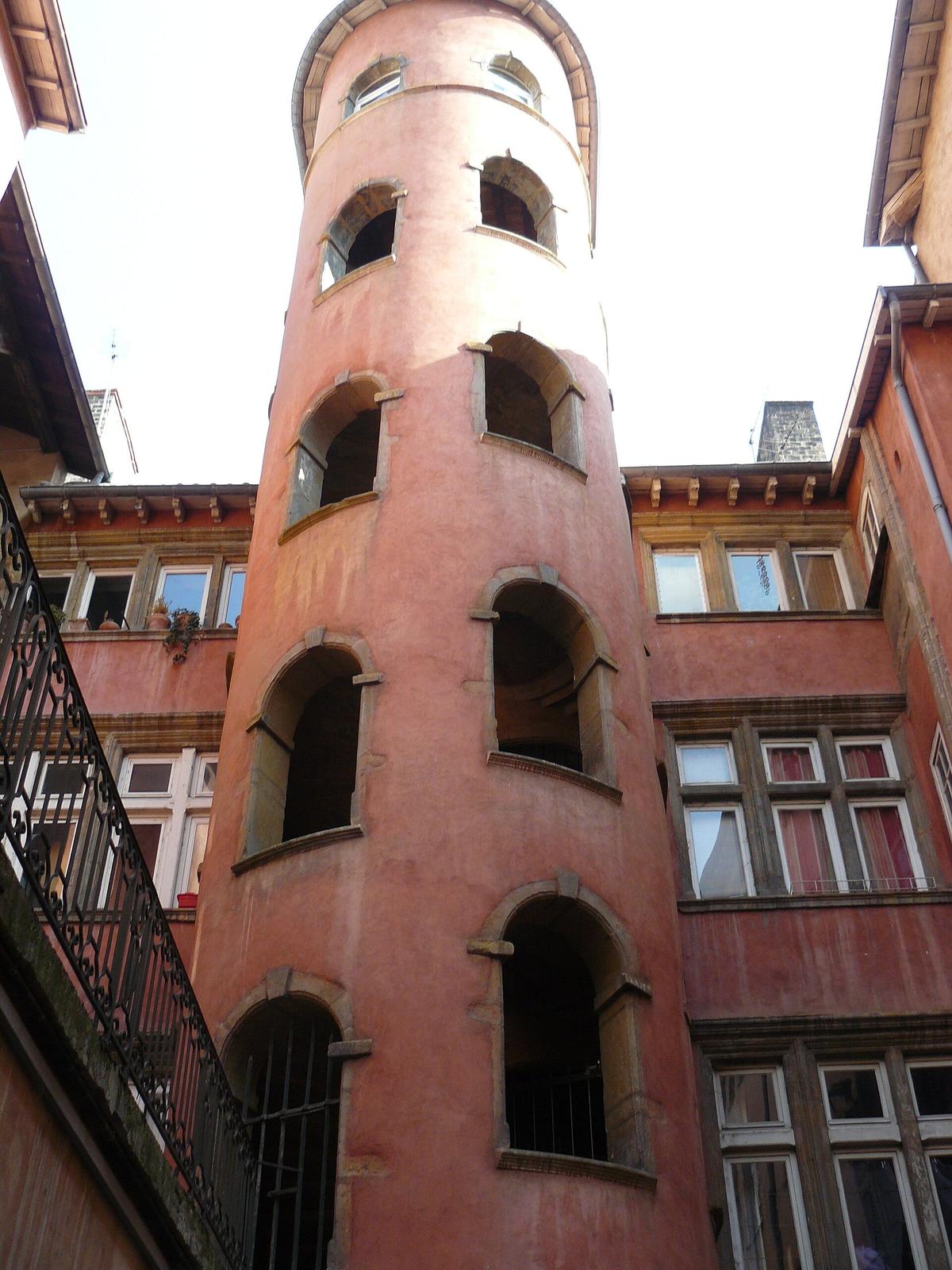
The Tour Rose, at 16 rue du Bœuf. The Maison du Crible is known for its pink stair tower, visible from the courtyard. It is one of the most photographed sights in the quarter.
On the Presqu'île and in the Croix-Rousse. The tourist office also lists traboules and courtyards on the other bank: at 12 rue Fernand-Rey, at 9 rue Laurencin, which leads to the Cour des Trois-Passages, at 13 rue de la Poulaillerie, which comes out at 2 rue des Forces (the entrance is sometimes closed), and the courtyard at 21 rue Royale.
How to find them. The tourist office website lists the traboules of Vieux Lyon and the Croix-Rousse. If a door is locked, do not ring: move on to the next one.
How much does it cost to visit?
Nothing, if you go on your own. The streets of Vieux Lyon and the traboules open to the public are free to visit.
What you pay for:
- Guided tours run by the tourist office, in Vieux Lyon and the Croix-Rousse. The guide takes you from one traboule to the next and explains the Renaissance architecture. Check the tour language before booking.
- Audio guides offered by the tourist office, to visit at your own pace.
- Museums in the quarter, such as the Musée Miniature et Cinéma, housed in the Cour de la Croix d'Or since Dan Ohlmann bought it in 1990.
Guided tour prices vary by route and season: check the tourist office's online shop before you come.
Should you book a guided tour?
To wander, no. For a guided tour, yes: places are limited, especially at weekends, in summer and during the Festival of Lights in December. A guided tour is worth it on a first visit: the guide finds the passageways for you and tells the story of the houses.
Other companies run tours of Vieux Lyon and the traboules, on foot, in small groups or combined with a food tasting.
Partner links: if you book through these links, we earn a commission at no extra cost to you. Partner links · Learn more
Guided tours and day trips on GetYourGuide
When to visit Vieux Lyon
The traboules open to the public can be visited 7:00 – 19:00, every day of the year. Outside those hours, the doors are closed.
Our tip: come on a weekday morning, between the time the traboules open and late morning. Rue Saint-Jean, the main shopping street, gets very busy in the afternoon and on Saturdays. Head towards rue du Bœuf and the Saint-Georges area for more peace.
The inner courtyards are often dark: for photos, the middle of the day works best.
How to behave in the traboules
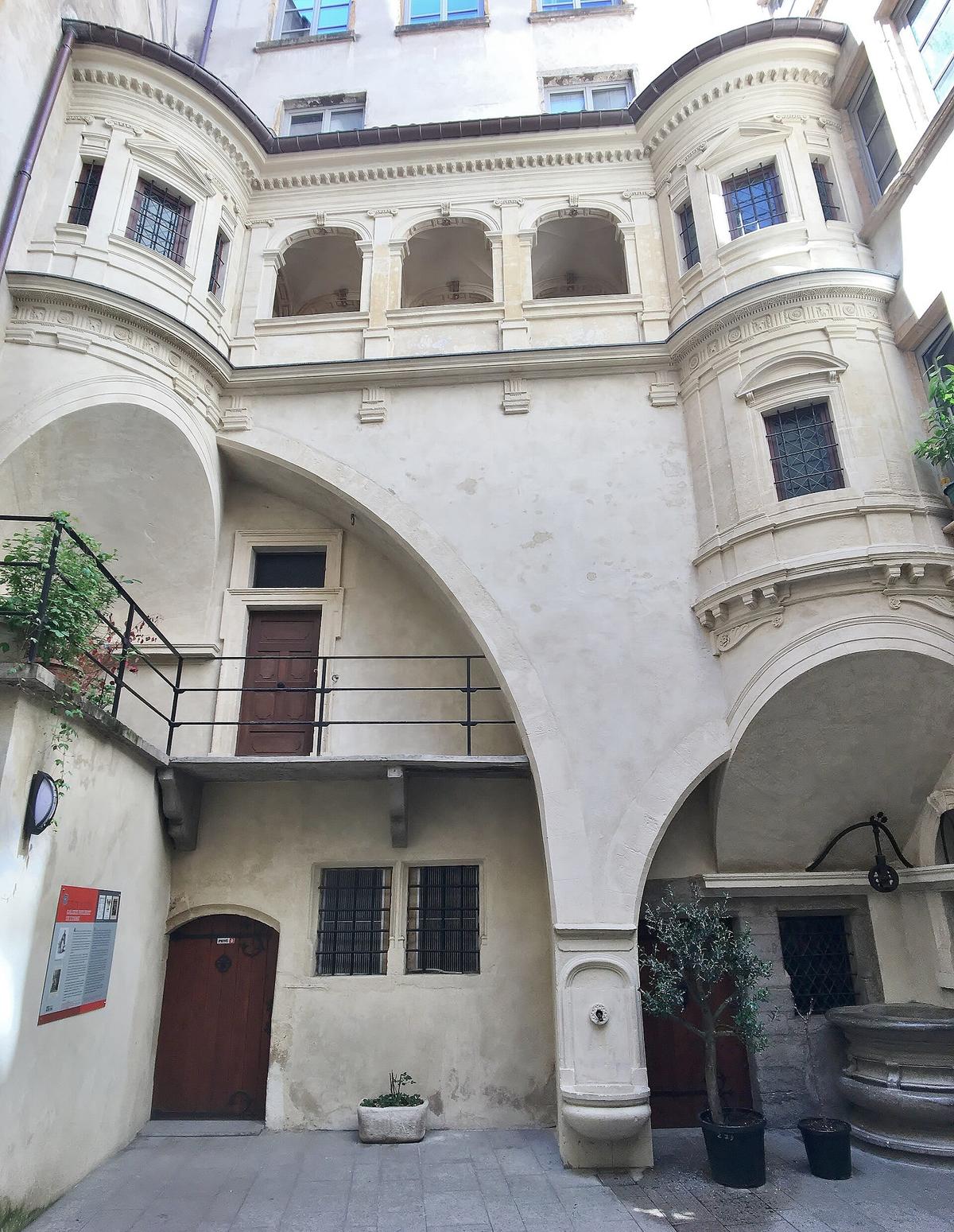
The traboules are shared areas of buildings where people live. The tourist office asks visitors to:
- stay discreet and speak quietly;
- not shout or run, especially with children;
- not drop litter;
- respect closed doors and private staircases.
The tourist office publishes a good-practice charter. Do not go up to the upper floors, do not sit on the stairs and avoid noisy groups. The passages stay open because the residents agree to it: respecting their peace also keeps the traboules open for the next visitors.
How to get to Vieux Lyon
By metro. Line D stops at Vieux Lyon station, in the heart of the Saint-Jean area, a few steps from the cathedral.
By funicular. From the same station, funiculars go up to Fourvière and Saint-Just. It is a handy way to combine the quarter with the basilica or the Roman theatres, then walk back down the stepped lanes.
On foot. From the Presqu'île, several footbridges and bridges cross the Saône. From place Bellecour, Vieux Lyon is about a ten-minute walk.
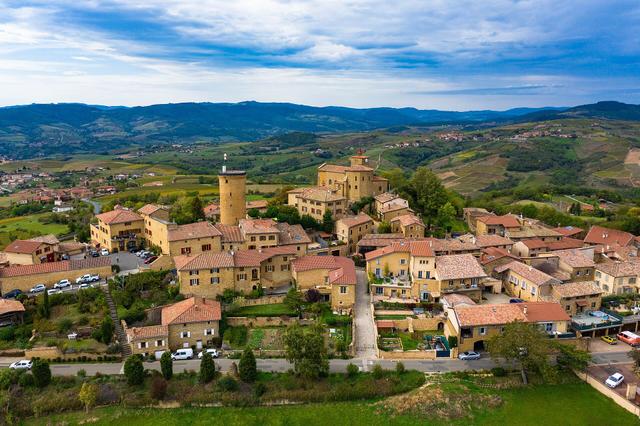
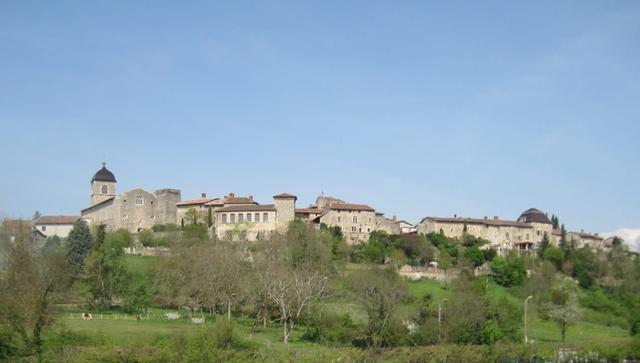
By car. The quarter is narrow, largely pedestrianised, and parking is difficult. Leave the car at your hotel. A car is useful, though, for day trips around Lyon: the medieval village of Pérouges, to the north-east, or the Beaujolais villages and the Hameau Duboeuf, to the north. See also: Pérouges medieval village, Hameau Duboeuf
What to see in Vieux Lyon
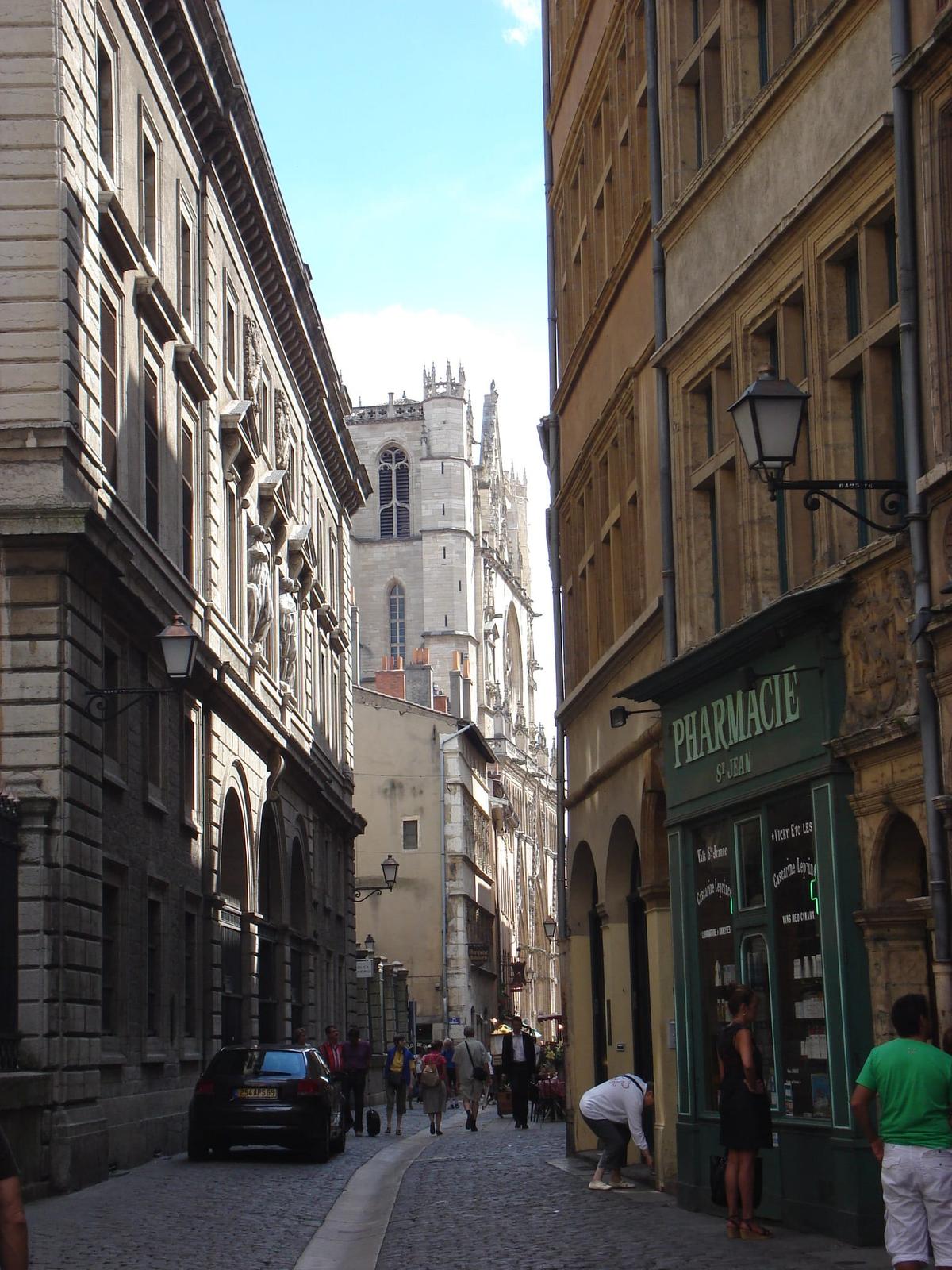
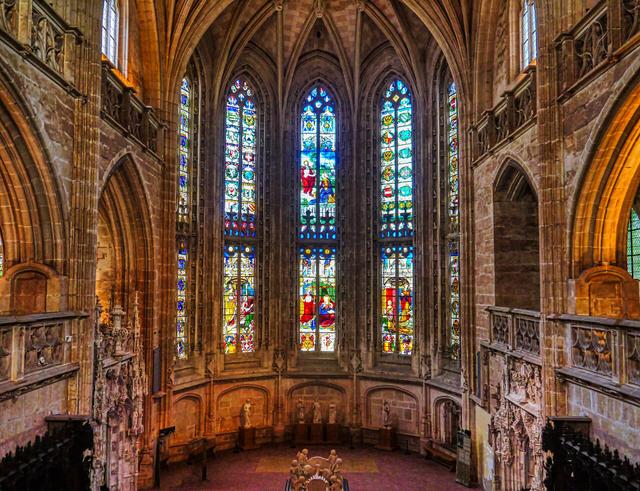
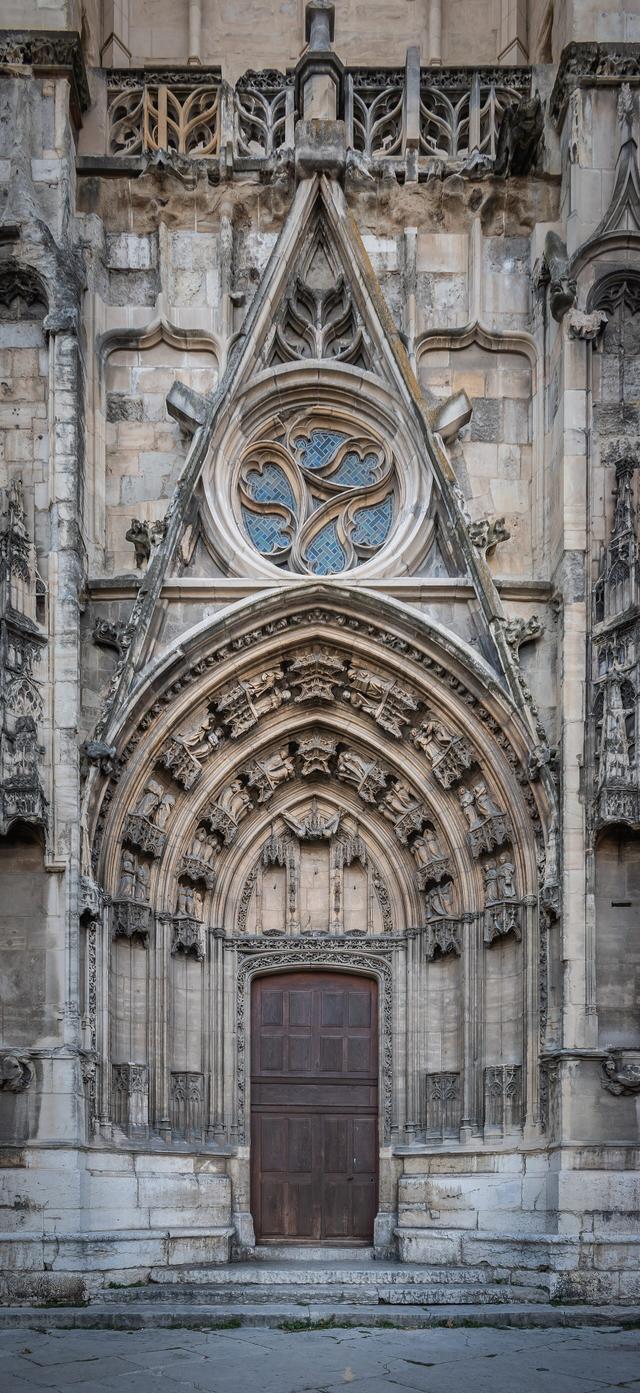
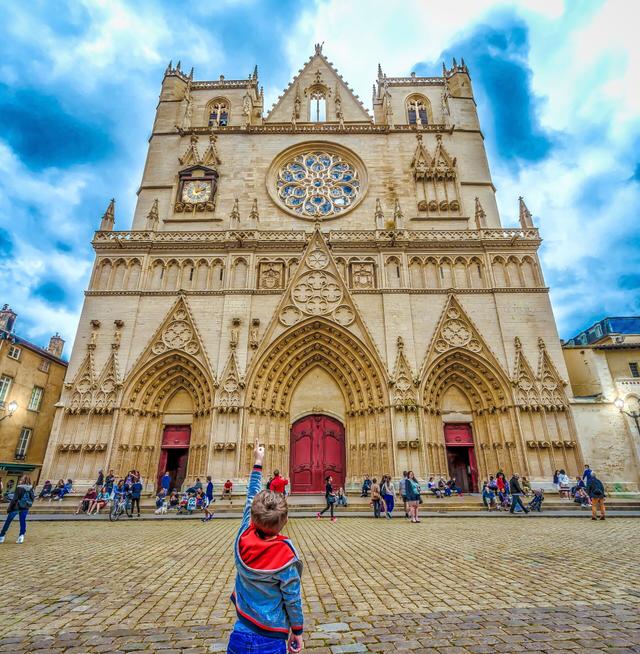
Saint-Jean Cathedral. Lyon's cathedral is called a "primatiale" because the Archbishop of Lyon holds the title of Primate of the Gauls. It has been a listed historic monument since 1913. Its facade closes off place Saint-Jean, where the main streets of the quarter start.
Rue Saint-Jean and rue du Bœuf. These two parallel streets in the Saint-Jean area have the highest concentration of Renaissance houses, with their stair towers, galleries and courtyards. The long traboule links them.
The Saint-Paul area. Around Saint-Paul church and station, the area is quieter. Bertrand Tavernier's film The Clockmaker of St. Paul is set here.
The Saint-Georges area. To the south, the old silk workers' quarter gets fewer visitors, with its small streets and plainer facades.
Guignol. Laurent Mourguet, who created the puppet, lived in the quarter from 1795. Guignol is still one of the symbols of Lyon.
Vieux Lyon with children
Vieux Lyon works well with a family, as long as you explain before going in that the traboules are homes where people live. Turn the walk into a treasure hunt: find the plaques of the open traboules, spot the Tour Rose, count the stair towers.
The streets are cobbled and the courtyards often have steps: a pushchair is hard to manage in the traboules. A baby carrier is more practical.
The Musée Miniature et Cinéma, in the quarter, is usually a hit with children. To round off the day, the funicular up to Fourvière is a small attraction in itself.
What to combine on the same day
| Also worth seeing | Distance | Travel time |
|---|---|---|
| Basilica of Notre-Dame de Fourvière | 1 km | 10 min by public transport |
| Lugdunum Museum and Roman Theatres | 1 km | 10 min by public transport |
| Musée des Beaux-Arts de Lyon | 1.5 km | 20 min on foot |
Approximate road distances and travel times.
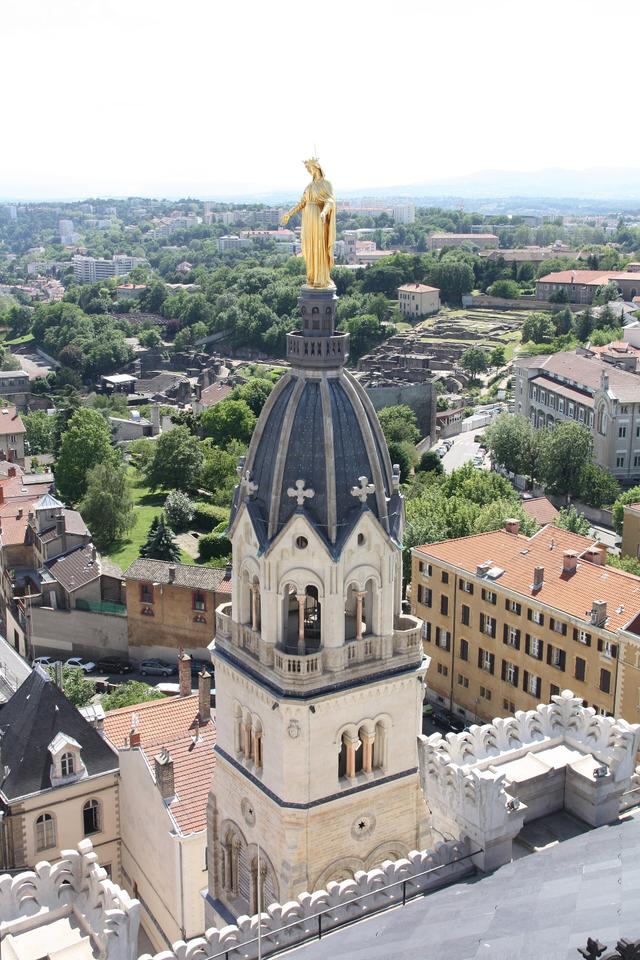
Fourvière. The basilica and its viewing terrace look down on Vieux Lyon. Take the funicular up from Vieux Lyon station; the view over the city is worth it. See also: Basilica of Notre-Dame de Fourvière
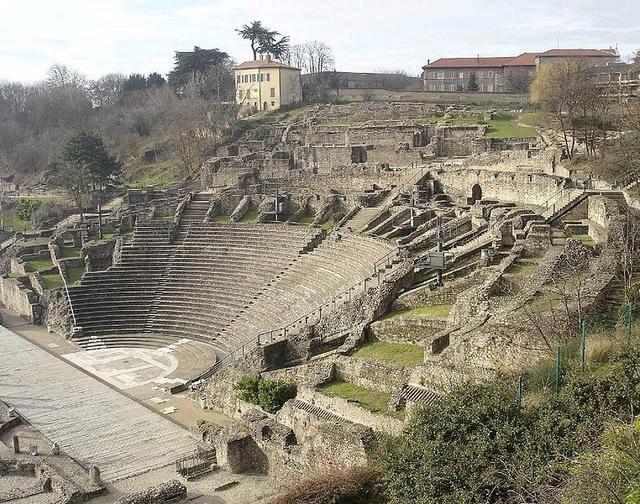
The Roman theatres and Lugdunum. On the same hill, the Gallo-Roman museum and the two ancient theatres tell how the city was founded, long before the Renaissance. See also: Lugdunum Museum and Roman Theatres
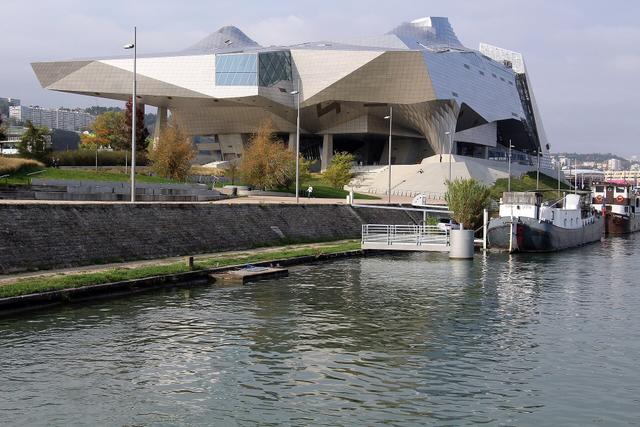
Across the Saône. The Museum of Fine Arts, on place des Terreaux, is about a twenty-minute walk away. Further south, the Musée des Confluences is reached by tram. See also: Musée des Beaux-Arts de Lyon, Musée des Confluences
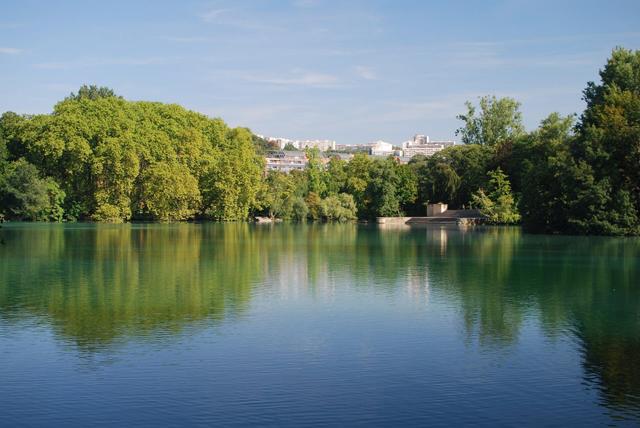
For a day in the green: See also: Parc de la Tête d'Or, Lyon and Beaujolais, Things to do in Lyon
Vieux Lyon in a few dates
- 1833: Louis Boitel describes Vieux Lyon as a dead quarter.
- 1958: an urban renewal plan threatens the quarter.
- 1962: André Malraux speaks up to save it.
- 1964: Vieux Lyon becomes a protected conservation area, on 12 May.
- 1990: the cour-traboule agreement opens passageways to the public.
- 1998: the Historic Site of Lyon is added to the UNESCO World Heritage List.
Where to eat and stay
Eating. Rue Saint-Jean and the streets around it have many bouchons, Lyon's traditional restaurants. The places on the main street are mostly aimed at tourists: compare menus and do not hesitate to head towards Saint-Paul or Saint-Georges. Book for dinner, especially at weekends.
Staying. Sleeping in Vieux Lyon lets you see the quarter early in the morning, before the crowds. The streets are cobbled and often car-free: bring luggage that is easy to carry. The Presqu'île, across the Saône, has more choice and is only a few minutes' walk away.
FAQ
Are the traboules free?
Yes. The traboules open to the public are free to visit. Only guided tours and audio guides are paid.
What time are the traboules open?
The traboules open to the public can be visited every day of the year, 7:00 – 19:00.
How many traboules are there in Lyon?
About 500, according to the tourist office, of which about 80 are open to the public.
Where is the most famous traboule?
The long traboule links 54 rue Saint-Jean to 27 rue du Bœuf, in the Saint-Jean area.
Since when has Vieux Lyon been a UNESCO site?
Since 1998, as part of the Historic Site of Lyon.
How do you get to Vieux Lyon?
By metro line D to Vieux Lyon station, or on foot from place Bellecour across the Saône.
Practical information
Opening hours 2026
| 1 January 2026 to 31 December 2026 | 7:00 – 19:00 |
|---|
Official ticket-office prices 2026
Free admission
Address
Vieux Lyon, place Saint-Jean, 69005 Lyon, France
Directions
On site and nearby
- Nearest shops and pharmacy: Lyon, less than 1 km away Straight-line distance, based on OpenStreetMap.
- Emergencies: 112 (all emergencies, free from any phone), 15 (SAMU, medical emergency)
Around the site, on Google Maps
With children
Family days out nearby: Musée Cinéma et Miniature (Cinema and Miniature Museum) (0 km), Gadagne Museums, Lyon (0 km), Lugdunum Museum and Roman Theatres (1 km)
Swimming pools and play areas nearby, on Google Maps
Facts checked on 29 October 2026. Sources: visiterlyon.com, fr.wikipedia.org
Map
In the same region
- Lyon Aquariumfrom €19.50Free under 3

- Chauvet Cave 2 (Grotte Chauvet 2)from €18Free under 10