Château de la Bâtie d'Urfé: planning your visit
Château de la Bâtie d'Urfé at a glance
- 1 November 2026 to 31 December 2026
- 10:00 – 17:00 (closed on Monday, Tuesday, Wednesday, Thursday and Friday)
- Full price
- €8
- Free
- under 12
- Where
- Saint-Étienne-le-Molard
Official ticket-office prices, checked on 11 November 2026. Full opening hours, reduced prices and access
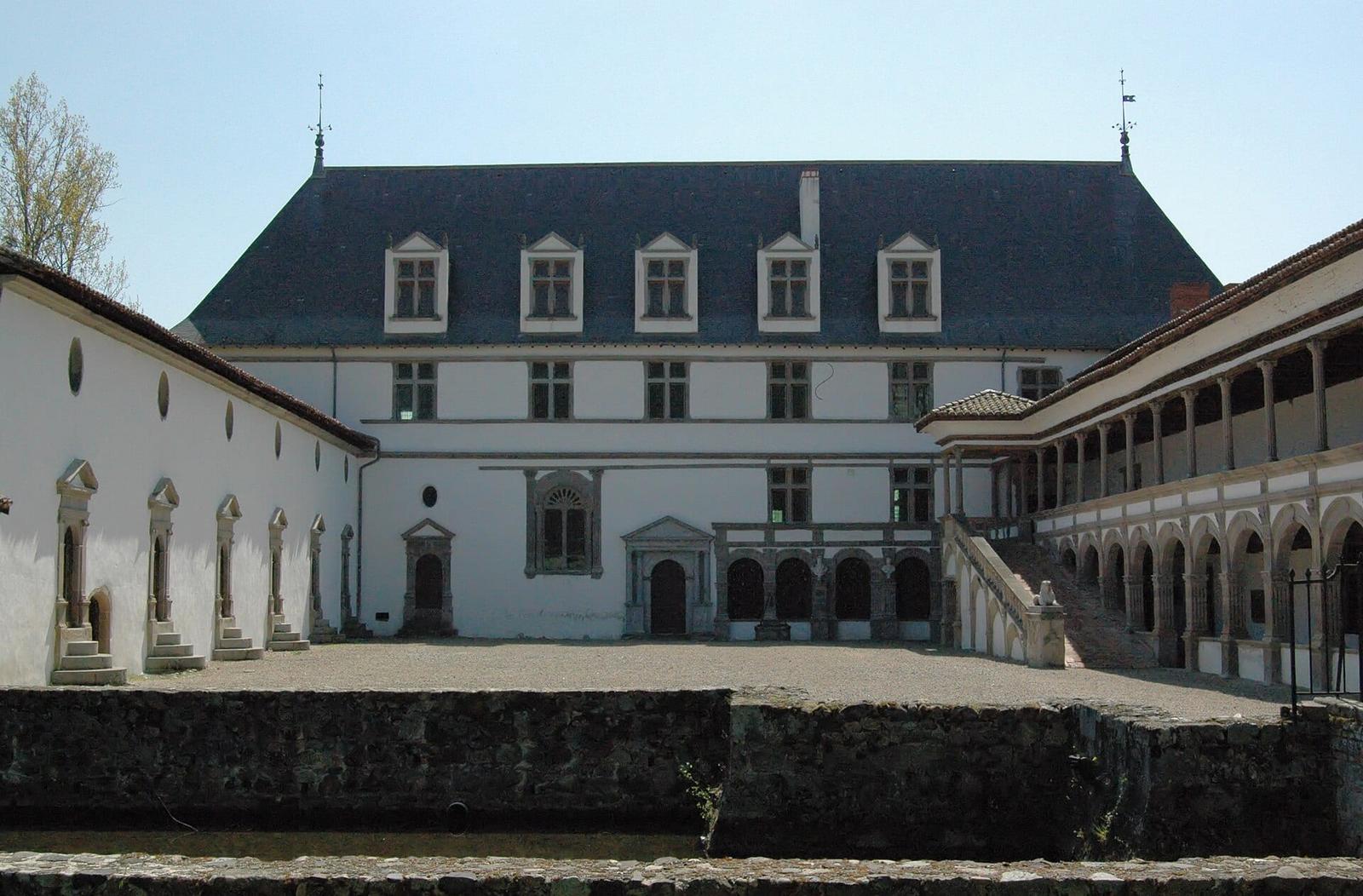

On the Forez plain, by the River Lignon, the Bâtie d'Urfé hides behind its rammed-earth walls one of the most Italian Renaissance interiors in France. People come for its grotto made of shells and pebbles, its sphinx, its formal gardens and the memory of L'Astrée. Here are the prices, opening hours, guided tour days and our tips.
Bâtie d'Urfé at a glance
- Where: in Saint-Étienne-le-Molard, in the Loire department, in the heart of the Forez plain, a little over an hour from Lyon by car.
- Price: €8 full price, €7 reduced, free for under-12s.
- Open: February to December. Closed on Tuesdays from February to October, open at weekends only in November and December, closed for the whole of January.
- Right now: the interior can only be seen on a guided tour, at weekends at 10:30 and 15:00.
- Don't miss: the grotto room, the chapel, the sphinx on the ramp and the box parterre.
- Best for: lovers of the Renaissance and of gardens, readers of L'Astrée, and families, thanks to the workshops.
Why visit the Bâtie d'Urfé
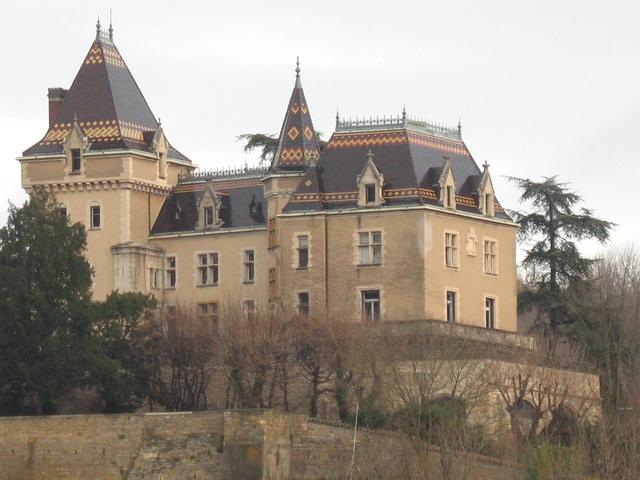
From the road, the château looks like a large fortified farmhouse in the Forez countryside. It is only when you step through the gate that you understand. The courtyard, the colonnaded gallery, the ramp guarded by a sphinx and the rooms decorated by Italian and French artists make the Bâtie one of the most unusual Renaissance ensembles in central France.
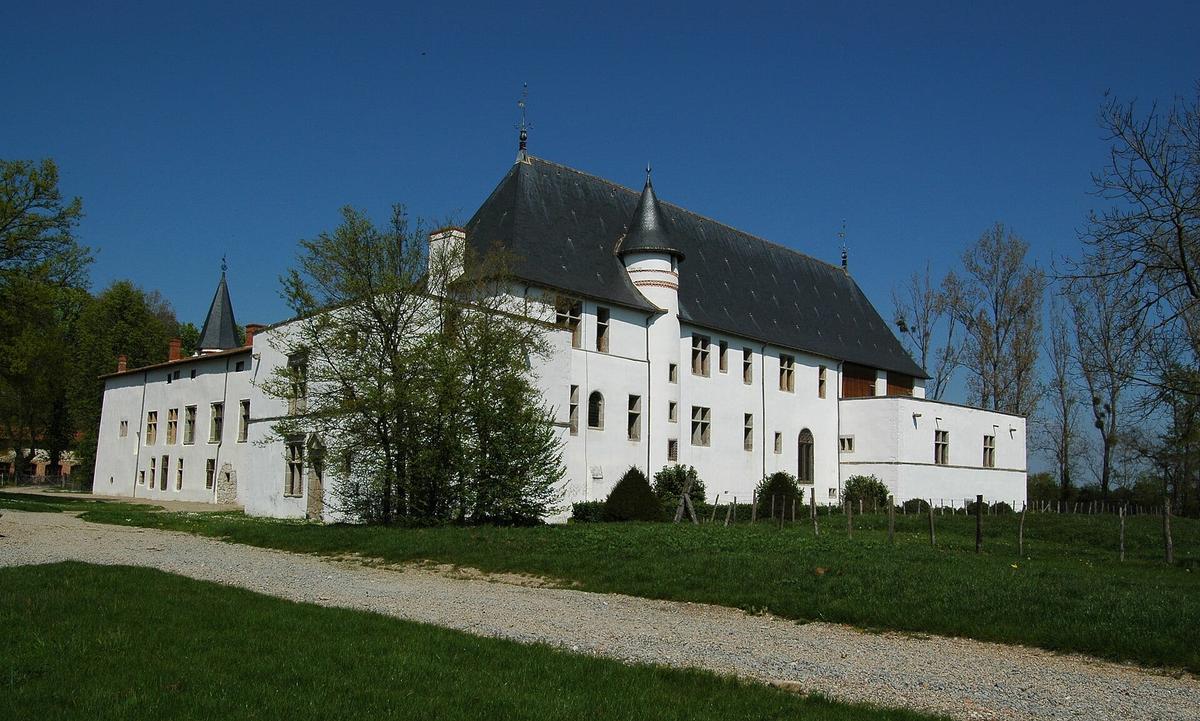

The estate brings two worlds together. On one side, the traditional building style of the Forez, with thick walls and a 14th-century fortified house whose drawbridge and moats still exist. On the other, the Franco-Italian art of the Renaissance, the vision of one man: Claude d'Urfé.
The château has been a listed historic monument since 25 October 1912. It also holds the Musée de France and Maison des Illustres labels, the latter in memory of Honoré d'Urfé, the author of L'Astrée.
A little history: from monks to the Urfé family
It began as a monastic grange built on the banks of the Lignon by the monks of Champdieu priory. The Urfé family, who lived up in the hills at the Cornes d'Urfé, near Saint-Just-en-Chevalet, came down to settle on the plain. The fortified house was enlarged around 1460 to 1470, with a keep, and became the family manor.
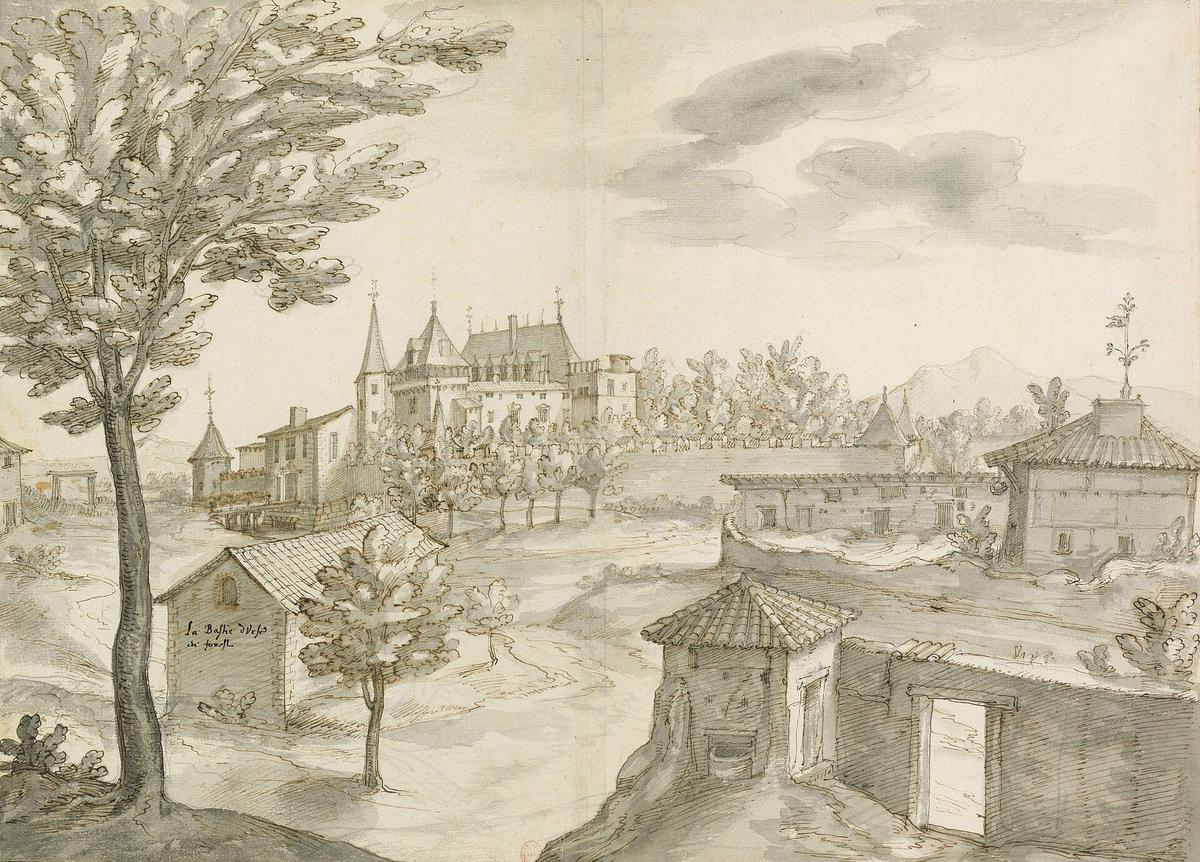

Everything changed with Claude d'Urfé (1501-1558). Ambassador of François I in Rome, then governor of the children of Henri II, he came back from Italy with ideas and artists. From 1535, he turned the manor into an Italian-style residence. The decoration he commissioned combines his love for his wife, Jeanne de Balzac, his taste for the arts and his philosophy.
His grandson Honoré d'Urfé spent part of his youth at the Bâtie. He wrote L'Astrée, often described as the first roman-fleuve (saga novel) in French literature, and set its story in this landscape: the Lignon, the hedged farmland, the Forez hills. From the château windows, you can still see the places named in the novel.
After the Urfé family, the estate declined. In 1909, the Diana, the historical and archaeological society of the Forez, saved it from ruin. It still owns it. The Loire departmental council has run the site since 2007, after major restoration work begun in 1990.
Bâtie d'Urfé ticket prices
2026 prices published by the Loire tourist board:
- Full price: €8.
- Reduced rate: €7.
- Under 12: free.
The price lists also show lower prices, from a few euros, from April to October. They are for shorter tours or events: ask at the front desk what is on the day you visit.
The annual pass. For €20, a pass gives unlimited access for a year to the Bâtie d'Urfé and three other sites run by the Loire departmental council. It pays for itself from the third visit.
Groups. A group rate applies from 10 people, up to 25 per group. Group visits can only be booked by phone.
Do you need to book?
It is advisable, especially in winter. The château lets you pre-book individual visits online (self-guided, guided or short tours), as well as shows and workshops. Note that online pre-booking is not possible for the same day. If you decide to come that morning, call the front desk on the number given on the château's website.
In November and December, the interior can only be seen with a guide, at two set times on each opening day. Places are limited: booking saves you from finding the door shut after the drive.
Opening hours 2026: opening days and closures
Calendar published by the château:
- 1 February to 31 March: every day except Tuesday, 10:00 – 13:00 / 14:00 – 17:00.
- 1 April 2026 to 31 October 2026: every day except Tuesday and 1 May, 10:00 – 13:00 / 14:00 – 18:00.
- 1 November 2026 to 31 December: Saturdays and Sundays only, 10:00 – 13:00 / 14:00 – 17:00.
The château is closed for the whole of January, and on 1 May and 24, 25 and 31 December. Last entry is 30 minutes before closing.
The winter format. At this time of year, the interior can only be seen on a guided tour, on 11 November and then on Saturdays and Sundays at 10:30 and 15:00. The ground-floor gardens remain open to wander freely, 10:00 – 13:00 / 14:00 – 17:00.
Our tip: come between May and September if you want to enjoy the gardens. The box parterre, the topiary and the wildflower meadow are at their best then. The château is closed on Tuesdays: the classic trap when planning a trip to the Forez.
What to see at the Bâtie d'Urfé
The grotto room. This is the room everyone comes to see. On the ground floor, an artificial grotto covers the walls and vaults with mythological scenes made of small pebbles, shells and coloured sand. Historians describe it as unique in France. Take time to look at the two large niches and the terms, figures with a human bust on a tapering pillar. The nymphs and gods are not painted: they are built up grain by grain.

The chapel. It brings together paintings and gypseries, carved plaster decoration. In the 16th century, it also had wood panelling, a glazed tile floor and a ceiling, made by Italian artists and Forez craftsmen.
A curious fact: the chapel is also in New York. The chapel's original panelling is now on display at the Metropolitan Museum of Art. It was made around 1547-1548 in Bologna by the workshop of Fra Damiano da Bergamo, from designs attributed to Vignola. The altarpiece, a Last Supper in marquetry, is signed and dated 1548. The Met explains that more than 25 kinds of wood were used. The panelling was sold to America, used by the architect Stanford White in a New York interior, then given to the museum in 1942. The Met also holds glazed tiles from the floor.
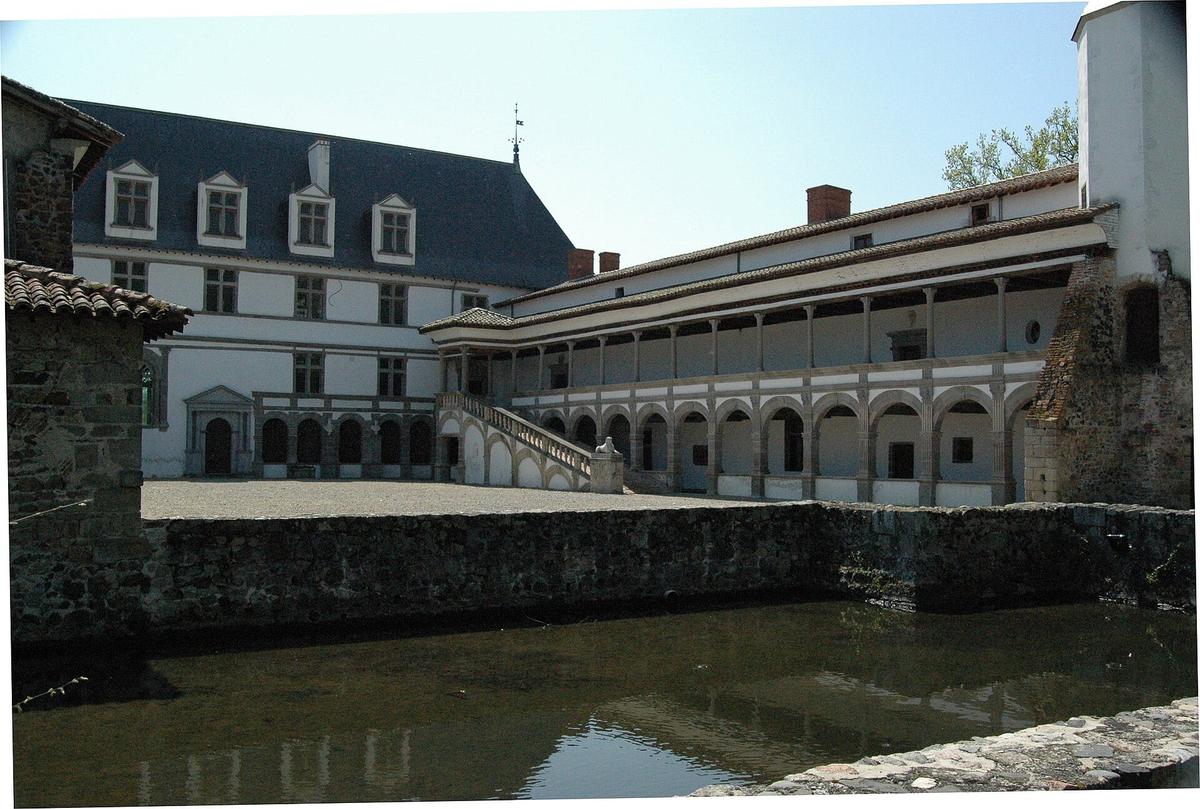
The sphinx. It guards the ramp up to the first floor. The one you see in the courtyard is a copy of the 16th-century sphinx. A permanent exhibition inside is devoted to it.
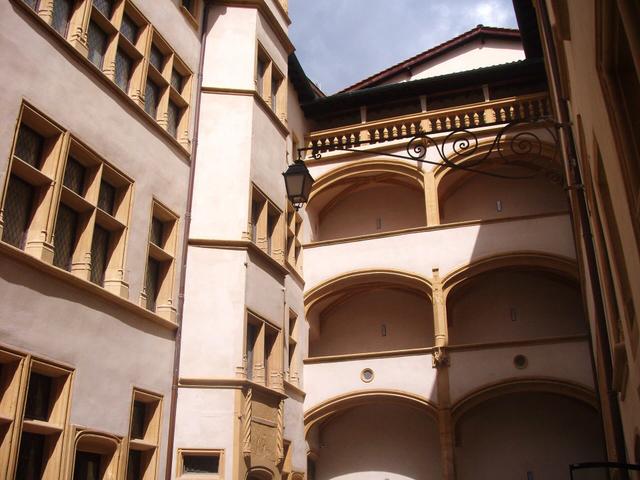
The gallery and the main courtyard. The twelve-column gallery gives the courtyard its Italian look. The guardroom recalls the site's defensive origins.
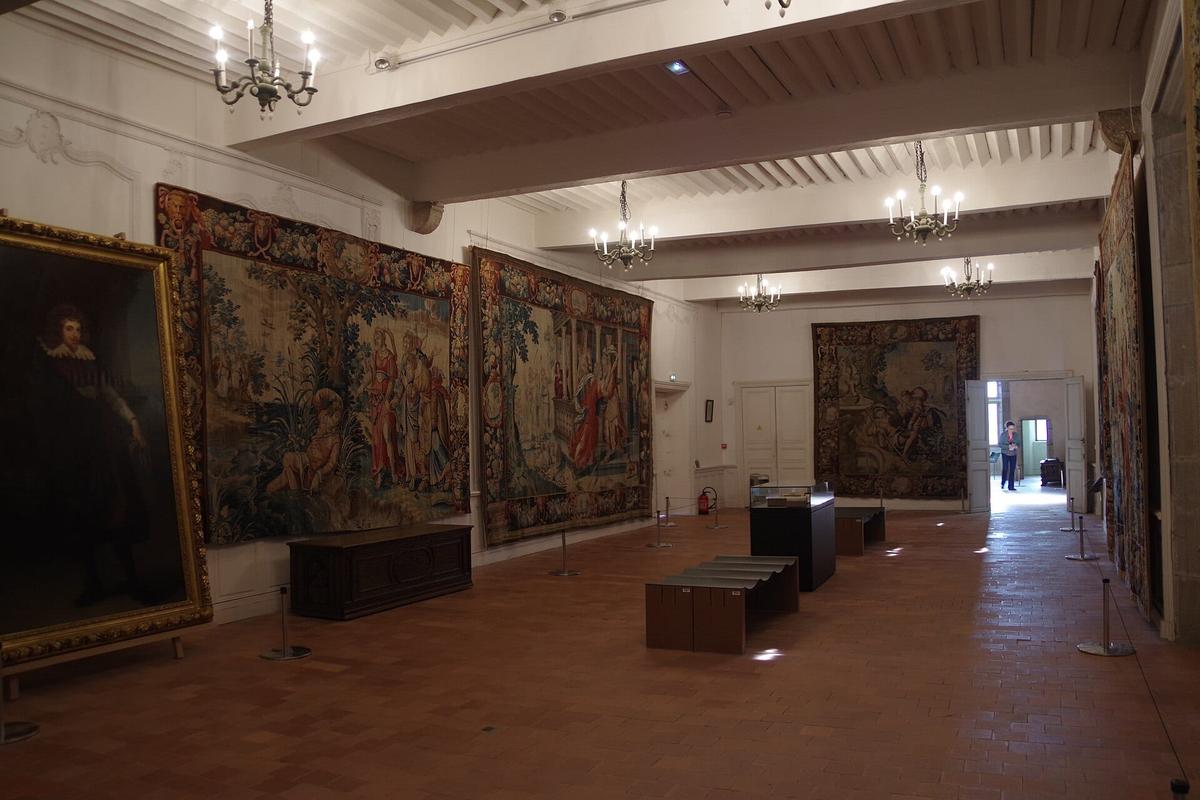
The state bedroom and the collections. The upstairs rooms display furniture and works linked to the Urfé family, including a Bruges tapestry showing Astrée and Céladon, the two heroes of the novel.
The Renaissance gardens
The gardens were studied from 1993 to 1998, then partly restored to their 16th-century state. The box parterre is divided into 16 symmetrical geometric compartments. In the centre, a rotunda shelters a white marble fountain, the fountain of the truth of love. It recalls the one the druid Adamas has built for Céladon in L'Astrée. A maze, a pergola, a pool and a reconstructed balustrade complete the garden.
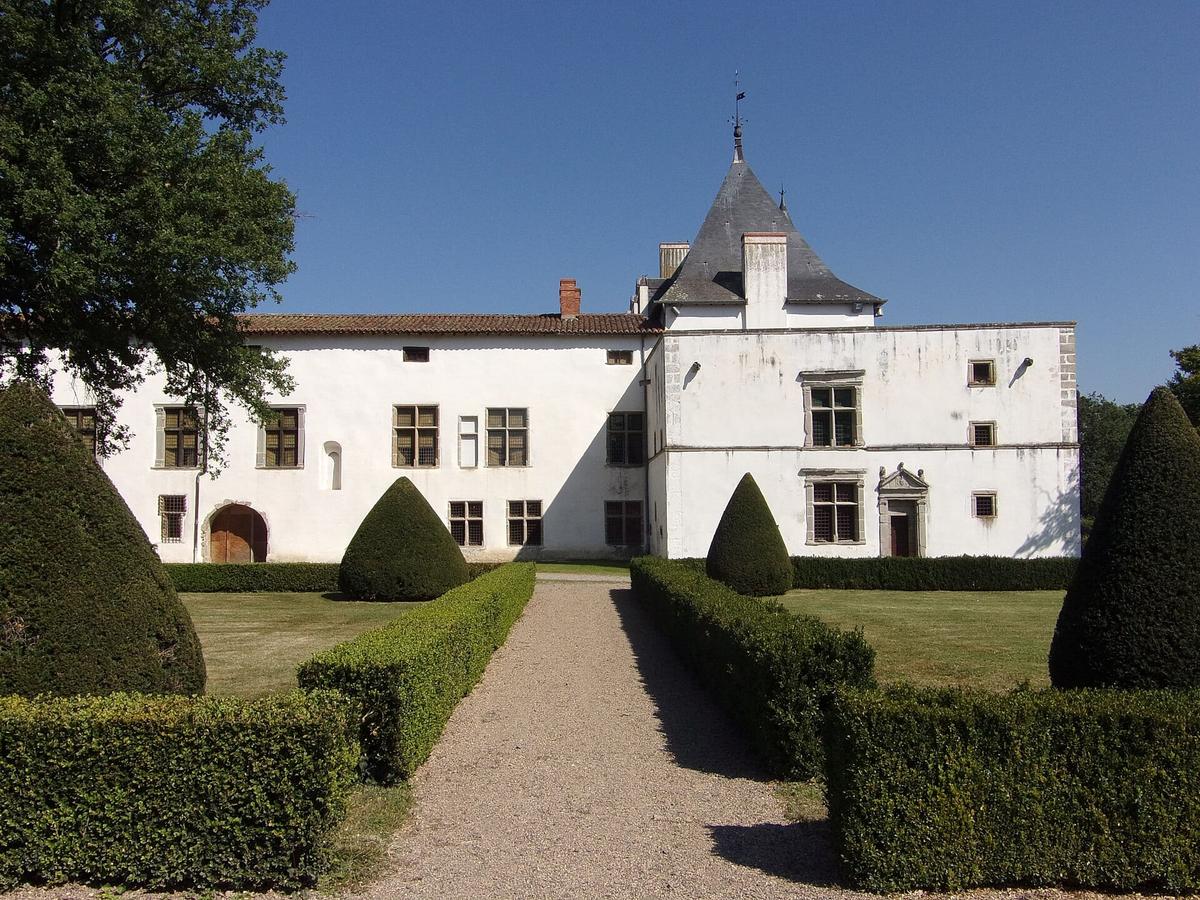

The green garden with its yew topiary, and the wildflower meadow, are open to wander during opening hours. From the château car park, a waymarked trail, "Le Grand Pré, le chemin de Céladon", is one of the four Astrée trails: a good way to extend your visit on foot along the Lignon.
How long should you allow?
The château does not publish a visit time. For the interior, the grotto, the chapel and the gardens, allow at least a morning or an afternoon, without rushing. Add time for the Céladon trail if the weather is good. In winter, the guided tour sets the pace: arrive a little before the announced time.

Visiting with children
The Bâtie runs workshops and shows for young audiences all year, as part of its cultural programme. The programme is published in the events calendar on the official website. Children under 12 get in free.
Children love the shell grotto: ask them to find the animals and faces hidden in the pebbles. The gardens and the riverside trail let them run off some energy after the visit. The Forez tourist office states that the site is pushchair accessible.
Accessibility and facilities
The Forez tourist office lists toilets, a shop, free parking (coaches included), a drop-off point for groups and a defibrillator. Wifi is free. The château has not published detailed information on wheelchair access: call before you come if you need it.
How to get there
By car. This is the easiest option. The château is on the Forez plain, near Boën-sur-Lignon, reached from the A72 and A89 motorways. Allow a little over an hour from Lyon. Montbrison is the nearest town. Parking is free.
By public transport. The château gives no practical public transport options. Without a car, the visit takes a lot of planning.
Renting a car. Lyon, with its station and airport, is the best starting point for a day in the Forez.
Partner links: if you book through these links, we earn a commission at no extra cost to you. Partner links · Learn more
What to see nearby on the same day
| Also worth seeing | Distance | Travel time |
|---|---|---|
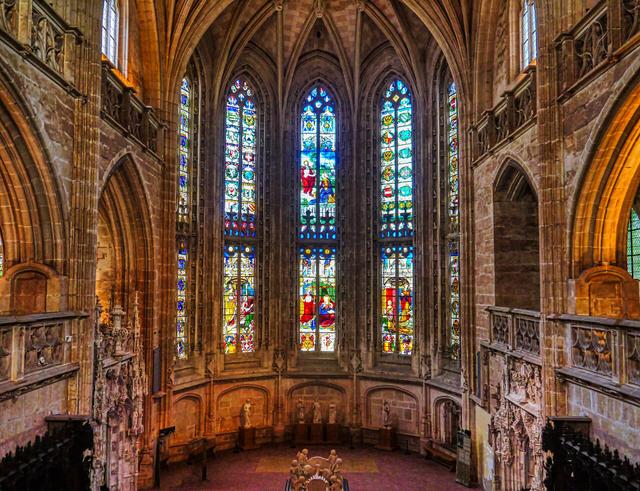
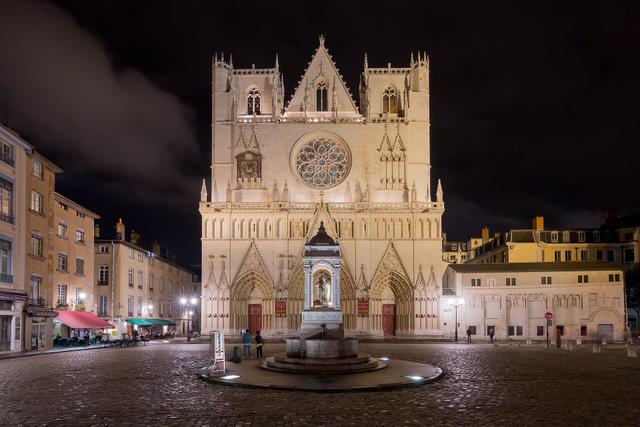
| Lyon Cathedral (Saint-Jean) | 90 km | 70 min by car |
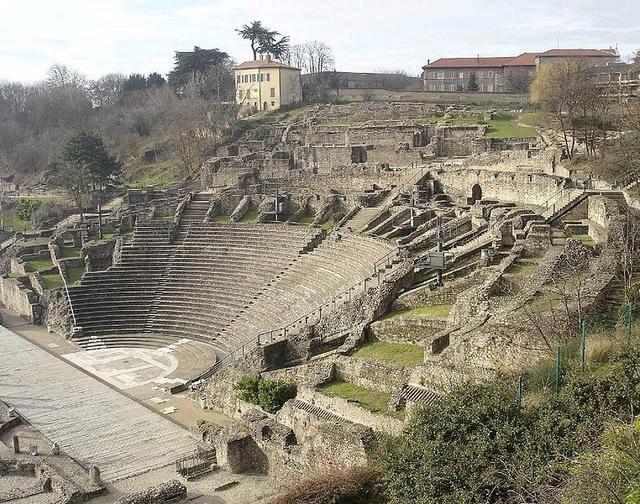
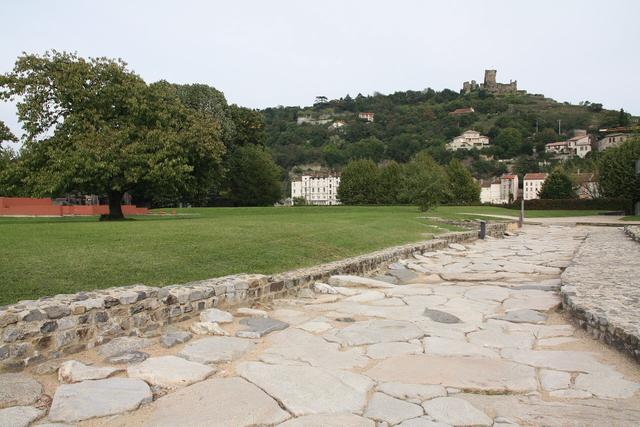
| Lugdunum Museum and Roman Theatres | 90 km | 75 min by car |
Approximate road distances and travel times.
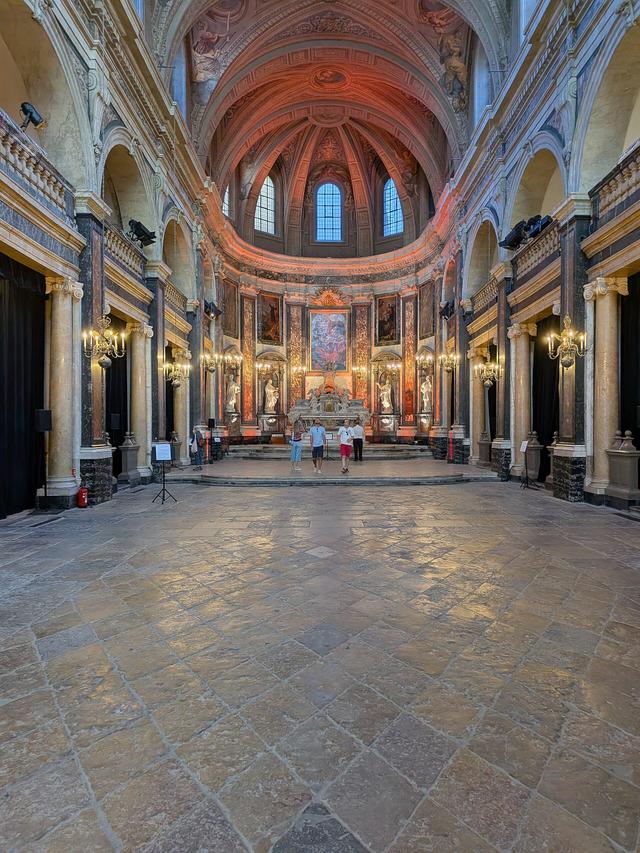
The Bâtie d'Urfé fits well into a stay in Lyon. Morning in the Forez, afternoon in Vieux-Lyon: Saint-Jean cathedral and the traboules are a little over an hour away. See also: Lyon Cathedral (Saint-Jean), Vieux Lyon and the traboules On Fourvière hill, Lugdunum and the Roman theatres show the region's other great era. See also: Lugdunum Museum and Roman Theatres
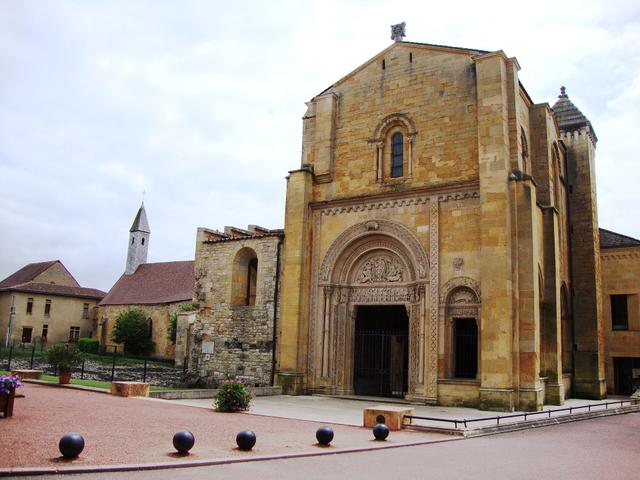
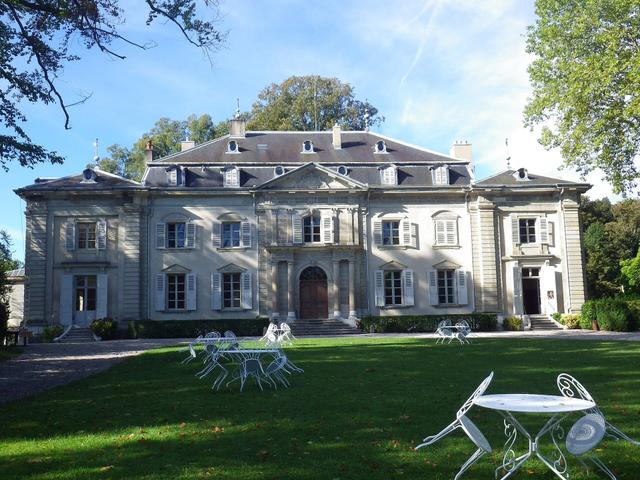
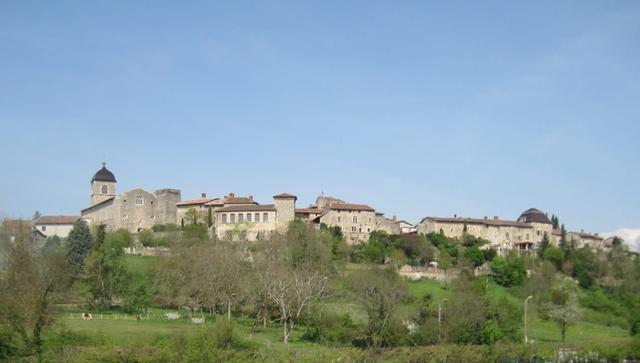
If you like Renaissance decoration, the Royal Monastery of Brou, in Bourg-en-Bresse, is from the same period: it was finished a few years before Claude d'Urfé began his work. See also: Royal Monastery of Brou The medieval town of Pérouges and Voltaire's château complete a heritage tour around Lyon. See also: Pérouges medieval village, Voltaire's Château, Lyon and Beaujolais
Where to eat and stay
The château has no restaurant. The neighbouring villages of the Forez plain and the town of Boën-sur-Lignon have places for lunch. A picnic by the Lignon after the visit is the nicest option in fine weather.
To stay, Montbrison is the most practical base, with its collegiate church and old town. Lyon has far more choice if you are doing a day trip.
Places to stay near Montbrison
FAQ
How much does it cost to visit the Bâtie d'Urfé?
€8 full price, €7 reduced, free for under-12s. An annual pass at €20 also covers three other sites run by the Loire departmental council.
Is the Bâtie d'Urfé open on Tuesdays?
No. The château is closed on Tuesdays from February to October, and opens only on Saturdays and Sundays in November and December.
Is the château open in January?
No, it is closed for the whole of January. It reopens on 1 February 2027.
Can I visit on my own in winter?
Not the interior. At the moment, it can only be seen with a guide, at weekends at 10:30 and 15:00. The ground-floor gardens remain open to wander freely.
What is the Bâtie d'Urfé grotto?
A 16th-century room entirely decorated with mythological scenes in pebbles, shells and coloured sand, considered unique in France.
Where is the chapel panelling now?
It is on display at the Metropolitan Museum of Art in New York, which received it as a gift in 1942.
Practical information
Opening hours 2026
| 1 February 2026 to 31 March 2026 | 10:00 – 17:00 (Closed: Tuesday) |
|---|---|
| 1 April 2026 to 31 October 2026 | 10:00 – 18:00 (Closed: Tuesday) |
| 1 November 2026 to 31 December 2026 | 10:00 – 17:00 (Closed: Monday, Tuesday, Wednesday, Thursday, and Friday) |
Closed: 1 May, 24 December, 25 December, and 31 December
Official ticket-office prices 2026
| Full price | €8 |
|---|---|
| Reduced rate | €7 |
| Free | under 12 |
Address
1061 route de la Bâtie d'Urfé, 42130 Saint-Étienne-le-Molard, France
Directions · Phone+33 4 77 97 54 68
On site and nearby
- On site: Toilets and wifi
- Nearest shops and pharmacy: Boën-sur-Lignon, 6 km away Straight-line distance, based on OpenStreetMap.
- Emergencies: 112 (all emergencies, free from any phone), 15 (SAMU, medical emergency)
Around the site, on Google Maps
With children
Family days out nearby: Richard-de-Bas Paper Mill (30 km), Maison de la Fourme d'Ambert (33 km), Château d'Aulteribe (45 km)
Swimming pools and play areas nearby, on Google Maps
Facts checked on 11 November 2026. Sources: batiedurfe.fr, batiedurfe.fr, loiretourisme.com, rendezvousenforez.com, batiedurfe.fr, techno-science.net, metmuseum.org
Map
In the same region
- Lyon Aquariumfrom €19.50Free under 3
- Chauvet Cave 2 (Grotte Chauvet 2)from €18Free under 10