Lalique Museum: planning your visit to Wingen-sur-Moder
Lalique Museum at a glance
- 1 October 2026 to 30 November 2026
- 10:00 – 18:00 (closed on Monday)
- Full price
- €9.50
- Free
- children under 6
- Time needed
- about 1 h 30 min
- Visitors per year
- about 51,635
- Where
- Wingen-sur-Moder
Official ticket-office prices, checked on 11 November 2026. Full opening hours, reduced prices and access
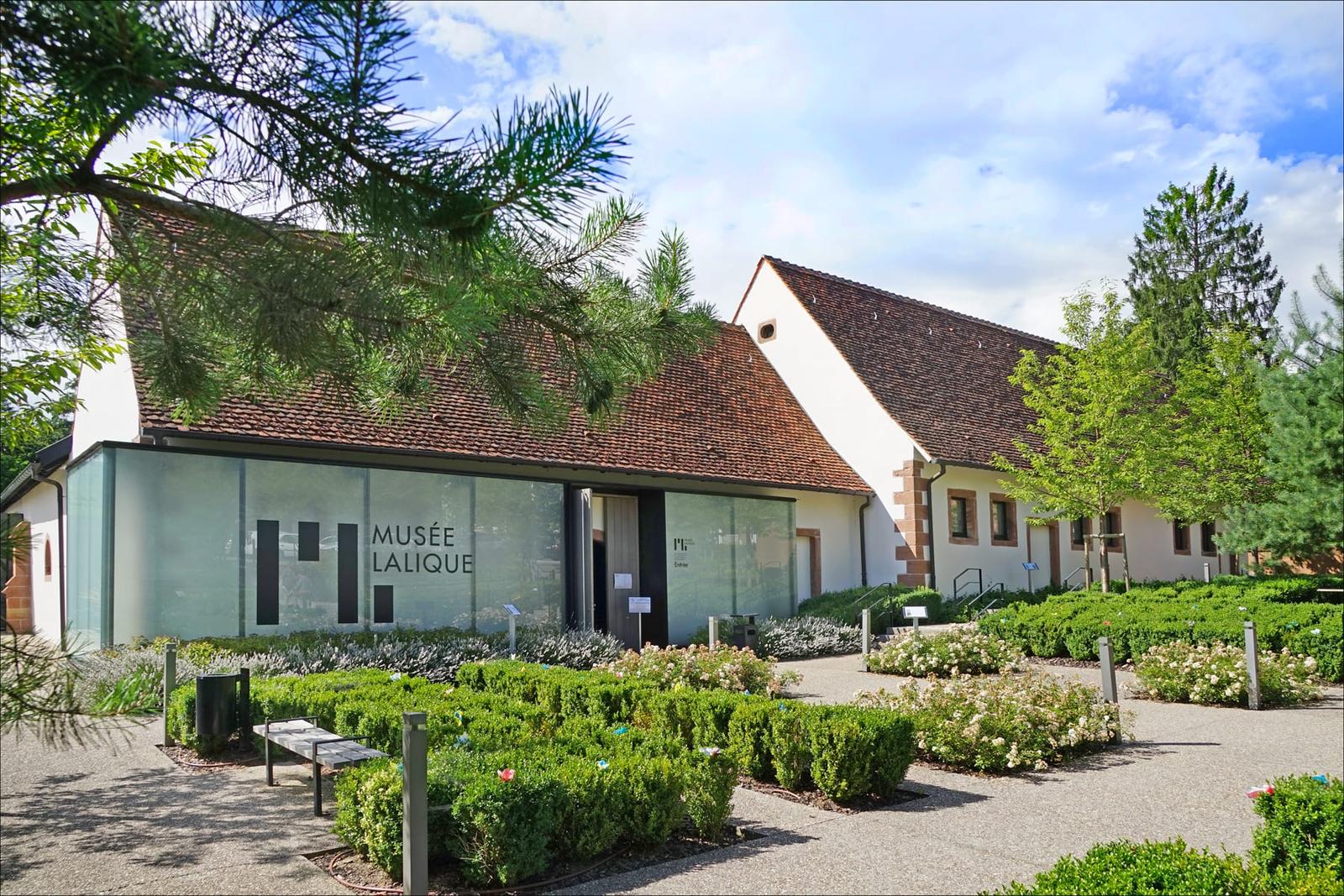

In a village in the Northern Vosges, an hour from Strasbourg, the Lalique Museum displays around 650 pieces by René Lalique and his successors: jewellery, perfume bottles, vases and objects in glass and crystal. It stands on the site of an 18th-century glassworks, a short walk from the Lalique crystal factory that still operates in the village. Here are the prices, opening hours, time needed, how to get there and our tips.
Lalique Museum at a glance
- Where: in Wingen-sur-Moder (Bas-Rhin), in the Northern Vosges Regional Nature Park, rue du Hochberg.
- Price: €9.50 full price, €6 reduced (ages 6 to 18, students, jobseekers, disabled visitors), free under 6. Temporary exhibitions are included.
- Open: daily from April to September and in December; Tuesday to Sunday in February, March, October and November. Closed in January (except the first few days) and on 25 December.
- Time needed: allow 1 h 30, the length of a guided tour.
- Getting there: Wingen-sur-Moder station on the Strasbourg-Sarreguemines line, then a 20-minute walk; two car parks on site.
- Accessibility: the whole museum is accessible to visitors with reduced mobility.
Why visit the Lalique Museum
For most people, the name Lalique means perfume bottles and crystal vases sold in luxury shops. The museum in Wingen-sur-Moder tells the story behind the name and what the house has made for more than a century. According to Wikipedia, it is the only museum in Europe devoted specifically to Lalique.
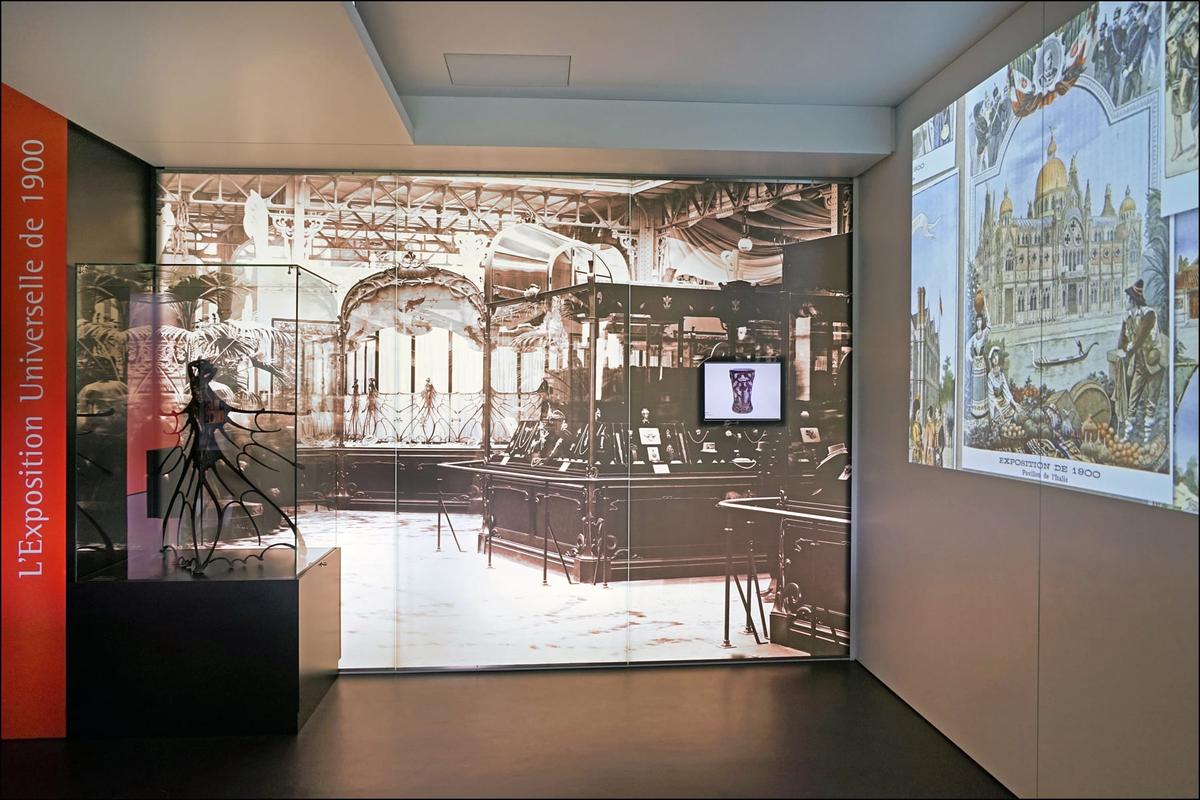

The reason it is in Alsace is simple: this is where Lalique makes its glass. René Lalique, first famous in Paris as an Art Nouveau jeweller, set up his glass production in Wingen-sur-Moder in 1921. The factory is still in the village, and in 2022 the company celebrated a hundred years in Alsace.
The museum opened in July 2011. The building is by architect Jean-Michel Wilmotte, working with Atelier Crupi, chosen in a competition for the way their design fits into the landscape of hills and forest. The galleries display around 650 pieces. They come from the museum's own collections, from items deposited by the Lalique company, from loans by Paris museums and from private collectors.
The museum welcomes around 51,635 visitors a year, according to Wikipedia. That is a lot for a forest village, but far fewer than the big sights of Alsace, so you can see the collections in comfort, without crowds.
How much does the Lalique Museum cost?
2026 prices published by the museum, permanent collections and temporary exhibitions included:
- Full price: €9.50.
- Reduced rate: €6, for ages 6 to 18, students, jobseekers and disabled visitors, with proof.
- Free: for children under 6, journalists, teachers, ICOM and French Ministry of Culture card holders, carers accompanying a disabled visitor and coach drivers.
There is no separate rate for visitors from outside the EU: everyone pays the same price.
The Museums-PASS-Musées. This cross-border pass covering Alsace, Baden-Württemberg and northern Switzerland gives free entry to the museum. If you plan to visit several museums in the region during your stay, work out whether it pays for itself.
The Pass Hanau-La Petite Pierre. The museum is part of this pass for sites in the Hanau and La Petite-Pierre area: with it, your fifth visit is free. Ask at the front desk of the first site you visit.
Free days. Entry is free during the European Artistic Crafts Days (in April) and the European Heritage Days (in September). In December, the Christmas exhibition, "Happy Cristal" in 2026, is free, but the permanent collections are still charged.
Groups. From 15 people, entry drops to €8 (and €4 at the reduced rate), with advance booking. One free ticket is given for every fifteen paid. A guided tour of the collections costs €95 per group, on top of the tickets.
Do you need to book?
No. For an individual visit, just turn up at the front desk. Booking is required for groups (call +33 3 88 89 08 14 or email reservation@musee-lalique.com), for guided tours and for visits outside opening hours.
For international visitors, a visit booklet in English and other languages is sold for €2.
If you are travelling without a car and would rather join an organised day out in Alsace, a few operators run tours from Strasbourg.
Partner links: if you book through these links, we earn a commission at no extra cost to you. Partner links · Learn more
Opening hours 2026 and closing days
Opening hours published by the museum:
- February and March: Tuesday to Sunday, 10:00 – 18:00.
- April to September: daily, 9:30 – 18:30.
- October and November: Tuesday to Sunday, 10:00 – 18:00.
- December: daily, 10:00 – 18:00, closing at 16:00 on 24 and 31 December.
Last entry is one hour before closing. The museum is closed on 25 December. In January, it opens only for the first few days, then closes for the rest of the month: in 2027, it will be open on 2 and 3 January, then closed from 4 January 2027 to 31 January 2027.
The Monday trap. In February, March, October and November, the museum is closed on Mondays. If you are spending a long weekend in Alsace out of season, keep the museum for Saturday or Sunday.
The best time to go. Weekday mornings are the quietest. In December, the Christmas decorations and the free exhibition draw more people, especially at weekends, but it is also the season when the crystal looks its best under the lights. Spring and autumn are ideal for pairing the visit with a forest walk around the village.
How long does it take to visit?
Allow 1 h 30 to see the collections without rushing. That is the length of the museum's guided tour, and the museum suggests about two hours on site for groups. Add the temporary exhibition, the shop and a coffee at the bistro, and plan on half a day.
If you love Art Nouveau or glass, you can easily stay longer: many pieces are small and you need to get close to the cases.
What to see at the Lalique Museum
René Lalique's jewellery. Before the glass came the jewellery. René Lalique made his name in Paris in the late 19th century with Art Nouveau jewels combining gold, enamel and stones with humbler materials such as horn and glass. These are often the finest pieces in the museum.
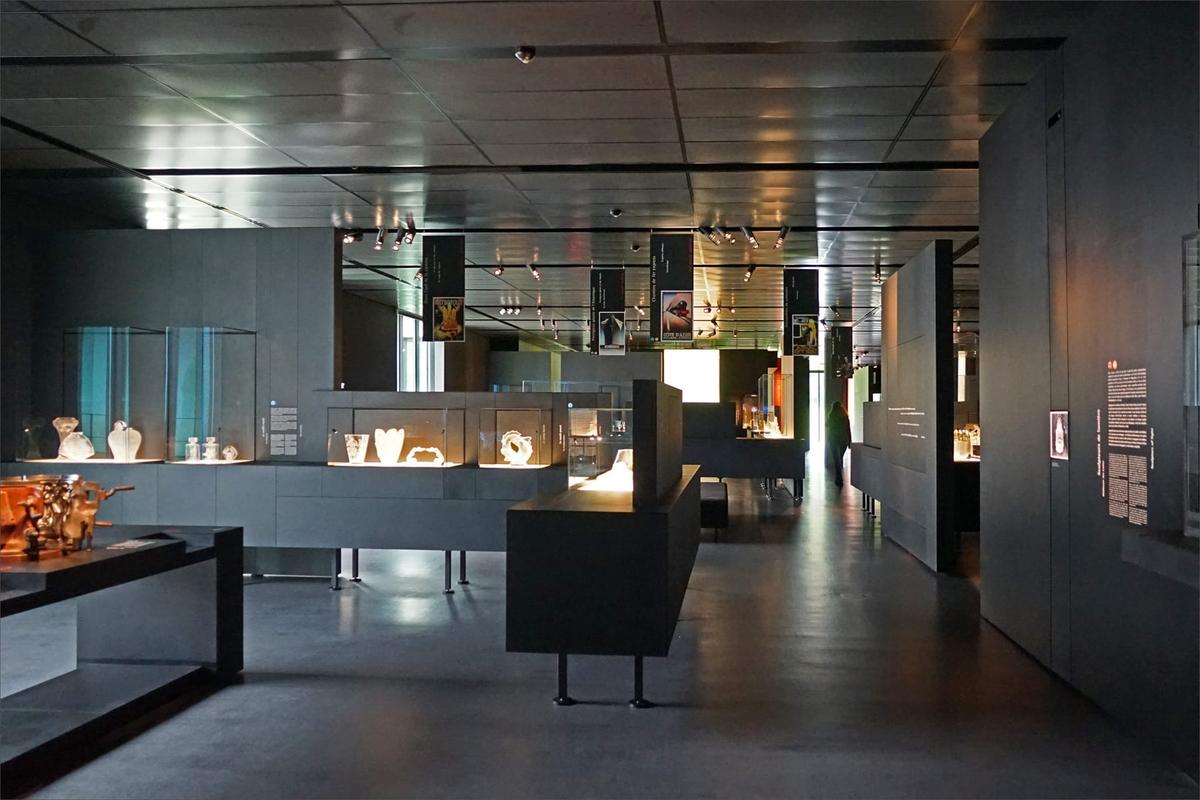

René Lalique's glass. The museum then shows how the jeweller became a glassmaker, and then an industrialist. Perfume bottles, vases, tableware and moulded glass decorations reveal his love of nature: women, animals, plants and insects appear again and again.
His successors. The story does not stop with René Lalique. The museum also shows the work of those who ran the company after him, up to today's crystal production. That is the point of visiting the museum where the brand still makes its pieces.
The craft. The exhibition design, by dUCKS scéno, helps you understand how a piece of glass or crystal is made. In 2020, the museum even showed an exhibition of photographs by Karine Faby on the jobs inside a crystal factory that you cannot visit. The Lalique factory in the village is not open to the public, so the museum is the only way to see this work up close.
The temporary exhibition. The museum changes its exhibitions every year, and they are included in the ticket. In 2026, the summer exhibition "Lalique Art" showed pieces created with architects and artists, including Zaha Hadid and James Turrell. In December, the Christmas exhibition "Happy Cristal" takes over.
The Hochberg site. The museum is built on the site of a glassworks founded in 1715. It made bottles and watch glass, then mainly window glass. It closed in 1868 and became a farm. The site has been a listed historic monument since 1996. Lalique never made glass here: it was the company's presence in the village that decided the choice of location.
Two stories about the site
A glassworks under the car park. In December 2007, before building work began, archaeologists from the Rhine regional archaeology service excavated the site. They studied the "halle", the large timber building on stone foundations where the glassblowers worked. Its remains now lie under the museum's north car park: you park on top of an 18th-century workshop.
The master glassmaker's château. Across the street from the museum, Château Teutsch was built in 1863 by Édouard Teutsch, who later owned the glassworks. For many years it was a holiday camp for local children, until the Lalique company turned it into a hotel and restaurant.
Visiting with children
The museum runs programmes for schools and holiday clubs, a sign that it knows how to talk to children. Check the official website for family activities during the school holidays. For a self-guided family visit, a few ideas:
- Children under 6 go in free, and the reduced rate applies up to age 18.
- Set them a challenge: find an insect, a fish, a bird and a woman's face in the display cases. Nature motifs are everywhere in Lalique's work.
- The visit is not very long, so it suits children who get bored quickly in museums.
- The whole museum is accessible to visitors with reduced mobility, which also makes things easier with a pushchair.
To end the day outdoors, the forests of the Northern Vosges around Wingen-sur-Moder have waymarked trails, and Lichtenberg Castle is a few kilometres away.
Accessibility
The whole museum is accessible to visitors with reduced mobility. It holds the Tourisme et Handicap label for physical, hearing and learning disabilities. Two wheelchairs and a walking frame can be borrowed free of charge, on request, as well as folding stools. Adapted tours for partially sighted and blind visitors are available on request (mediation@musee-lalique.com).
According to the acceslibre listing, the museum has reserved parking spaces and accessible toilets. The first car park has an easy path to the entrance; from the second, call the front desk and someone will come to meet you.
How to get to the Lalique Museum
By train. It can be done, which is rare for a countryside museum. Get off at Wingen-sur-Moder station, on the Strasbourg-Sarreguemines-Saarbrücken line, then walk about 20 minutes to the museum. Check train times on the TER Grand Est website: there are fewer trains at weekends.
By car. Wingen-sur-Moder is north-west of Strasbourg, between Ingwiller and Bitche. The museum has two car parks: P1, and P2, reached from the roundabout, which also takes coaches.
Renting a car. Without a car, it is hard to combine the museum with the castles of the Northern Vosges. The easiest option is to rent a car in Strasbourg.
What to combine it with on the same day
| Also worth seeing | Distance | Travel time |
|---|---|---|
| Lichtenberg Castle | 13 km | 20 min by car |
| Fleckenstein Castle | 45 km | 50 min by car |
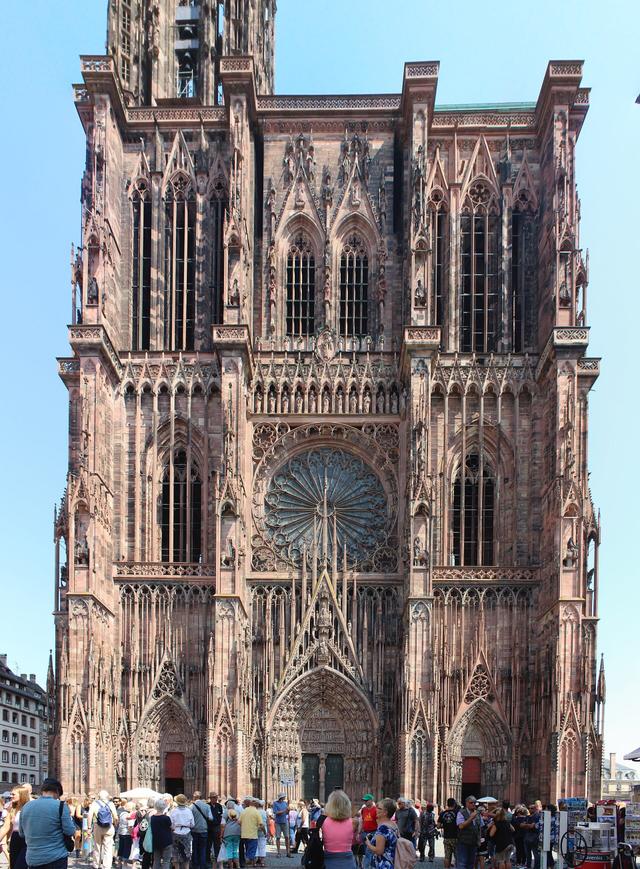
| Strasbourg Cathedral | 60 km | 75 min by public transport |
Approximate road distances and travel times.
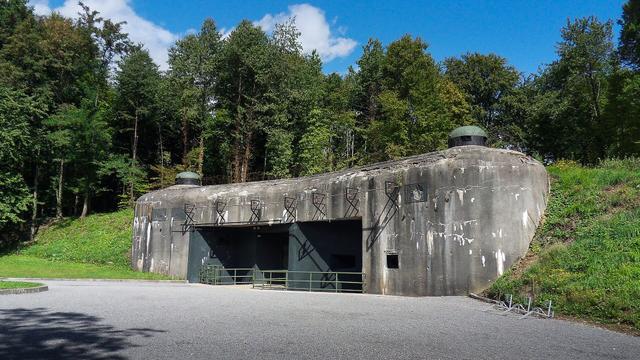
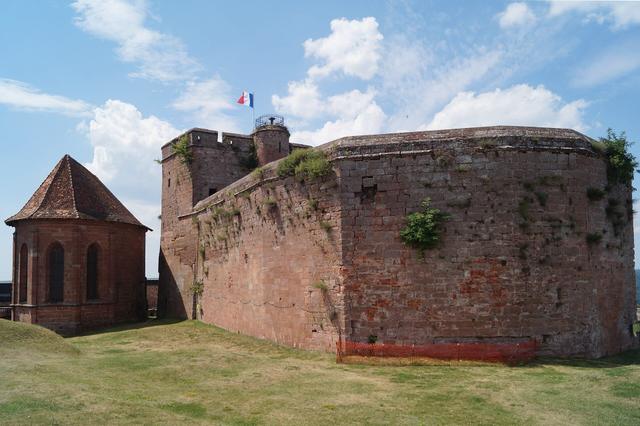
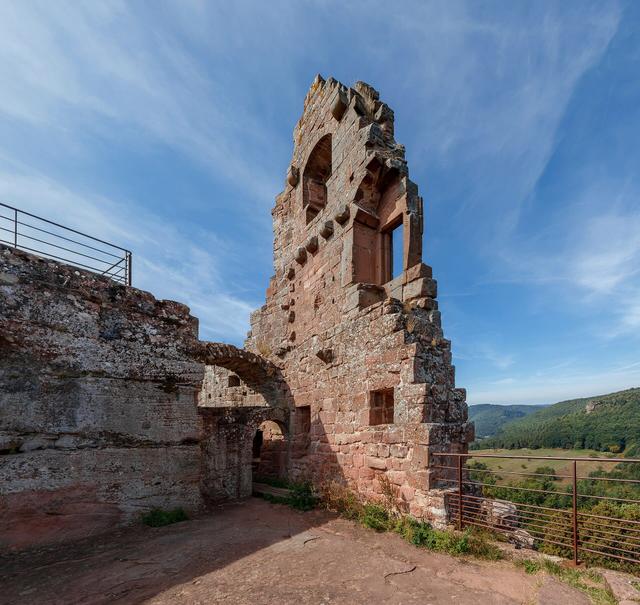
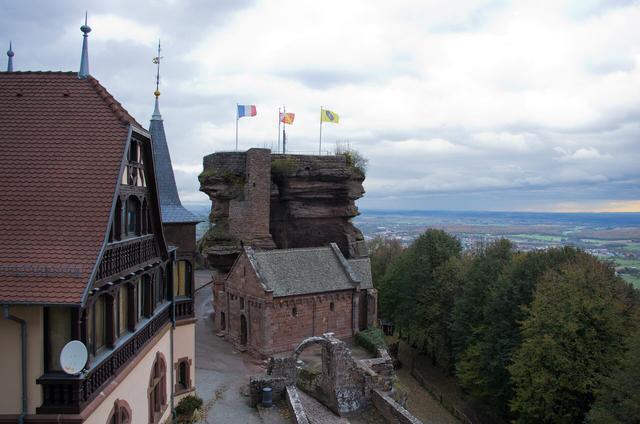
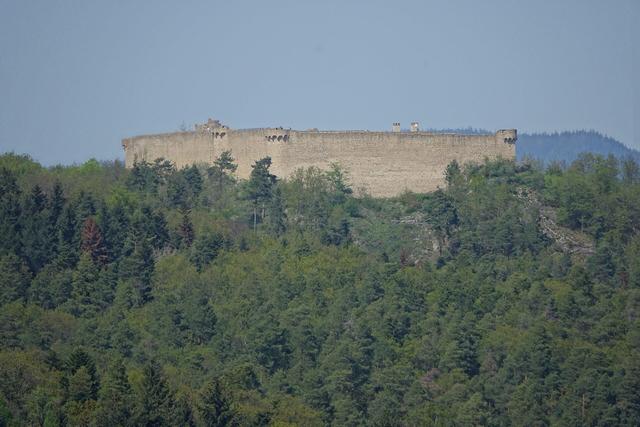
Lichtenberg Castle, about twenty minutes away by car, is the natural next stop: a fortified castle perched above the forest, restored with contemporary architecture. See also: Lichtenberg Castle Further north-east, towards Wissembourg, Fleckenstein Castle and Fort Schoenenbourg on the Maginot Line round off a day in northern Alsace. See also: Fleckenstein Castle, Fort de Schoenenbourg
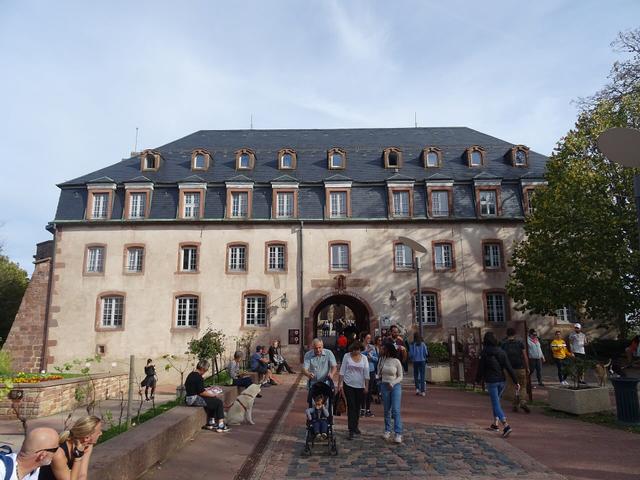
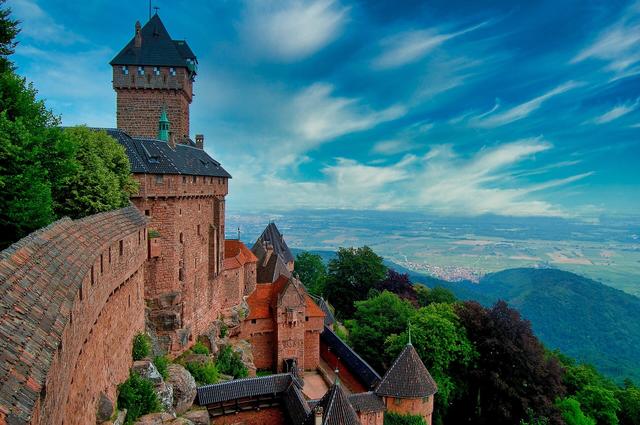
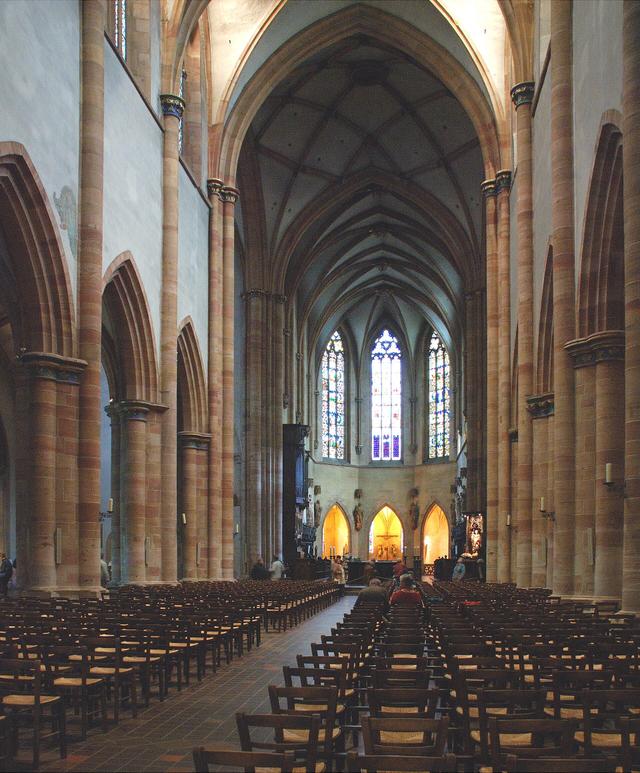
If you are staying in Strasbourg, the museum makes a half-day trip by train, with time to see the cathedral when you get back. See also: Strasbourg Cathedral For a longer stay in Alsace, Haut-Koenigsbourg Castle and the Unterlinden Museum in Colmar are further south. See also: Haut-Koenigsbourg Castle, Unterlinden Museum, Alsace
Where to eat and stay
At the museum. The museum bistro serves coffee and simple meals. To book a table, call +33 3 88 02 54 04. The shop, at the entrance, sells Lalique pieces, books, stationery and games; visitors from outside the European Union can claim a VAT refund (tax-free shopping). There is a cloakroom in the entrance hall.
Nearby. Château Teutsch, opposite the museum, houses the Lalique hotel and restaurant. On a tighter budget, the villages of the Northern Vosges (La Petite-Pierre, Ingwiller, Bitche on the Lorraine side) have B&Bs and family-run hotels. Strasbourg remains the best base if you are visiting without a car.
Places to stay near Wingen-sur-Moder
FAQ
How much is a ticket to the Lalique Museum?
€9.50 full price and €6 reduced (ages 6 to 18, students, jobseekers). Entry is free under 6 and with the Museums-PASS-Musées. Temporary exhibitions are included.
Is the Lalique Museum open on Mondays?
From April to September and in December, yes, it opens every day. In February, March, October and November, it is closed on Mondays.
When is the Lalique Museum closed?
On 25 December and for almost all of January. In 2027, it opens on 2 and 3 January, then closes until 31 January 2027.
Can you visit the Lalique factory?
No. The Lalique factory in Wingen-sur-Moder is not open to the public. The museum explains the glassmakers' skills through its collections and exhibitions.
Can you get to the Lalique Museum by train?
Yes. Wingen-sur-Moder station is on the Strasbourg-Sarreguemines line, about a 20-minute walk from the museum.
Is the museum wheelchair accessible?
Yes, the whole museum is accessible, and two wheelchairs can be borrowed free of charge on request.
Practical information
Opening hours 2026
| 1 February 2026 to 31 March 2026 | 10:00 – 18:00 (Closed: Monday) |
|---|---|
| 1 April 2026 to 30 September 2026 | 9:30 – 18:30 |
| 1 October 2026 to 30 November 2026 | 10:00 – 18:00 (Closed: Monday) |
| 1 December 2026 to 31 December 2026 | 10:00 – 18:00 |
| 2 January 2027 to 3 January 2027 | 10:00 – 18:00 |
Closed: 25 December
Official ticket-office prices 2026
| Full price | €9.50 |
|---|---|
| Reduced rate | €6 |
| Free | children under 6 and journalists |
Address
Musée Lalique, 40 rue du Hochberg, 67290 Wingen-sur-Moder, France
Directions · Phone+33 3 88 89 08 14
On site and nearby
- On site: Toilets and food and drink
- Nearest shops and pharmacy: Wingen-sur-Moder, less than 1 km away Straight-line distance, based on OpenStreetMap.
- Emergencies: 112 (all emergencies, free from any phone), 15 (SAMU, medical emergency)
Around the site, on Google Maps
With children
Family days out nearby: Lichtenberg Castle (9 km), Citadel of Bitche (15 km), Haut-Barr Castle (22 km)
Swimming pools and play areas nearby, on Google Maps
Facts checked on 11 November 2026. Sources: musee-lalique.com, musee-lalique.com, fr.wikipedia.org, acceslibre.beta.gouv.fr
Map
In the same region
- La Ferme aux Rennes (Reindeer Farm)from €7Free under 3