Hunspach: visiting the white village of northern Alsace
Hunspach at a glance
- Admission
- Free
- Time needed
- about 1 h 30 min
- Where
- Hunspach
Facts checked on 12 November 2026. Full opening hours, reduced prices and access
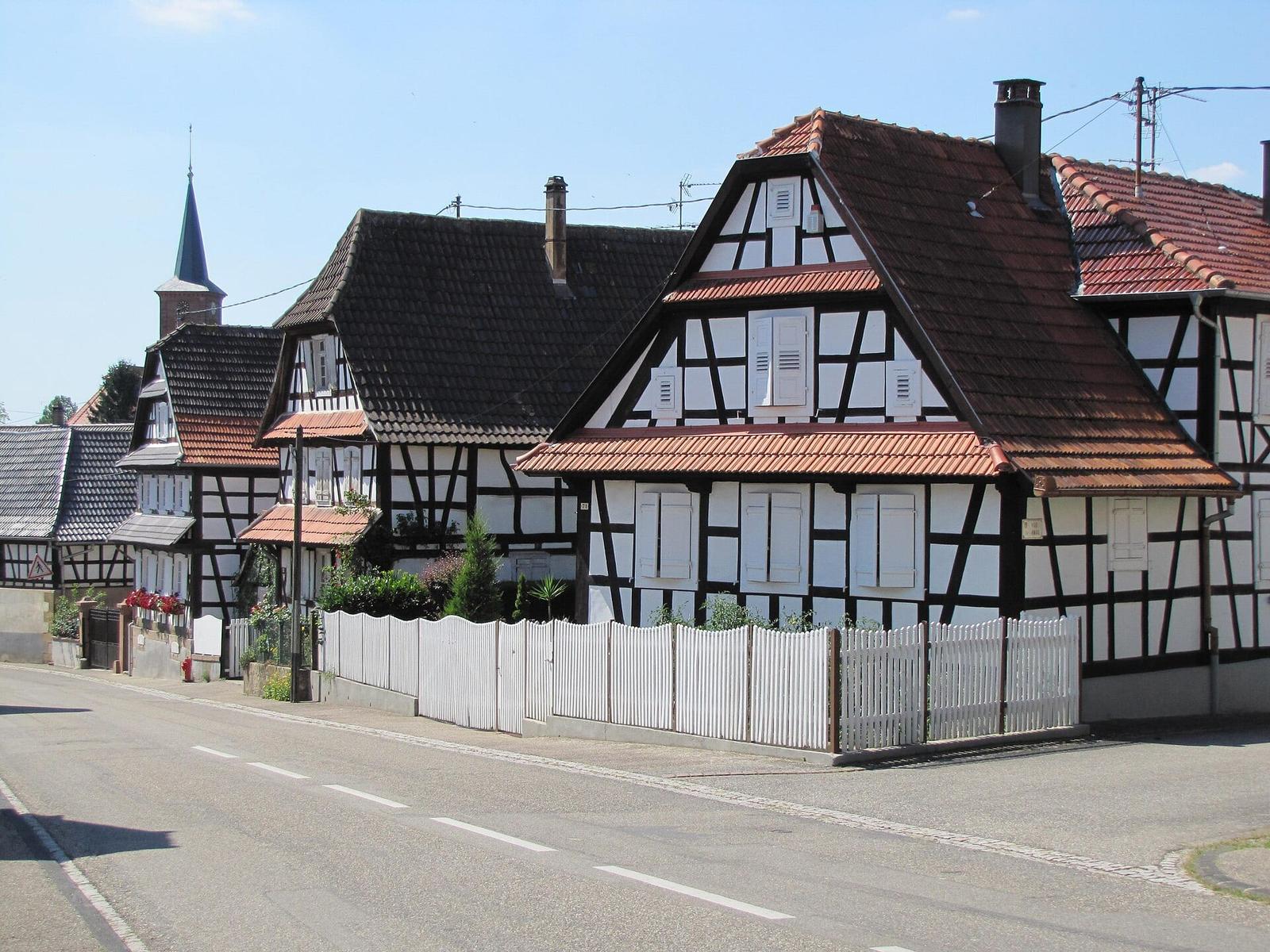

Hunspach looks nothing like the villages of the Alsace Wine Route. Here the half-timbered houses are whitewashed, the roofs have hipped ends and some windows still have their bulging panes, which let you see out without being seen. The village is free to explore, a few minutes from Fort de Schoenenbourg. Here is what to see, where to park, how long to allow and when to come.
Hunspach at a glance
- Where: in the Outre-Forêt area of northern Alsace (Bas-Rhin), just south of Wissembourg and about an hour from Strasbourg.
- Price: the village is free to visit, at any time. Parking is free all year round.
- Time needed: 45 minutes for the heritage trail, 1 to 2 hours at a relaxed pace.
- When to come: from May to September for the geraniums, or for the Christmas windows trail, from 28 November 2026 to 6 January 2027.
- Best for: lovers of villages and photography, families, and Maginot Line visitors heading to Fort de Schoenenbourg.
- Good to know: Hunspach is a lived-in village of 625 people. The farmyards are private: look at them from the street.
Why visit Hunspach
In 2020, Hunspach won the TV contest "Le Village préféré des Français" (France's favourite village). It was the third Alsace village to win, after Eguisheim in 2013 and Kaysersberg in 2017. The village is also one of the Most Beautiful Villages of France, holds the Villes et Villages Fleuris label and lies within the Northern Vosges Regional Nature Park.
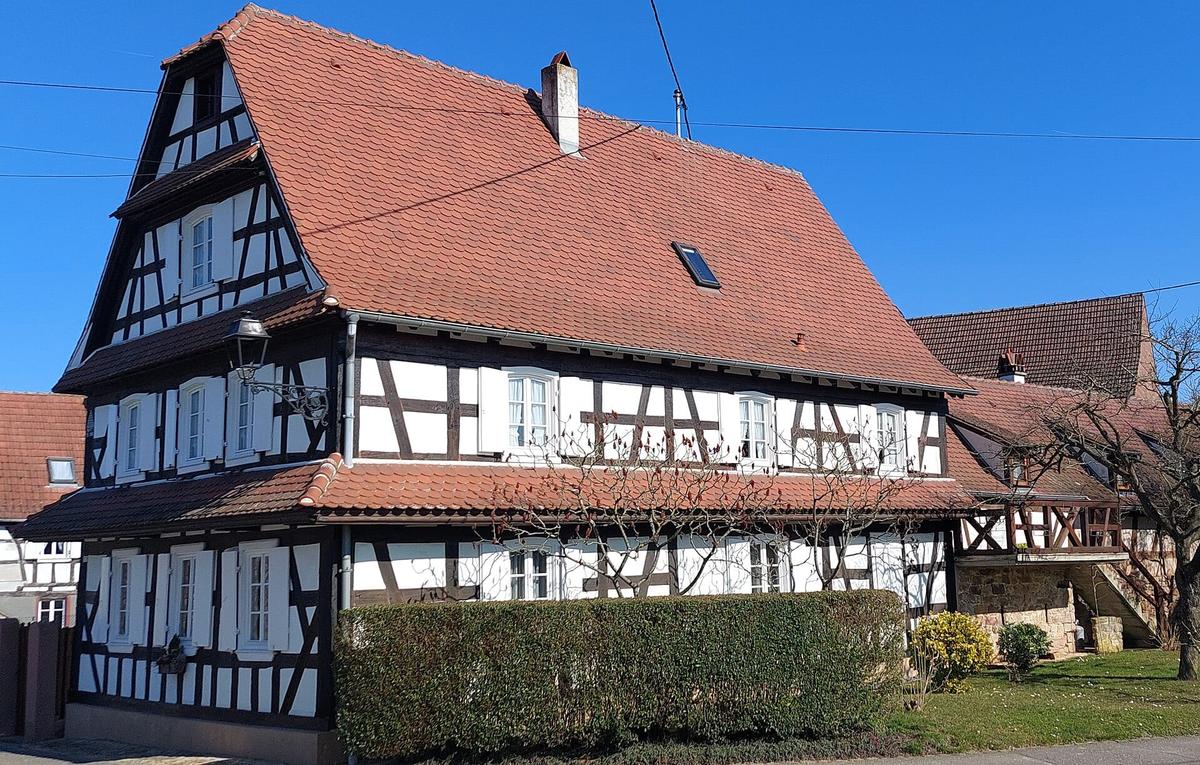

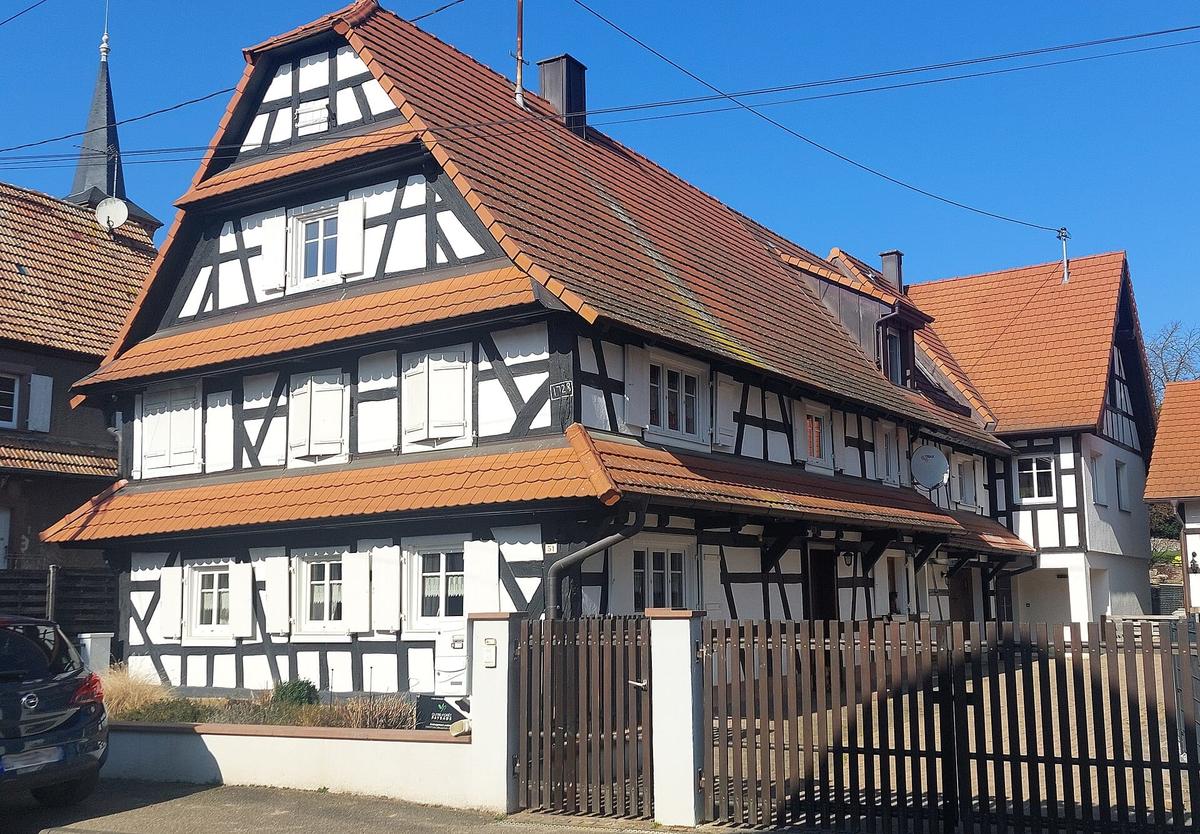
What strikes you on arrival is the colour. In the Haut-Rhin, in southern Alsace, the house fronts are pink, yellow or blue. In Hunspach, almost all the houses are white, with dark beams and red geraniums at the windows. The main street has kept a rare harmony: the same shapes, the same hipped roofs, the same large farmyards opening onto the street, typical of the Wissembourg area.
This is not a museum village. Some of the farmyards are still working farms. It is also a small, quiet village: 625 inhabitants in 2022, over 5.49 km².
Hunspach had a reputation before television: in 1978, the programme La France buissonnière had named it a "village where life is good".
The bulging window panes: see without being seen
This is the detail people come to Hunspach for. On some houses, the window panes are not flat but bulge slightly outwards. The village's website explains their purpose: they let you see without being seen.
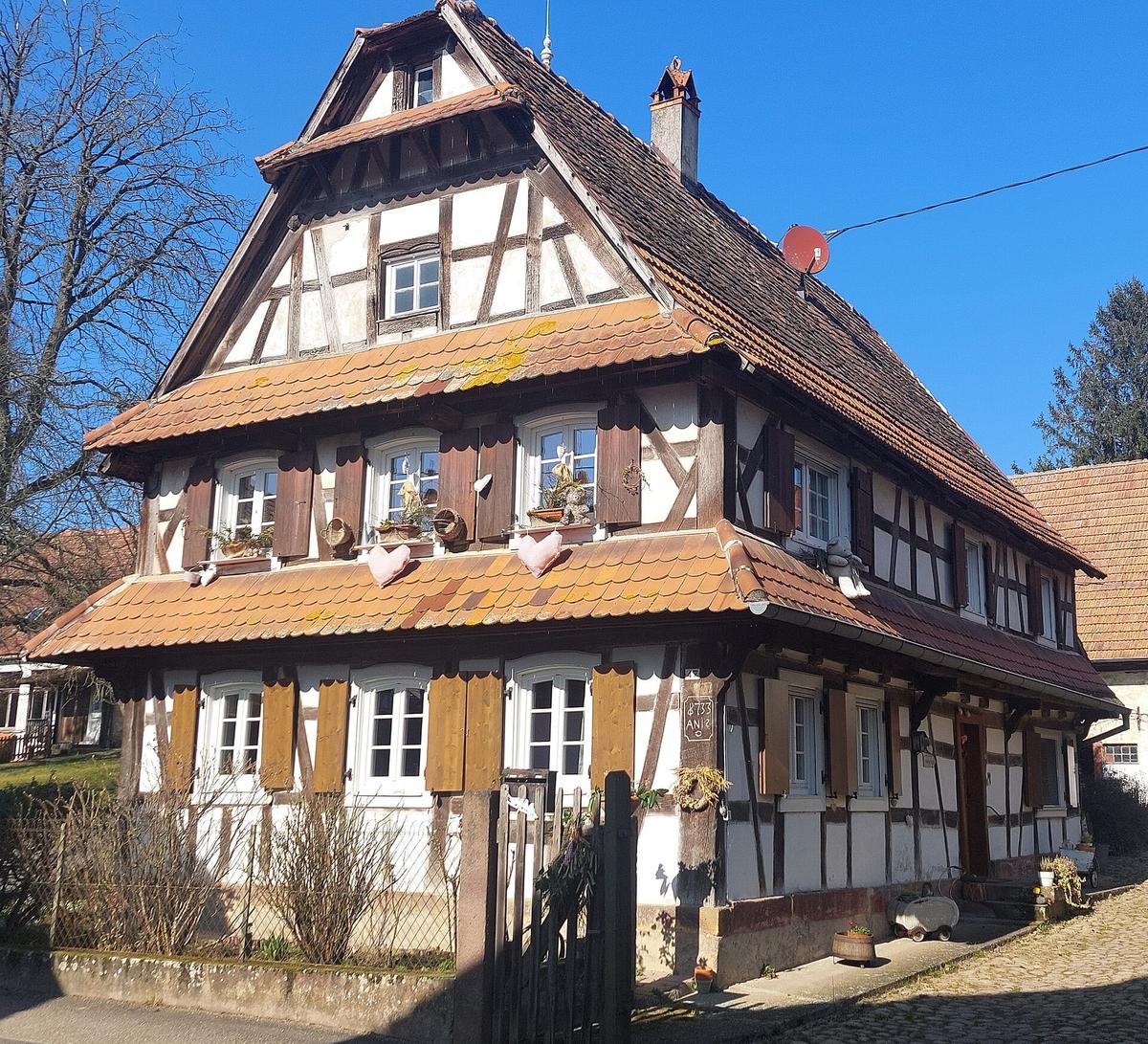

From inside, you see the street normally. From outside, passers-by only see their own distorted reflection. According to The Connexion, which spoke to residents, many houses had no curtains: the bulging glass did the job of a net curtain.
How to spot them. Walk slowly along the main street and look at the windows at an angle, not straight on. Bulging panes catch the light differently from flat ones and distort the reflection of the houses opposite. Not every house still has them: finding them is a game, especially with children.
A short history of Hunspach
A village recorded as early as 1298. According to Wikipedia, the first written mention of Hunspach dates from 1298. In 1504, the village passed to the Counts Palatine of Zweibrücken (Deux-Ponts in French), and it stayed with them until the end of the Ancien Régime. The Protestant Reformation was introduced in 1530, which is why the village church is a Reformed church.
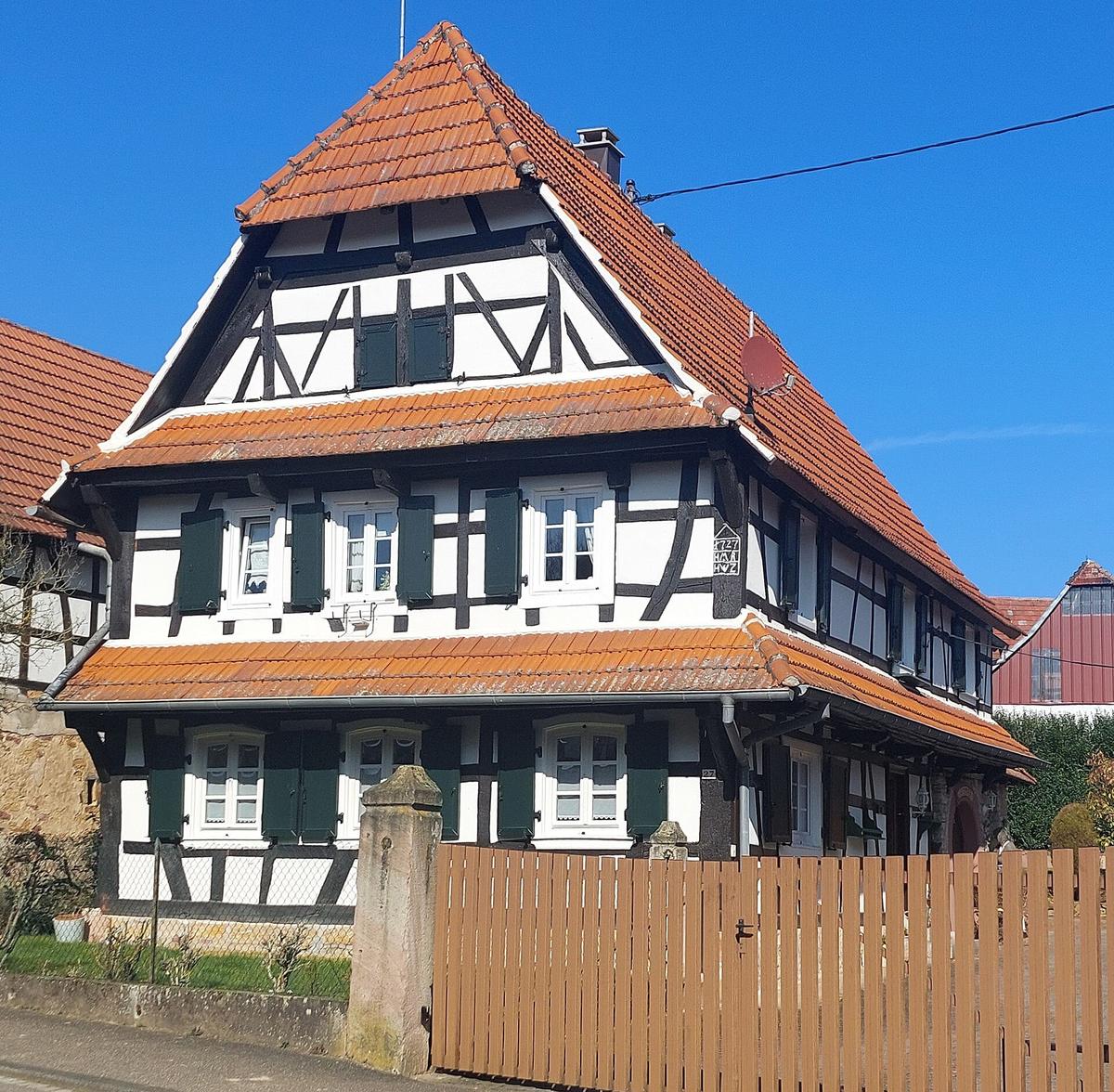

Destroyed in 1633, rebuilt by immigrants. During the Thirty Years' War, imperial troops destroyed the village in 1633. Wars and plague delayed the rebuilding. Immigrants from Switzerland and, according to The Connexion, Protestant refugees from Picardy resettled the village. This is why the houses you see today are more recent than you might think: the oldest dates from 1713.
A "Swedish" village. The Dukes of Zweibrücken were linked by marriage to the Swedish crown, and the press likes to point out that Hunspach was Swedish before it was French. The village only became French in 1787, two years before the Revolution.
The 1939 evacuation. The village lies on the Maginot Line. On 1 September 1939, residents were ordered to leave within a few hours. According to residents' memories collected by The Connexion, they travelled for three days by cart to west-central France, told to leave their doors open and set the livestock free. They came back a year later to find their houses standing, but looted.
Spared by the war. Hatten and Rittershoffen, a few kilometres away, were flattened in the fighting of winter 1944-1945. Hunspach was left almost intact, which is why you can still see a whole street of old houses today.
Is Hunspach free to visit?
Yes. The village is open access, at any time and all year round. There is no ticket, no entry fee and parking is free. The Christmas windows trail is free too.
The only possible costs are a group guided tour (booked through the tourist office), a horse-drawn carriage ride when one is offered, and shopping in the village. Fort de Schoenenbourg, next door, charges admission.
Where to park in Hunspach
Parking is free all year round, according to the Most Beautiful Villages of France association. The Alsace tourist office mentions a car park next to the cemetery. The village is small: wherever you park, you can then do everything on foot.
Motorhomes. The Most Beautiful Villages of France association mentions a motorhome area less than a quarter of an hour's walk from the centre. During the Christmas period, the Alsace tourist office announces free parking nearby, including for motorhomes and coaches.
Our tip: do not park on the main street or in front of farmyard entrances. These are working farms and lived-in houses, and farm vehicles need to get through.
Things to do in Hunspach
The main street. This is the heart of the visit. It is lined with the finest white half-timbered houses, with their hipped roofs and open farmyards. The yards are private: look at them from the gate without going in.
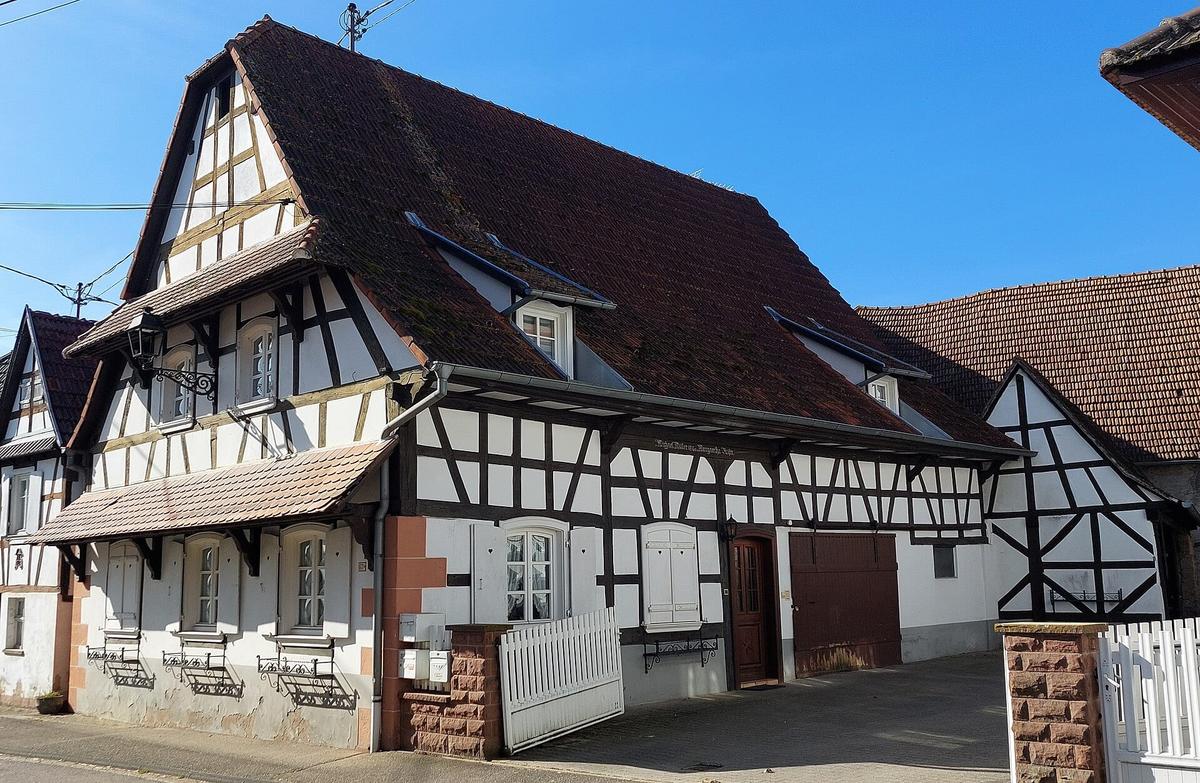

The heritage trail. A walk of about 45 minutes takes you round the village. It tells local stories and explains the symbols hidden on the house fronts: carvings on the posts, inscriptions on the lintels, patterns in the timber framing. Ask for the map at the tourist information office.
The Reformed church. The Protestant church was built in 1757. Its neo-Romanesque bell tower in pink sandstone is more recent, dating from 1874. Inside, the organ is the work of organ builder Johann Karl Baumann, in 1782. No opening hours are published: the church hosts concerts and the start of the Sunday Christmas guided tour, two good chances to go inside.
The town hall-school and the pastor's house. Both buildings are registered historic monuments, like several farms on Rue Principale and the farm at 12 Rue des Moutons.
The resting benches. Wikipedia mentions a bench known as the "King of Rome" bench and resting benches of Empress Eugénie. These large stone slabs on two uprights were used to set down heavy loads along the roads. You will find several in northern Alsace.
Kelsch'Idée. In an old barn, this community-run space combines a small museum of everyday life in the past, a reuse centre and a shop selling kelsch, the blue and red checked linen or cotton fabric typical of Alsace.
How long does it take to visit Hunspach?
The heritage trail takes about 45 minutes. With photos, a stop in a shop and a look at the church, allow 1 to 2 hours. The village alone will not fill a day: most visitors combine it with Fort de Schoenenbourg, a few minutes away, and Wissembourg.

Walkers can add the fort loop, a 6 km trail linking the village to the Maginot Line, with views over the Alsace plain and the Northern Vosges. Cyclists have a 49 km loop, "Villages pittoresques", starting from Hunspach.
Best time to visit Hunspach
From May to September, the red geraniums are at the windows and the village is at its most photogenic. It is also the busiest time, especially at weekends.
On Sunday 16 August 2026, the "Bienvenue au village" festival brings together around fifteen craftspeople and producers in the farmyards, with concerts and free guided tours. Summer is also the season of the folklore festival, with costumes, dancing and traditional food.
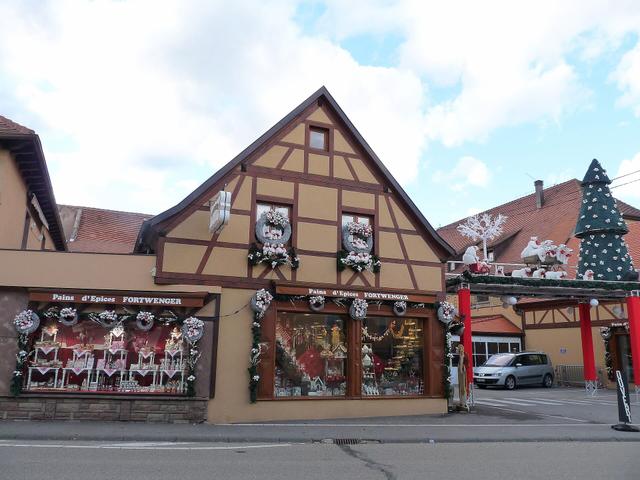
At Christmas, the Christmas windows trail is open every day from 28 November 2026 to 6 January 2027. Windows around the village are decorated on the theme of Christmas traditions. The map is available at the tourist information office, and the guided tour of the trail starts on Saturdays from Place de la Mairie and on Sundays from the church. A Christmas concert is announced for 29 November 2026, booking required. The old-style Christmas market, with Hans Trapp and the Christkindel, takes place in December; its 2026 dates had not been published when we checked.
Our tip: for photos, come early in the morning. The sun then lights up the house fronts on the main street and there is hardly anyone about.
Visiting Hunspach with kids
The village is short and flat, easy with children. A "Fun Walk", a treasure-hunt style trail, is offered for children from age 4: ask for it at the information office. Hunting for the bulging window panes is a good game for younger ones.
Fort de Schoenenbourg is better suited to school-age children: it is cool underground and the tour is long. For something more playful, the Didiland amusement park is about twenty minutes away.
Wheelchair access and dogs
According to the Most Beautiful Villages of France association, the village is accessible to people with reduced mobility and to pushchairs. Dogs are allowed in the village and on the Christmas trail.
How to get to Hunspach
By car. This is the easiest option. Hunspach is about an hour from Strasbourg via Haguenau.
By train. Hunspach has a TER stop on the Strasbourg–Haguenau–Wissembourg line. This is rare for one of the Most Beautiful Villages of France: you can come from Strasbourg without a car.
The information office. It is at 3 Route de Hoffen, in the Maison Ungerer. The Alsace Verte tourist office welcomes visitors there from Tuesday to Friday, 10:00 – 12:00 and 14:00 – 17:00 in winter, and also on Saturdays in December. It is closed on Mondays, public holidays and over the Christmas and New Year holidays. Phone: +33 3 88 80 41 46.
Partner links: if you book through these links, we earn a commission at no extra cost to you. Partner links · Learn more
What to see near Hunspach on the same day
| Also worth seeing | Distance | Travel time |
|---|---|---|
| Fort de Schoenenbourg | 3 km | 5 min by car |
| Didi'Land | 17 km | 20 min by car |
| Fleckenstein Castle | 27 km | 35 min by car |
Approximate road distances and travel times.
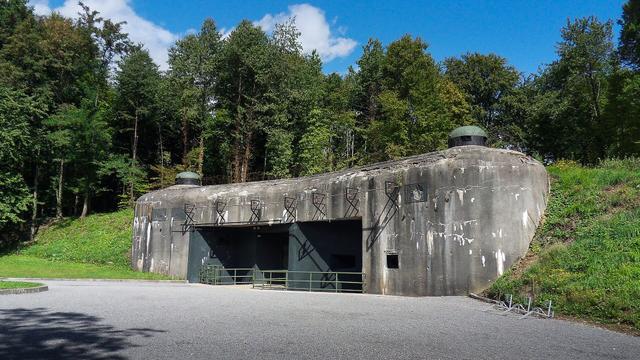
Fort de Schoenenbourg is the natural add-on: it is the largest Maginot Line fort open to the public in Alsace, and it stands within the village's boundaries. The Hunspach website points out that it was the most heavily attacked fort in 1940 and was never taken. See also: Fort de Schoenenbourg
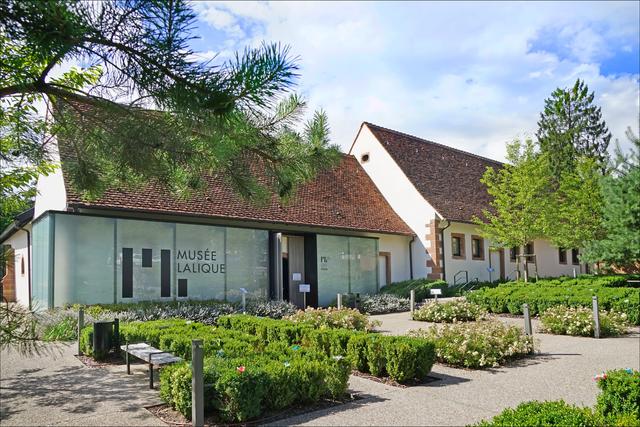
Further west, the Château du Fleckenstein and its rooms carved into the sandstone make a good family visit. See also: Fleckenstein Castle The Didiland park keeps children busy for half a day. See also: Didi'Land Towards the Northern Vosges, the Lalique Museum and the Château de Lichtenberg round off a stay. See also: Lalique Museum, Lichtenberg Castle
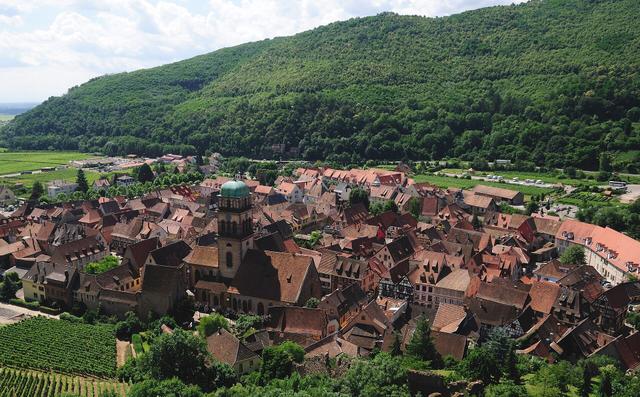
If you like villages, compare Hunspach with those of southern Alsace, more colourful and busier. See also: Eguisheim, Riquewihr, Kaysersberg, Noyers-sur-Serein, Strasbourg Cathedral, Alsace
Where to eat and stay in Hunspach
The village has restaurants, local shops, holiday cottages and B&Bs. The village lists two places to stay: the Maison Ungerer, a holiday cottage and B&B in an old Alsace farmhouse (3 Route de Hoffen), and the Billmann cottages (7 Rue de l'Ange).
For food, try the specialities of the Outre-Forêt: "dicke Kuche", a brioche, and Fleischknepfle, meatballs, with a local wine. For a wider choice of hotels and restaurants, Wissembourg is a few minutes away.
FAQ
Do you have to pay to visit Hunspach?
No. The village is free to visit, at any time, and parking is free all year round.
Why are the windows in Hunspach bulging?
To see without being seen. From inside, you see the street; from outside, you only see your own distorted reflection. In many houses, the bulging glass took the place of curtains.
How long does it take to visit Hunspach?
About 45 minutes for the heritage trail, 1 to 2 hours at a relaxed pace. Add Fort de Schoenenbourg for a full day.
When is the Christmas windows trail in Hunspach?
From 28 November 2026 to 6 January 2027, every day. It is free and the map is available at the tourist information office.
Can you get to Hunspach by train?
Yes. The village has a TER stop on the Strasbourg–Haguenau–Wissembourg line.
When was Hunspach voted France's favourite village?
In 2020, on the TV programme presented by Stéphane Bern.
Practical information
Official ticket-office prices 2026
Free admission
Address
Bureau d'information touristique, 3 route de Hoffen, 67250 Hunspach, France
Directions · Phone+33 3 88 80 41 46
On site and nearby
- On site: Toilets
- Nearest shops and pharmacy: Seebach, 4 km away Straight-line distance, based on OpenStreetMap.
- Emergencies: 112 (all emergencies, free from any phone), 15 (SAMU, medical emergency)
Around the site, on Google Maps
With children
Family days out nearby: Fleckenstein Castle (16 km), Didi'Land (16 km), Lichtenberg Castle (33 km)
Swimming pools and play areas nearby, on Google Maps
Facts checked on 12 November 2026. Sources: hunspach.fr, alsace-verte.com, les-plus-beaux-villages-de-france.org, christmas.alsace, fr.wikipedia.org, en.wikipedia.org, connexionfrance.com, hunspach.fr
Map
In the same region
- La Ferme aux Rennes (Reindeer Farm)from €7Free under 3