Château de Sassenage: planning your visit
Château de Sassenage at a glance
- Full price
- €10
- Free
- children under 5
- Time needed
- about 1 h 15 min
- Where
- Sassenage
Official ticket-office prices, checked on 12 November 2026. Full opening hours, reduced prices and access
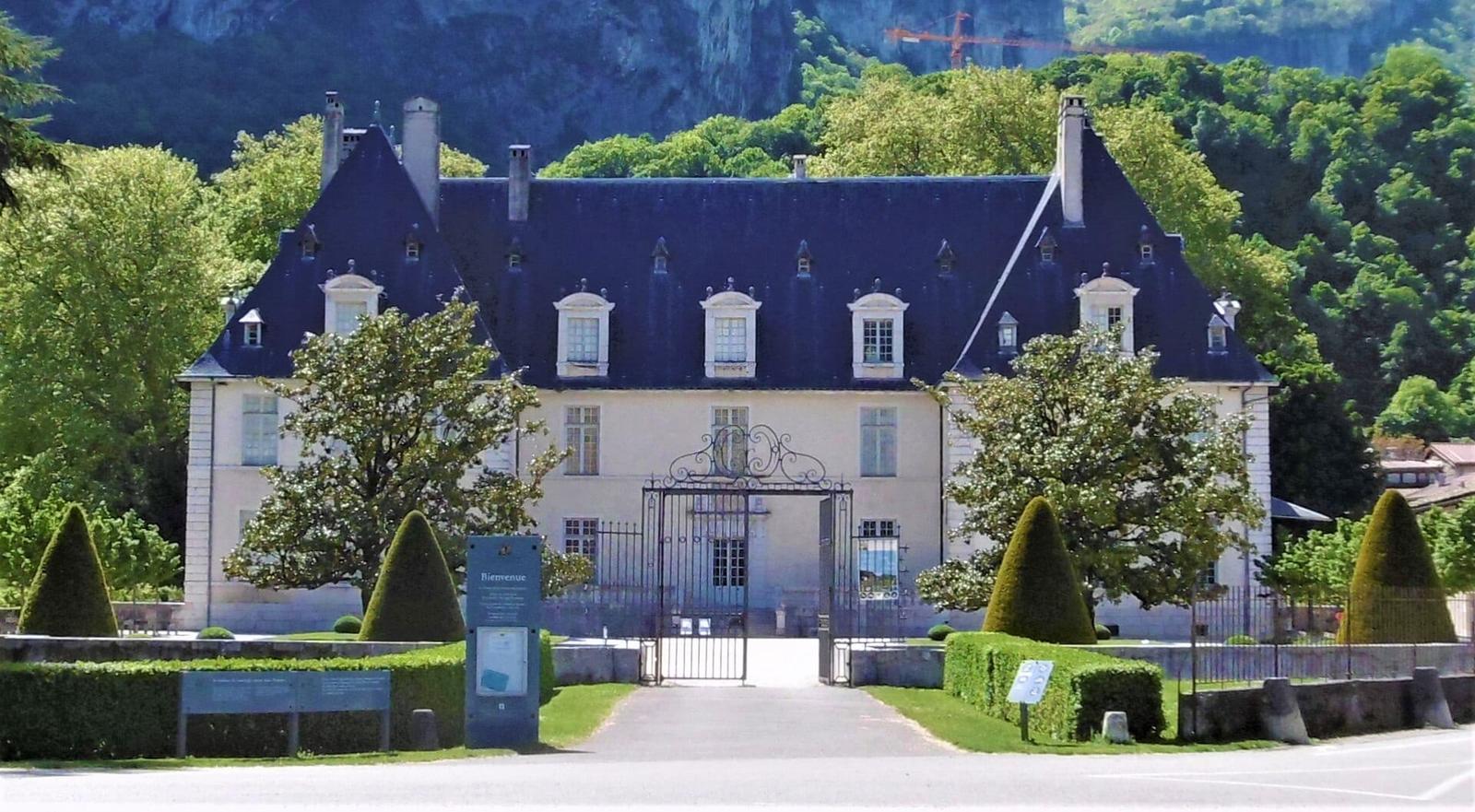

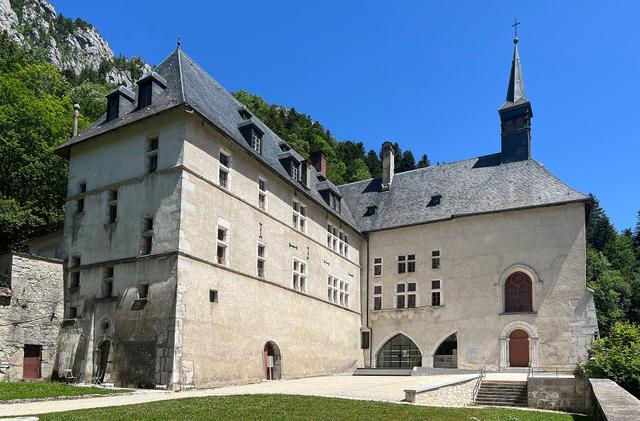
On the edge of Grenoble, at the foot of the Vercors, the Château de Sassenage has kept its 17th-century rooms, its furniture by the Hache cabinetmakers and a listed eight-hectare park. The castle can only be visited with a guide, on a few dates a year, but the park is free. Here are the tour days, prices, how to get there and our tips.
Château de Sassenage at a glance
- Where: in Sassenage, west of Grenoble, on the left bank of the Isère, at the foot of the Vercors.
- Price: €10 for the monthly guided tour, €8 for the summer tours. Free under 5. The park is free to enter.
- When: the castle can only be visited on a guided tour, on the first Sunday of each month at 10:30, and several times a day from 14 July to 15 August.
- Tour length: 75 minutes for the monthly tour, 60 minutes in summer.
- Best for: lovers of furnished historic houses and antique furniture, anyone curious about legends (Mélusine), and families thanks to the storytelling tours for children.
- Good to know: the castle is not wheelchair accessible, and dogs are not allowed, even in the park.
Why visit the Château de Sassenage
This is not a fortress but a large 17th-century family house that is still furnished. The Bérenger-Sassenage family lived here until the 20th century. Their furniture, paintings and wood panelling are still in place, which is rare in the region.
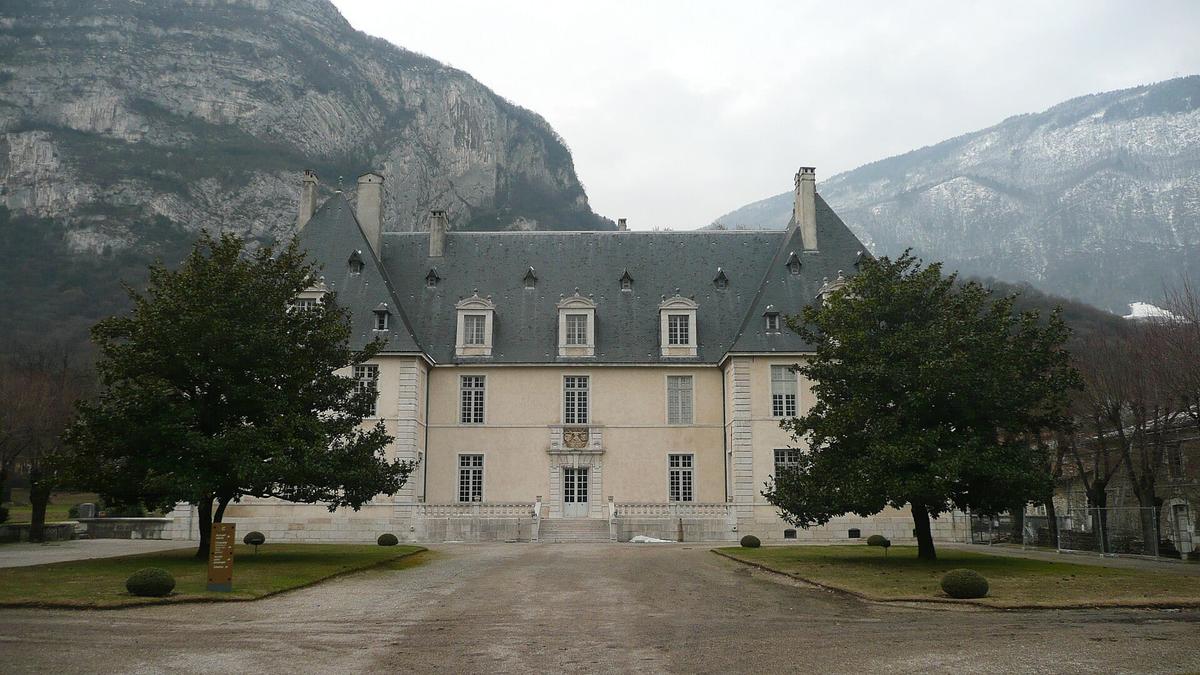

The castle belongs to the Fondation de France, which received it as a bequest in 1971. The castle, the park and the chestnut avenue have been listed historic monuments since 1942. According to the castle, the park was the first protected garden in the Isère.
Finally, it is an easy outing from Grenoble: you can get there by tram and bus, and the park offers a quiet, free walk a few kilometres from the city centre.
History of the castle and the legend of Mélusine
The Sassenage family settled in the Dauphiné around the year 1000. In 1292, Aymar de Bérenger married Béatrix de Sassenage, and the two lines eventually merged. Together they formed the second barony of the Dauphiné.
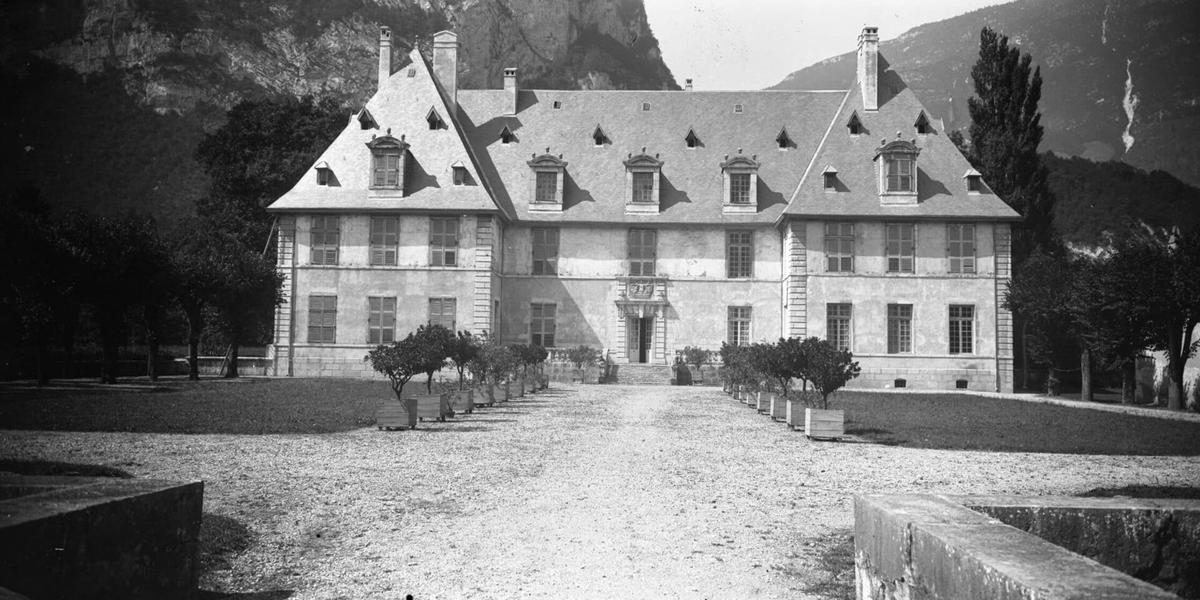

The present castle is the third on the site. It replaced a fortified house destroyed in 1661. Charles-Louis-Alphonse de Sassenage had it built from 1662 to 1669, to plans by the Valence architect Laurent Sommaire, in local Sassenage limestone. His father-in-law, Denis Salvaing de Boissieu, first president of the Dauphiné Chamber of Accounts, paid for part of the work.
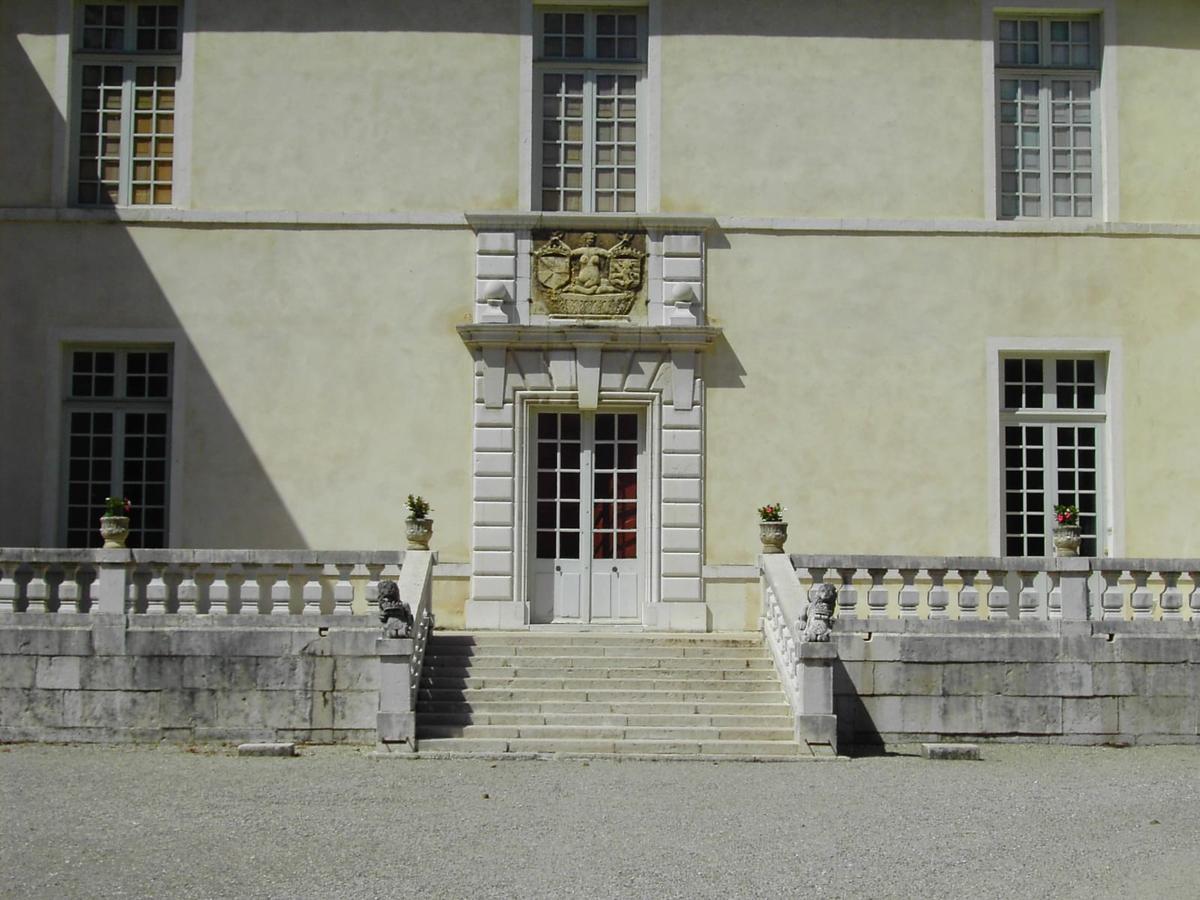
Mélusine on the façade. Look at the pediment as you arrive: a figure of Mélusine holds the coats of arms of the Bérenger and Sassenage families. According to the legend, this water fairy turned every Saturday into a creature half woman, half serpent. Her husband Raymondin, who had promised never to try to see her secret, spied on her in her bath. She fled through a window and took refuge in the nearby caves, the Cuves de Sassenage. The family said she let out a cry three days before the death of a lord. In 1484, Louis de Sassenage already wore a Mélusine on his helmet at a tournament in Romans.
A marquise who was a friend of Madame de Pompadour. In the 18th century, Marie-Françoise-Camille de Sassenage lived at Versailles, where her husband served the Dauphin. She was a friend of the future Madame de Pompadour. She loved gambling and chocolate: fifteen bars were found in her home when she died in 1786. She is said to have inspired the Marquise de Merteuil in Choderlos de Laclos's Les Liaisons dangereuses. There is no proof, but the guides like the idea.
A lace factory in the castle. From 1770 to 1784, the castle was rented to a lace manufacturer. Nearly 400 young women were housed there. The lease was not renewed.
The Revolution and the 20th century. From 1785 to 1790, Raymond-Pierre de Bérenger had the interior remodelled: boudoirs, a library, mezzanines for the servants. The second floor went from 4 to 17 rooms. He was arrested in 1793 and released in 1794. In the 20th century, the last marquise, Pierrette-Élisa de Bérenger, had the collections inventoried and opened the castle to the public. With no heir, she left the estate to the Fondation de France in 1971.
Château de Sassenage ticket prices
The price depends on the time of year. 2026 prices published by the castle:
- Monthly guided tour (first Sunday of the month): €10 full price, €8 reduced.
- Summer tours (from 14 July to 15 August): €8 full price, €6 reduced.
- Under 5: free, except for the special children's tours.
- Storytelling tour for children aged 4 to 10: €6 per child.
The reduced rate applies to under-18s, disabled visitors and people with reduced mobility, jobseekers, students and Crédit Agricole members. The castle accepts cash, bank cards and cheques.
The park is free. You can walk there without a ticket during opening hours.
Groups. From 15 people, the castle organises tours all year round, booked by phone or through the contact form.
Do you need to book?
Yes, it is strongly recommended. The castle only opens for the guided tours, and places are limited. Tickets are sold online through the Grenoble Alpes Tourisme ticket office, which the castle's website links to. For the monthly tour, with a single departure, book a few days ahead. Costumed tours and children's activities are by booking only.
Booking platforms do not sell tickets for the castle. If you want to round off the day with a guided tour of Grenoble or a trip into the Vercors, have a look at the activities offered around the city.
Partner links: if you book through these links, we earn a commission at no extra cost to you. Partner links · Learn more
2026 opening hours: when can you visit?
The castle. It only opens for guided tours:
- All year except July and August: on the first Sunday of each month, starting at 10:30, for a 75-minute tour.
- From 14 July to 15 August: Sunday to Thursday, tours at 15:00, 16:00 and 17:00, lasting 60 minutes. No tours on Fridays and Saturdays.
Outside these times, you cannot go inside the castle.
The park. It is open Monday to Friday, 8:00 – 17:00, except on public holidays. From 14 July to 15 August, it also opens on Sundays, 14:00 – 17:00. The park may close on some days for private events, as the estate is hired out for weddings and seminars.
Our tip. In summer, take the 15:00 tour and walk in the park before or after, when it opens on Sundays. The rest of the year, the first-Sunday tour at 10:30 goes well with lunch in Grenoble and a trip up to the Bastille in the afternoon.
Events. The castle also puts on plays, escape games and costumed tours. The calendar is on the home page of the official website.
How long does the visit take?
The monthly guided tour lasts 75 minutes and the summer tour 60 minutes. Add half an hour to an hour for the park. Half a day is more than enough, which leaves time to see another sight around Grenoble the same day.
What to see at the Château de Sassenage
The visit is guided. You go through the reception rooms, the private apartments and the kitchen.

The vaulted kitchen. It is built around a huge fireplace. It is one of the rooms that best shows daily life in the house.
The Salle des États. Around 1680, Joseph-Louis-Alphonse de Sassenage had the painter Louis Cretey decorate it with scenes from the Aeneid, including "Aeneas and the Cumaean Sibyl".
The drawing rooms. The salon de compagnie has recovered its original panelling after a yellowed varnish was removed. The grand salon, the Marquise's bedroom and the King's bedroom complete the tour.
The Hache furniture. Thomas Hache, a cabinetmaker, settled in Grenoble in 1695. His son Pierre took over from 1725. Their marquetry furniture is the castle's great pride. You will also see pieces stamped by 18th-century Parisian masters. Some of the furniture is being restored.
The lions at the entrance. Two stone lions guard the entrance. They recall the lion on the family coat of arms, borrowed from the princes of Royans.
The park: 8 free hectares
The park has changed style three times, and you can still see traces of each.

- In the 17th century, it was a formal French garden, with a main avenue more than 500 metres long planted with lime trees. In 1680, the orangery held 32 orange trees.
- In the 18th century, it became an Anglo-Chinese garden with winding paths, a small waterfall and a Chinese pavilion.
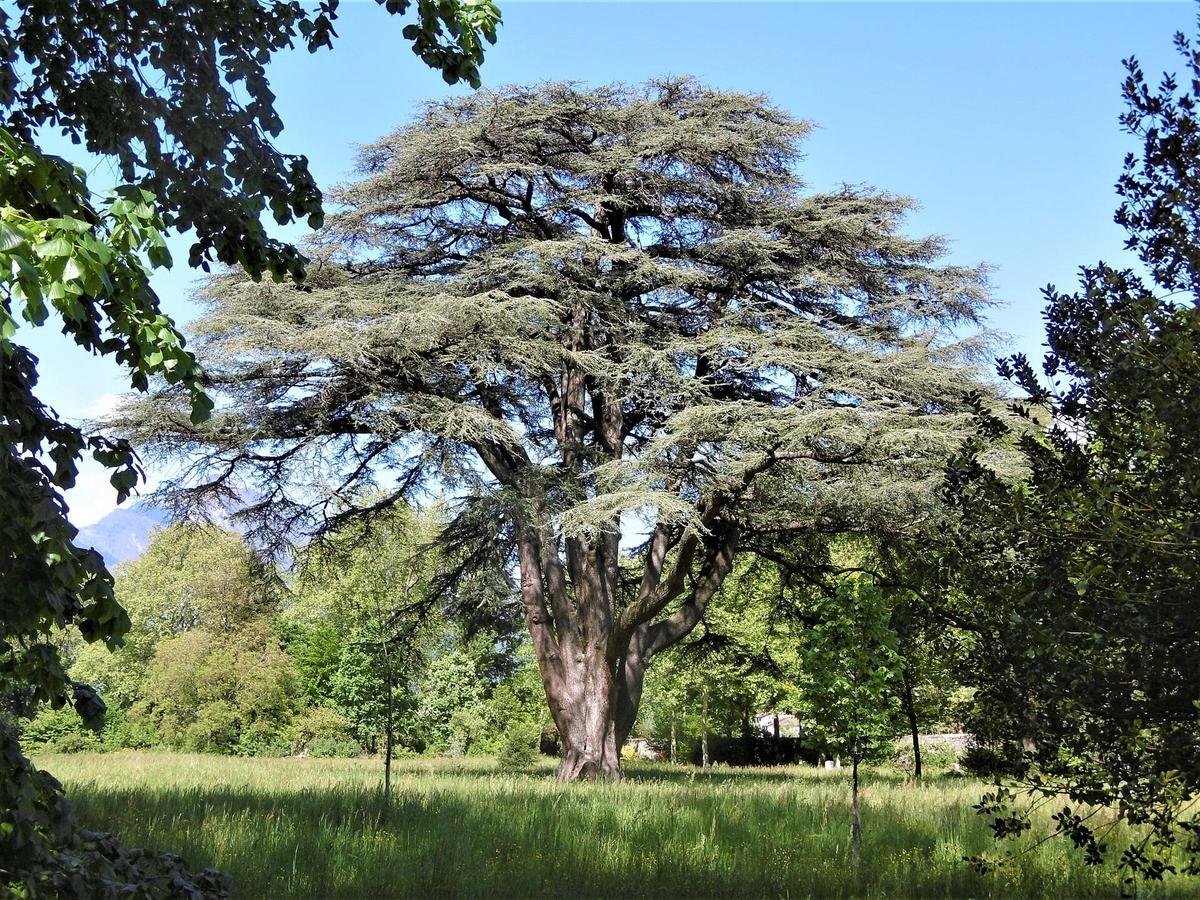
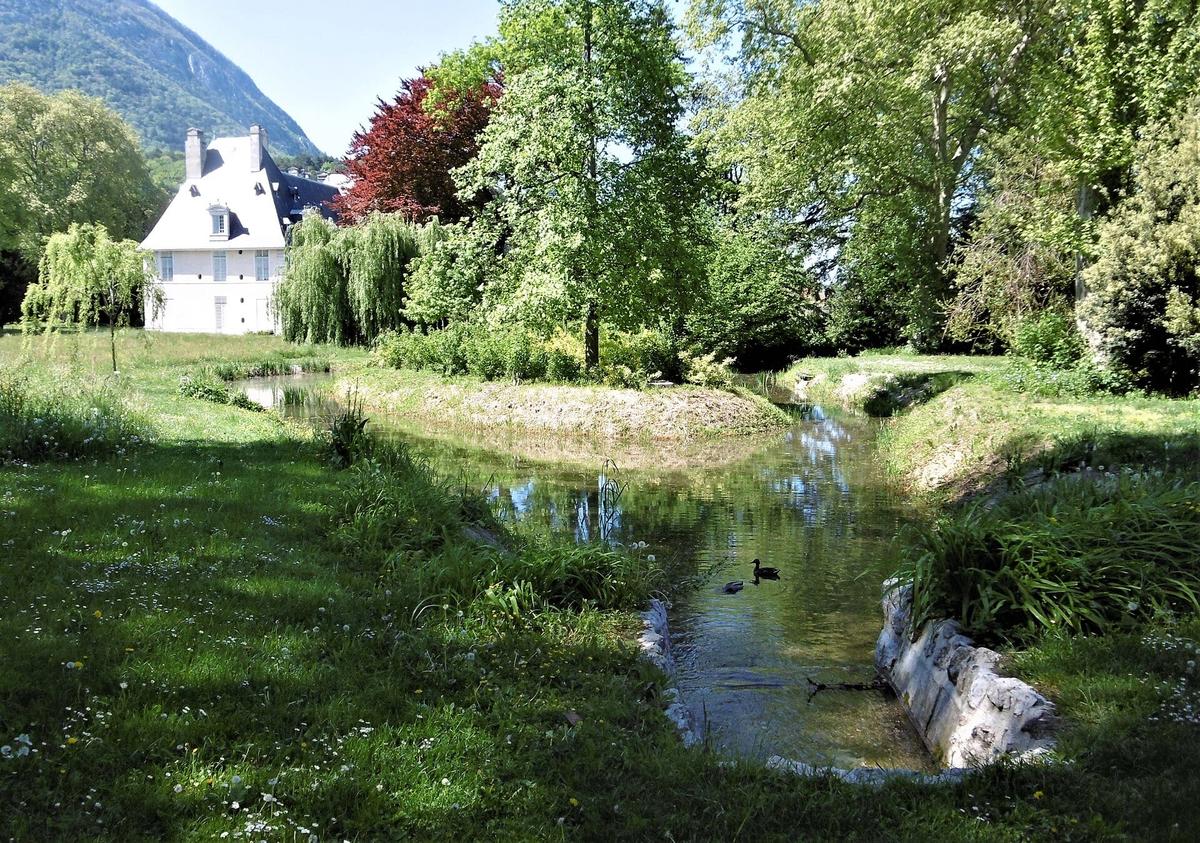
- In the 19th century, the Marquis Raymond-Ismidon-Marie de Bérenger turned it into a landscape park. He had 24 chestnut trees planted in 1844, then more than 3000 trees and shrubs from 1853 to 1856, including the large cedar of Lebanon. An "English river" and an island were created at the same time.
Look out for a plane tree about 250 years old. The recent restoration of the park won the Aurhalpin heritage prize in 2020.
Park rules. Dogs are not allowed, even on a lead. Picnics are not permitted: a quick sandwich is tolerated, a blanket on the grass is not. Bikes and scooters are not allowed in the park; there are bike racks at the entrance.
Visiting with kids
The castle offers a storytelling tour, "Une marquise au pays des contes de fées" (A marquise in fairyland), for children aged 4 to 10. It lasts 45 minutes and costs €6 per child. It runs during French school holidays, usually on Tuesdays at 15:00, with extra departures if there is enough demand. An adult must accompany the child. Online booking is required.

For older children, the Mélusine legend works well: show them the fairy on the façade before you go in. Children's groups can book a treasure trail in the park.
Wheelchair access
The official website states that the castle is not accessible to people with reduced mobility. The Orangery and the park are, and the outdoor toilets are adapted. Disabled visitors and people with reduced mobility get the reduced rate.
How to get to the Château de Sassenage
By tram and bus from Grenoble. Take tram A to the Fontaine La Poya terminus, then bus 20 (towards Veurey Mairie) or bus 50 (towards Sassenage les Côtes) to the "Château" stop. The stop is less than 500 metres from the entrance. The nearest railway station is Grenoble.
By car. From Lyon or Paris, leave the A48 just after the toll, following signs for Villard-de-Lans and Sassenage. From Chambéry, Geneva or Marseille, take the southern ring road (rocade sud) and exit 1, Sassenage. From central Grenoble, cross the Pont de Catane and drive through Fontaine.
Parking. A free car park with 80 spaces is available for visitors.
Renting a car. If you want to combine Sassenage, the Vercors and the Chartreuse, a rental car from Grenoble is the most flexible option.
What to see near Sassenage on the same day
| Also worth seeing | Distance | Travel time |
|---|---|---|
| Musée Dauphinois | 7 km | 15 min by car |
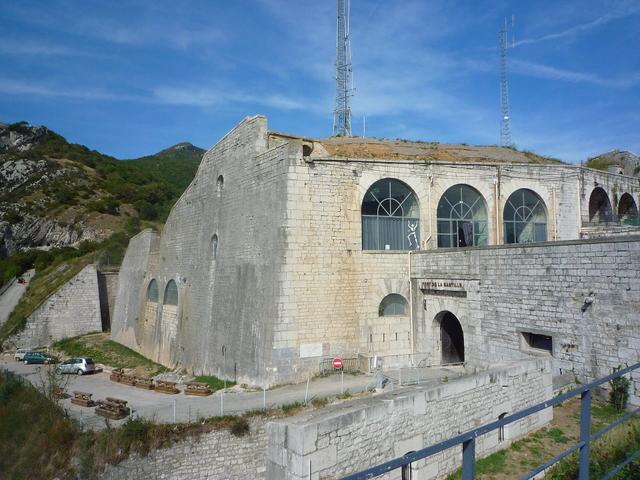
| Grenoble Bastille | 7 km | 15 min by car |
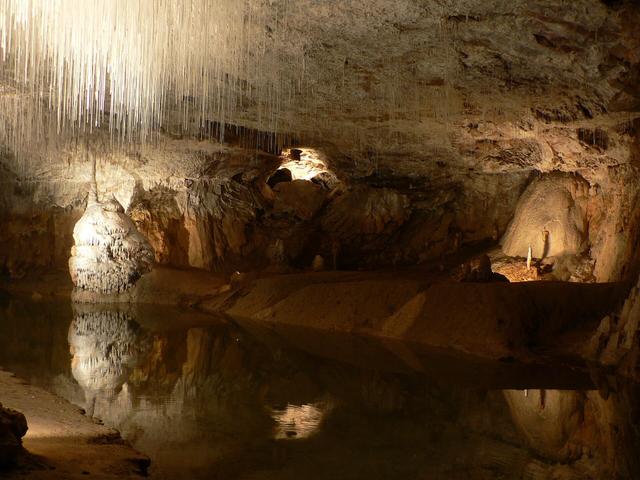
| Choranche Caves | 35 km | 40 min by car |
Approximate road distances and travel times.
The Musée Dauphinois tells the story of the region; its exhibition "De tous bois" (All kinds of wood) led to a costumed tour about the Hache cabinetmakers at the castle. See also: Musée Dauphinois The Bastille and its cable car give you the view over Grenoble and the Vercors, on the other side of the Isère. See also: Grenoble Bastille Heading up into the Vercors, the Choranche caves make a good afternoon trip. See also: Choranche Caves
South of Grenoble, the Château de Vizille and its large park are the other great country house in the area. See also: Château de Vizille, Musée de Grenoble, Chartreuse Cellars, Grande Chartreuse Museum, French Alps
Where to eat and stay
The official website does not mention any food service for visitors. The village of Sassenage has a few shops and restaurants; for more choice, Fontaine and Grenoble are a quarter of an hour away by car.
To stay, Grenoble is the most convenient base: plenty of hotels, and the tram to get to Sassenage. If you are heading into the Vercors afterwards, Villard-de-Lans is less than an hour's drive away.
FAQ
Can you visit the Château de Sassenage all year round?
Yes, but only on the first Sunday of each month at 10:30, on a guided tour. From 14 July to 15 August, tours run from Sunday to Thursday.
How much does the visit cost?
€10 for the monthly tour (reduced €8), €8 for the summer tours (reduced €6). Free under 5.
Is the Château de Sassenage park free?
Yes. It is open free of charge Monday to Friday, 8:00 – 17:00, and also on Sunday afternoons in summer.
Can I bring my dog?
No. Dogs are not allowed in the park, even on a lead.
How do I get to the Château de Sassenage without a car?
Tram A to Fontaine La Poya, then bus 20 or 50 to the "Château" stop.
What is the link between Sassenage and Mélusine?
The Sassenage family claimed descent from the fairy Mélusine. Her figure decorates the façade, and the legend says she took refuge in the Cuves de Sassenage, the nearby caves.
Practical information
Official ticket-office prices 2026
| Full price | €10 |
|---|---|
| Reduced rate | €8 |
| Free | children under 5 |
Address
Allée du Château, 38360 Sassenage, France
Directions · Phone+33 4 38 02 12 04
On site and nearby
- On site: Toilets
- Nearest shops and pharmacy: Sassenage, less than 1 km away Straight-line distance, based on OpenStreetMap.
- Emergencies: 112 (all emergencies, free from any phone), 15 (SAMU, medical emergency)
Around the site, on Google Maps
With children
Family days out nearby: Grenoble Bastille (6 km), Musée Dauphinois (6 km), Musée de Grenoble (6 km)
Swimming pools and play areas nearby, on Google Maps
Facts checked on 12 November 2026. Sources: chateau-de-sassenage.com, chateau-de-sassenage.com, chateau-de-sassenage.com, chateau-de-sassenage.com, chateau-de-sassenage.com, chateau-de-sassenage.com, fr.wikipedia.org, alpes-isere.com
Map
In the same region