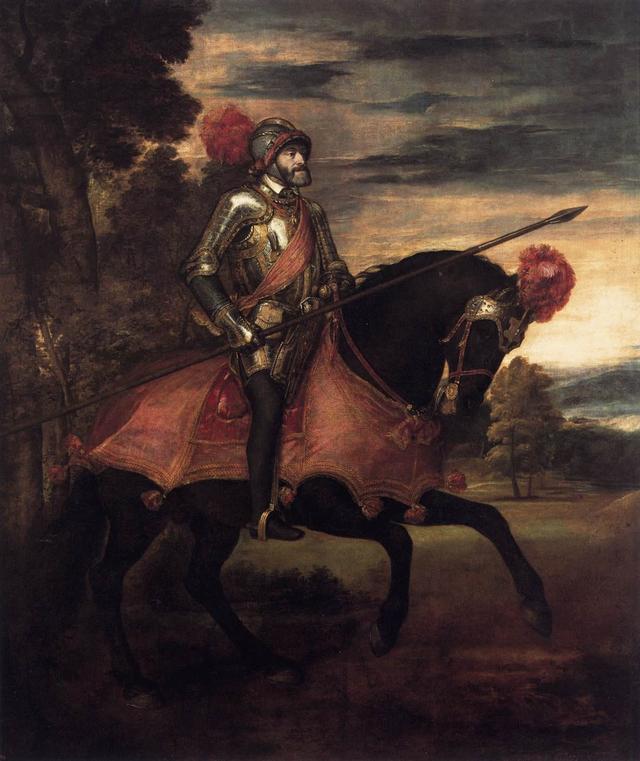
Jacques Cœur, the merchant who lent money to the king
- Born
- c. 1400
- Died
- 1456
- Active years
- 1439 – 1451
- Family
- Artists, saints and favourites
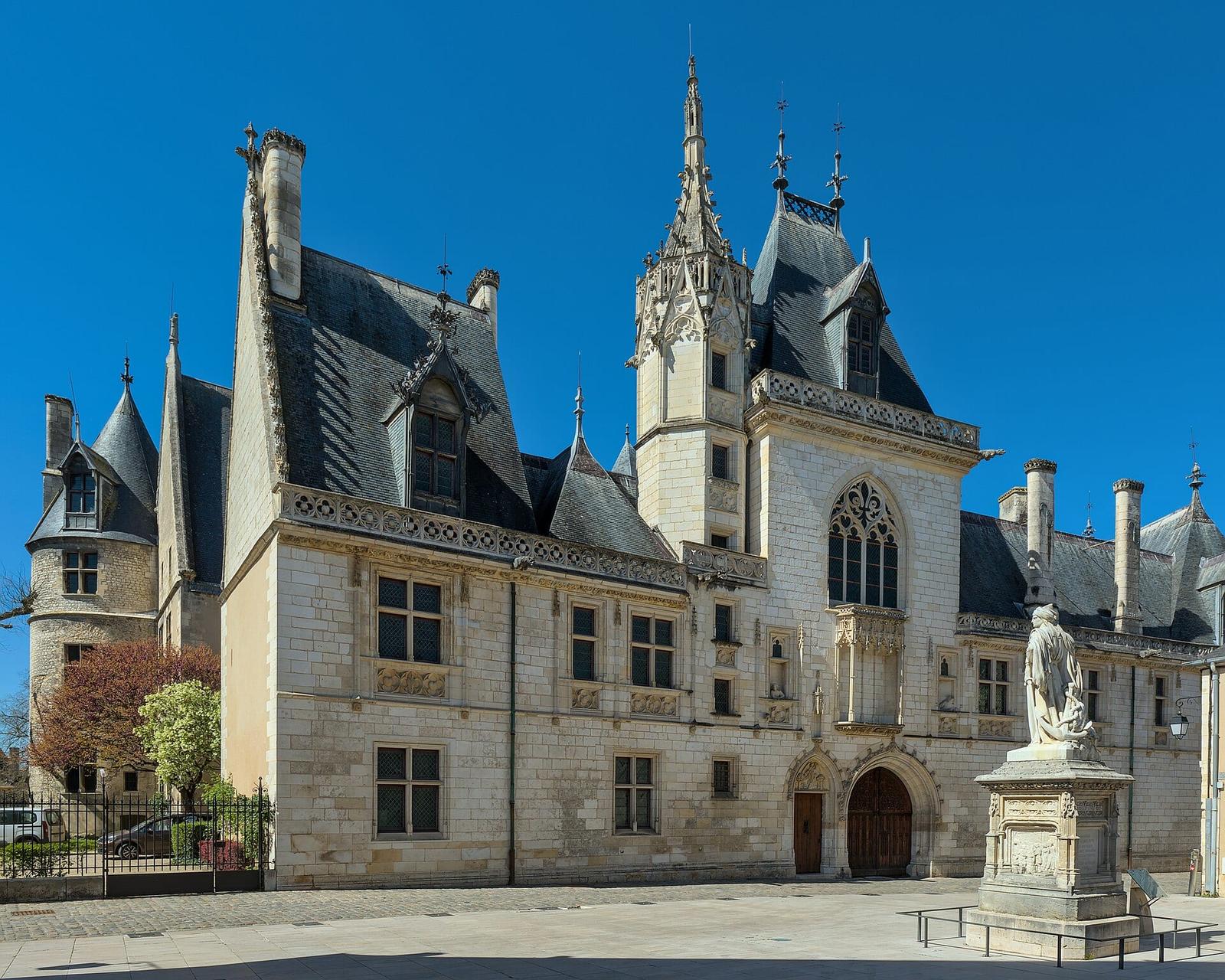
The son of a fur merchant from Bourges, Jacques Cœur became the richest man in the kingdom. His galleys traded with the East, he supplied the court, and he lent the king the money to win back Normandy. Then Charles VII had him arrested. He died in exile on a Greek island, having hardly ever lived in the palace he had built in Bourges.
Jacques Cœur in dates
| Date | Event |
|---|---|
| c. 1400 | Born in Bourges, son of the furrier Pierre Cœur |
| c. 1420 | Marries Macée de Léodepart, daughter of the provost of Bourges |
| 1432 | Travels to Egypt and Syria |
| 1435 | Master of the mint in Bourges |
| 1439 | Treasurer to King Charles VII |
| 1443 | Buys the land for his Bourges palace and starts building |
| 1447 | Embassy to the pope in Rome |
| 1449 | Advances the king 200,000 écus to win back Normandy |
| February 1450 | Death of Agnès Sorel |
| 1451 | Arrested at the Château de Taillebourg |
| 1453 | Convicted of lèse-majesté; his property is seized |
| 1454 | Escapes and reaches Rome |
| 1456 | Dies on Chios, in the Aegean Sea |
The furrier's son
Jacques Cœur was born in Bourges around 1400. His father sold furs. Bourges was then the king's town: Charles VII, driven out of Paris by the English and the Burgundians, held his court there, so much so that he was nicknamed the "King of Bourges". See also: Charles VII
Around 1420 Jacques married Macée de Léodepart, daughter of the town's provost. In 1432 he set off for the Levant and saw Damascus and Alexandria. He realised that spices, silk and fabrics from the East all passed through Venice and Genoa, and that France could run this trade itself. In 1435 he became master of the mint in Bourges.
The king's treasurer
Around 1439 Charles VII put him in charge of the Argenterie, the office that supplied the court with cloth, furs, weapons and jewels. Jacques Cœur bought, sold and lent, and grew rich fast. He was ennobled, joined the king's council and was sent on diplomatic missions, to Genoa and then to Rome, where he helped end the quarrel between two rival popes.
His motto, "À vaillans cuers riens impossible", plays on his name: to a valiant heart, nothing is impossible. His coat of arms shows hearts and scallop shells, the shell of Saint James, for his first name.
In 1449, when the king wanted to win back Normandy from the English, Jacques Cœur advanced him 200,000 écus at once. Rouen fell the same year. When the king entered the city, his treasurer rode at his side.
Aigues-Mortes: the galleys of the East
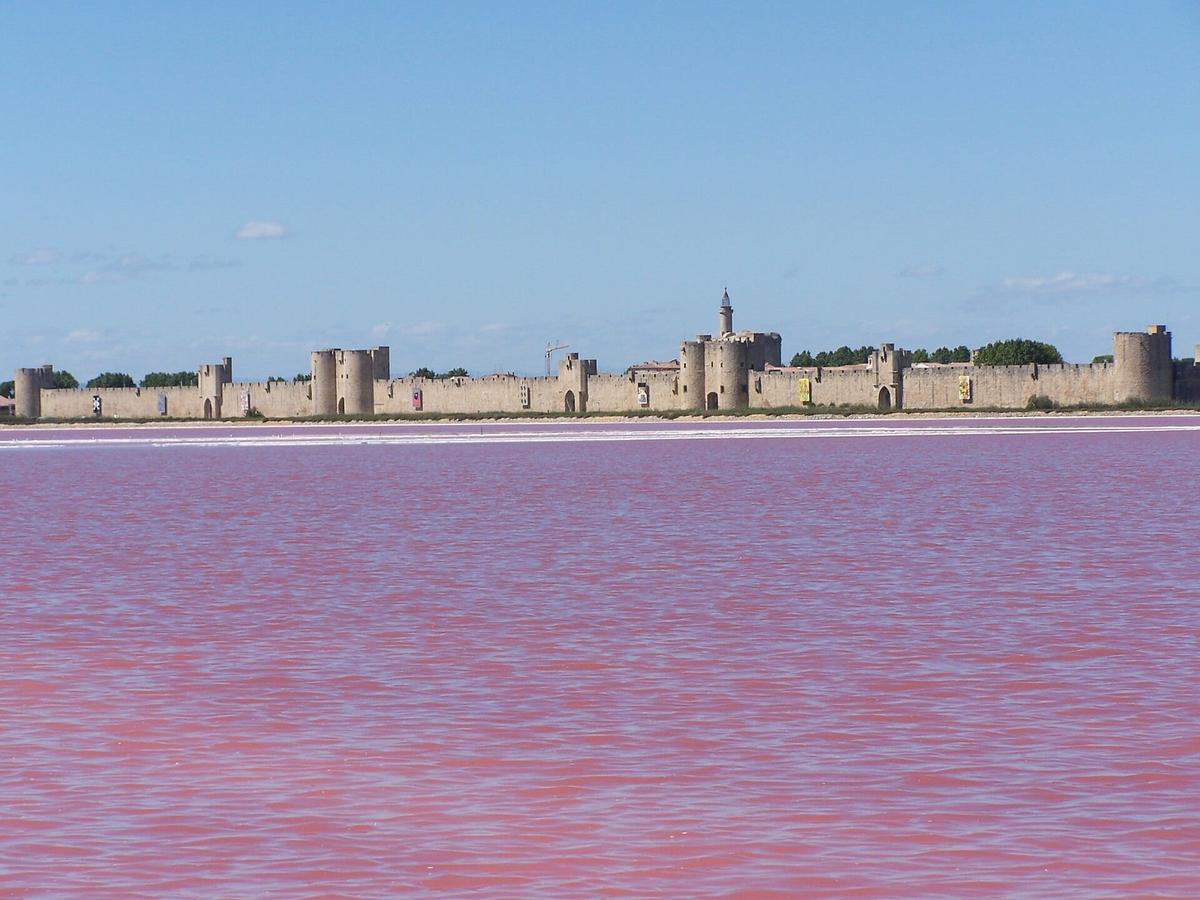
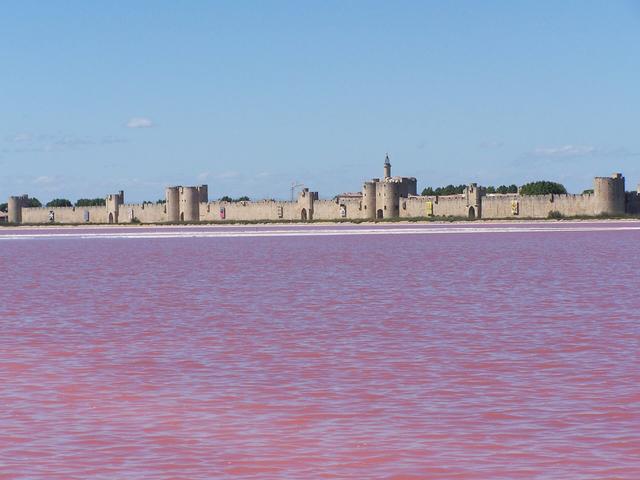
Trading with the East meant ships and ports on the Mediterranean. Jacques Cœur made Montpellier the centre of his business and set up a shipyard at Aigues-Mortes, the fortified town of Saint Louis. His "galées", large merchant galleys, sailed to Alexandria, Beirut or Rhodes and came back loaded with spices, silks and sugar. See also: Aigues-Mortes Ramparts, Saint Louis (Louis IX)
What to see: the circuit of the ramparts along the wall walk, the Tour de Constance, and the view over the salt flats, where ships once reached the sea.
Bourges: the palace of the "grant maison"
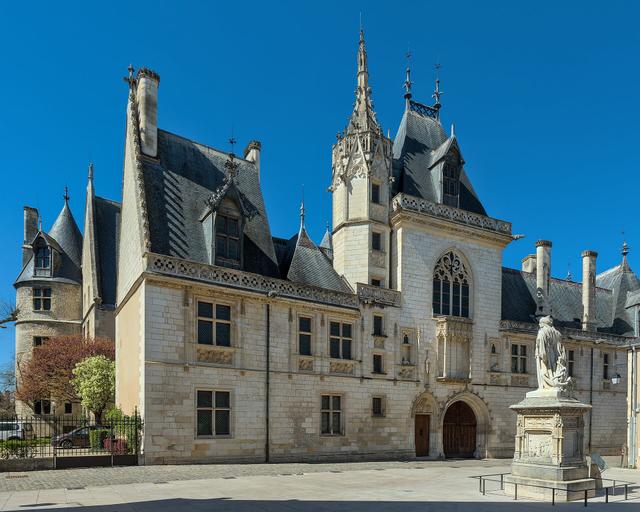
From 1443 Jacques Cœur built a huge house in Bourges, set against the town's Gallo-Roman wall. He was often away and left the work to two men from Bourges. Macée moved in from 1447. On the street side, the façade is carved with false windows where a stone man and woman seem to be watching passers-by. On the courtyard side, each staircase has its own tower, and hearts and shells are everywhere.
It is said that Jacques Cœur slept there only eight nights. After his fall the house changed hands many times. Colbert, who came to own it, sold it to the town of Bourges in 1682. It then served as the town hall and later as the law courts, hence its name of "palace". See also: Jacques Cœur Palace, Jean-Baptiste Colbert
What to see: the main façade and its figures at the false windows, the chapel with angels painted on the vault, and the treasure room, closed by a door with a secret lock. The palace is due to close for works, with reopening planned for 2028: check the official website.
The cathedral: the family chapel
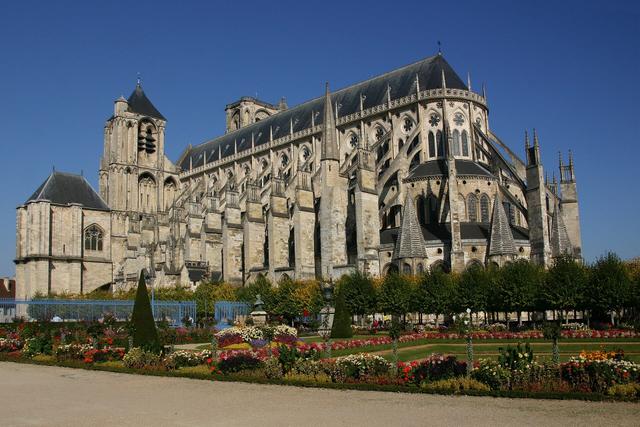
A few minutes' walk from the palace, Saint-Étienne Cathedral still has the chapel that Jacques Cœur had fitted out for his family around 1450. Its Annunciation window, in very bright colours, is one of the finest 15th-century windows in France. His son Jean Cœur became Archbishop of Bourges. See also: Bourges Cathedral
What to see: the Jacques Cœur chapel and its window, in the ambulatory, then the crypt and the climb up the north tower to see the palace from above.
The fall and exile
On 9 February 1450 Agnès Sorel, the king's mistress, died in Normandy. Jacques Cœur was her friend and one of the executors of her will. In 1451 a lady of the court accused him of poisoning her. The charge was dropped, but others followed: fraud, selling arms in the East, and a Christian slave who had taken refuge on one of his galleys and whom he was said to have handed back to his Egyptian masters. The king, who owed him a great deal of money, had him arrested at the Château de Taillebourg. Agnès Sorel's tomb is at Loches. See also: Agnès Sorel, Royal City of Loches
Convicted of lèse-majesté in 1453, he had to make public penance on his knees in Poitiers, and all his property was seized. In 1454 he escaped from his prison in Poitiers, reached Beaucaire, then Rome. The pope gave him command of a fleet against the Turks. He died in 1456 on the island of Chios, in the Aegean, and was buried in the island's Franciscan church.
In his footsteps: Bourges, then the Mediterranean
The Palais Jacques-Cœur and Bourges Cathedral can be seen in the same day; a combined ticket covers the palace and the crypt. For the rest of his life you need to head down to the Mediterranean: Aigues-Mortes is about thirty kilometres from Montpellier, where Jacques Cœur's town house holds a museum. From there, Nîmes and its arena are 40 minutes away by road. See also: Nîmes Arena
Partner links: if you book through these links, we earn a commission at no extra cost to you. Partner links · Learn more
Guided tours and day trips on GetYourGuide
FAQ
Where is Jacques Cœur buried?
On the island of Chios, in Greece, where he died in 1456. He was buried in the choir of the Franciscan church. His tomb has never been found.
Where was Jacques Cœur born?
In Bourges, around 1400, into a family of fur merchants.
Why was Jacques Cœur arrested?
First accused of poisoning Agnès Sorel, he was cleared of that charge, then convicted of fraud, exporting metals and weapons to the East, and lèse-majesté. His enemies at court, and the king's debts to him, counted for a lot.
Who did Jacques Cœur marry?
Macée de Léodepart, daughter of the provost of Bourges, around 1420. They had five children, among them Jean, the future Archbishop of Bourges.
Can you visit the Palais Jacques-Cœur?
Yes, it belongs to the state and is run by the Centre des Monuments Nationaux. A closure for works has been announced, with reopening planned for 2028: check the dates before you go.
Sources: fr.wikipedia.org (Jacques Cœur), palais-jacques-coeur.fr, bourges-cathedrale.fr, aigues-mortes-monument.fr
Tickets to book online
Partner links: if you book through these links, we earn a commission at no extra cost to you. Partner links · Learn more