Canadian National Vimy Memorial: planning your visit
Canadian National Vimy Memorial at a glance
- High season
- 10:00 – 18:00
- Low season
- 9:00 – 17:00
- Admission
- Free
- Time needed
- about 2 h
- Visitors per year
- about 1,000,000
- Where
- Givenchy-en-Gohelle
Facts checked on 11 November 2026. Full opening hours, reduced prices and access
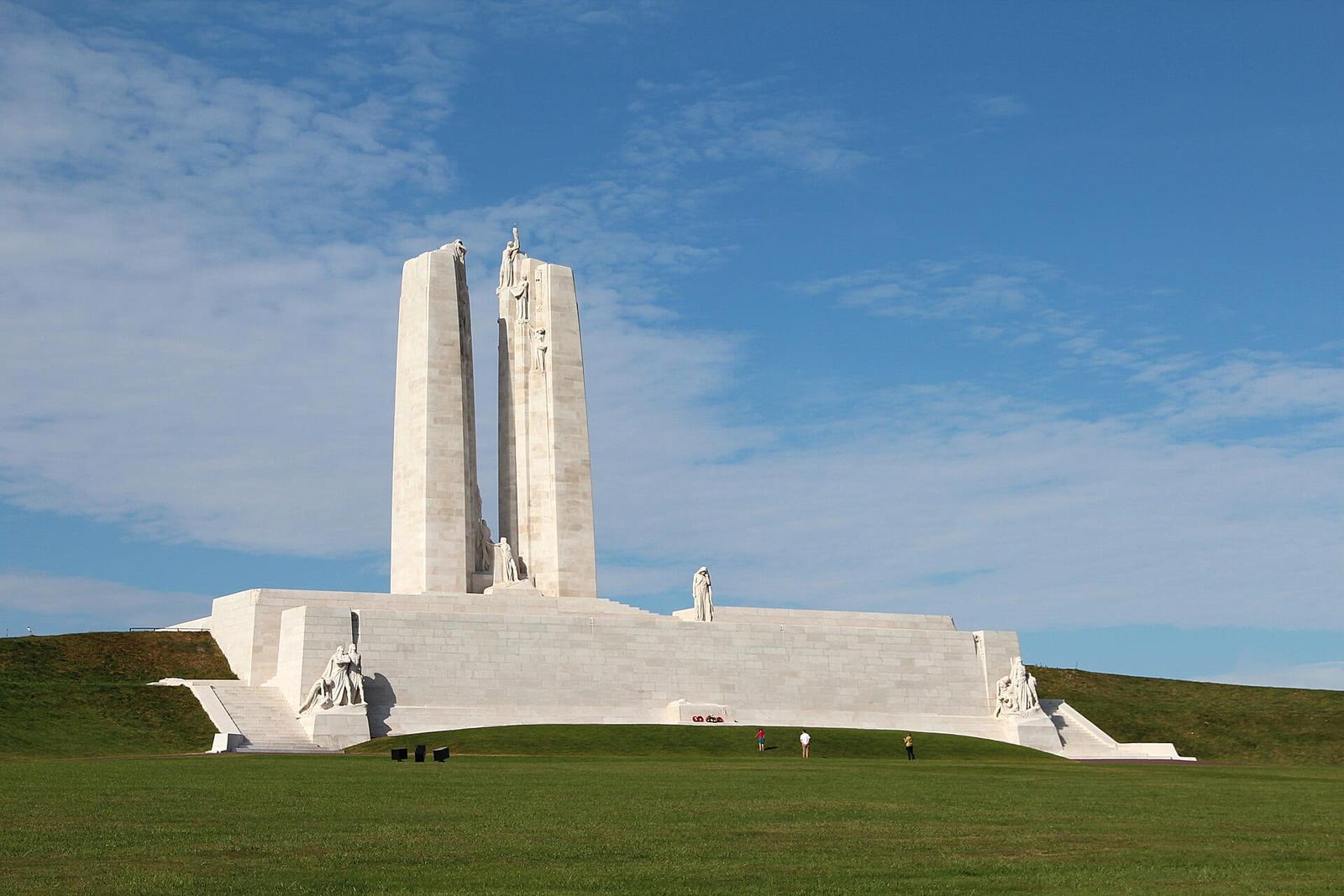
On Vimy Ridge, between Arras and Lens, two white stone pylons rise above the old mining plain. Canada built its great First World War memorial here, in a park where shell craters, trenches and tunnels have been left in place. Entry is free: here are the opening hours, the guided tour of the tunnels and our tips.
Vimy Memorial at a glance
- Where: on Vimy Ridge, at Givenchy-en-Gohelle (Pas-de-Calais), about fifteen kilometres north of Arras and ten south of Lens.
- Price: free, for the park, the monument, the visitor centre and the guided tour.
- Open: the park is open daily. The visitor centre is open 10:00 – 18:00 from April to September and 9:00 – 17:00 from October to March, opening later on Mondays. It closes for several weeks in winter.
- Time needed: up to 2 h for the monument, the cemeteries and the visitor centre, including a 30-minute guided tour.
- Best for: history lovers, Canadians tracing their ancestors, and families with children old enough to understand the Great War.
- Good to know: the tunnel tour cannot be booked. Only assistance dogs are allowed on site.
Why visit the Vimy Memorial
Vimy is Canada's most important place of remembrance outside the country. The monument honours Canadian soldiers of the First World War and bears the names of 11,285 of them who were killed in France and have no known grave.
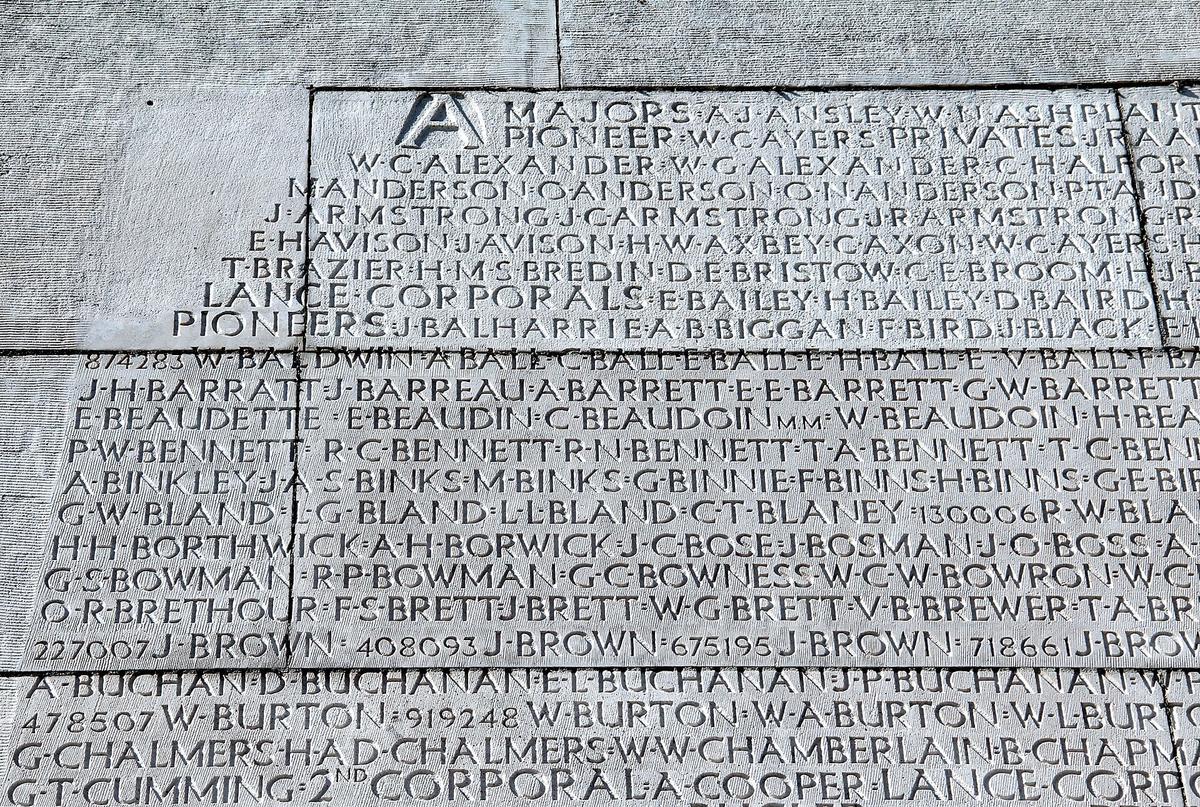
It is more than a monument. The 100-hectare park preserves the ground as the war left it: earth pitted with shell holes, trenches rebuilt in concrete, mine craters and tunnels dug by hand under the ridge. Once there, you see why this high ground was so fiercely fought over: from the top, the view sweeps across the whole plain of Lens and the mining basin.
The site is run by Veterans Affairs Canada. Tours are led by student guides from Canada. Together with the Beaumont-Hamel Newfoundland Memorial in the Somme, Vimy receives more than 1,000,000 visitors a year, according to Wikipedia.
The Battle of Vimy Ridge in a few dates
Vimy Ridge had been held by the German army since the autumn of 1914. French forces tried to retake it in 1915, at enormous cost, without success.
On 9 April 1917, at 5.30 in the morning, the four divisions of the Canadian Corps attacked together for the first time. The assault had been prepared for months: rehearsals on scale models of the ground, tunnels dug to bring troops as close as possible to the lines, artillery fire timed minute by minute. By the evening of 12 April 1917, the whole ridge had been taken, including Hill 145, the highest point, where the monument stands today.
The price was heavy: 10,602 Canadian soldiers killed or wounded, 3598 of them killed. In Canada, the victory is often presented as a founding moment of national identity.
The history of the monument
On 5 December 1922, France granted Canada the free use, in perpetuity, of 100 hectares of land on the ridge. Toronto sculptor and architect Walter Seymour Allward had won the design competition a year earlier.
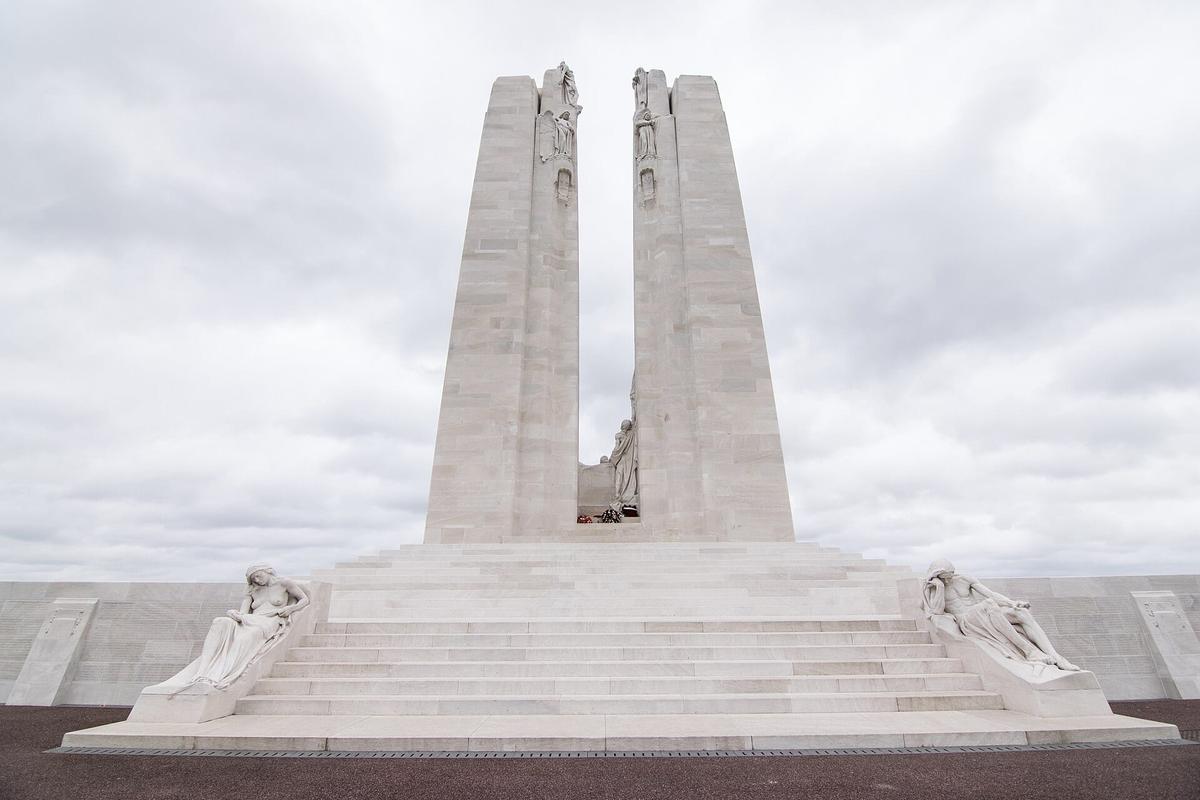
Construction began in 1925 and lasted eleven years. Allward wanted a stone that would not change colour over time. He found it in Croatia, in an old Roman quarry near Seget, after spotting a similar stone in the ruins of Diocletian's Palace in Split. The monument uses nearly 6000 tonnes of it, laid on a base of 11,000 tonnes of concrete.
King Edward VIII unveiled the memorial on 26 July 1936, in the presence of President Albert Lebrun and a crowd of more than 50,000 people, including 6200 pilgrims from Canada.
A story from 1940. After the invasion of France, rumours spread in Canada and Britain that the Germans had destroyed the monument. The German propaganda ministry denied it, and Hitler himself came to visit it on 2 June 1940, in front of photographers. The British soldiers who liberated the area in September 1944 found it intact.
The monument was fully restored from 2005. Queen Elizabeth II rededicated it on 9 April 2007, for the 90th anniversary of the battle. The visitor education centre opened in 2017, for the centenary.
How much does it cost to visit the Vimy Memorial?
Nothing. Veterans Affairs Canada says all its memorial sites in Europe are free. That applies to the park, the monument, the cemeteries, the visitor centre exhibition and the guided tour of the tunnels and trenches.
So there is no ticket to buy in advance. Be wary of websites selling an "entry ticket" for Vimy: what you pay for there are organised tours, with transport and a private guide.
Do you need to book the tunnel tour?
No, and individual visitors cannot book. The guided tour of the Grange Tunnel and the trenches runs on a first-come, first-served basis. Sign up at the visitor centre as soon as you arrive, then go and see the monument while you wait for your tour.
A few things to know before you sign up:
- The tour lasts about 30 minutes.
- The tunnel is narrow, the floor is uneven and it goes down 10 metres underground. If you are claustrophobic, you can just visit the trenches, which are open to all.
- Children under 12 must be accompanied by an adult, with one adult for every two children.
- On busy days, from April to November, tour slots fill up quickly. Arrive early, especially at weekends.
If you would like to see Vimy in a day with other battlefields, guided tours leave from Lille and Arras.
Partner links: if you book through these links, we earn a commission at no extra cost to you. Partner links · Learn more
Opening hours 2026 and best time to visit
The park is open every day. The hours below are those of the visitor education centre, published by Veterans Affairs Canada.
1 April to 30 September:
- Tuesday to Sunday: 10:00 – 18:00;
- Monday: 12:00 – 18:00.
1 October to 31 March:
- Tuesday to Sunday: 9:00 – 17:00;
- Monday: 11:00 – 17:00.
The gates. The park gates open at 10:00 in summer and 9:00 in winter. The entrance gate on the visitor centre side closes at 17:30 in summer and 16:30 in winter. Do not come late in the day.
The winter closure. The visitor centre and guided tours stop for several weeks around Christmas and New Year. In 2027, they will run from 29 January 2027 to 10 December 2027. The monument can still be visited during this period.
Dates to note:
- On 16 November 2026, the visitor centre is closed all day for a power cut, and there are no tunnel tours.
- From 12 November 2026 to 31 March 2027, car park P1, the closest to the monument, is closed. The car parks at the visitor centre (P2), on the D55E2 (P3) and at the cemeteries (P4) stay open.
- For the 110th anniversary of the battle, on 9 April 2027, the visitor centre, tunnels and trenches will be closed, and access to the ceremony will be limited to registered participants. Access around the monument will also be restricted in the days before.
Our tip: come on a weekday at opening time, in spring or early autumn. In the morning, the light falls on the east face of the monument and the school groups have not yet arrived. On 9 April and 11 November, official ceremonies take place: the atmosphere is powerful, but hours and access change.
How long does it take to visit Vimy?
Veterans Affairs Canada recommends allowing up to 2 h to see the monument, the cemeteries and the visitor centre. That is realistic:
- 30 minutes for the monument and the view from the ridge;
- 30 minutes for the guided tour, plus any waiting time;
- 30 minutes for the visitor centre exhibition and the trenches;
- the rest for the cemeteries and the park's other memorials.
If you add Notre-Dame-de-Lorette and the Ring of Remembrance, a few kilometres away, allow a full day.
What to see at the Vimy Memorial
The monument. Its two pylons rise 30 metres above the platform. One bears the maple leaf of Canada, the other the fleur-de-lis of France. In all, 20 statues, twice life size, represent Peace, Justice, Truth, Hope and the Defenders breaking their sword, among others.
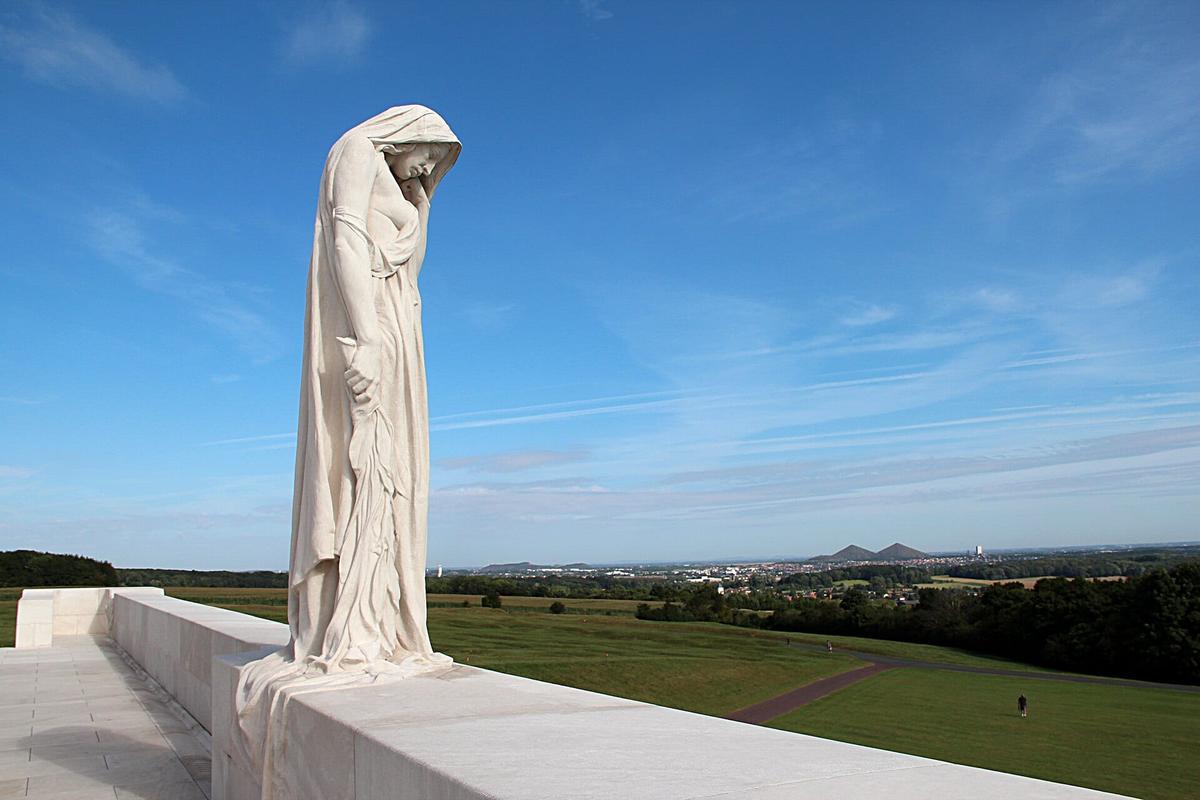
"Mother Canada". The best-known statue, Canada Bereft, looks east, head bowed, above a tomb. It was carved from a single 30-tonne block: the largest piece in the monument.
The names of the missing. The walls bear the names of 11,285 Canadian soldiers who died in France with no known grave. A curious detail: a few soldiers whose remains have since been found now have a grave, but their names remain carved, as the stone panels could not be altered. If you are looking for a relative, the Canadian Virtual War Memorial and the Commonwealth War Graves Commission website let you search by name before you go.
The Grange Tunnel. About 800 metres long, it linked the rear lines with the front. Part of it can be visited with a guide. You go down into the chalk, where soldiers waited for the assault, sheltered from shellfire.
The trenches and craters. Near the visitor centre, a section of Canadian and German trenches has been preserved and reinforced with concrete sandbags. The enemy lines were sometimes only a few dozen metres apart. All around, the mine craters form deep hollows in the grass.
The sheep. Do not be surprised to see sheep in the fenced meadows. The ground still holds unexploded shells, and mowing would be too dangerous, so the sheep keep the grass down. This is also why much of the park remains off limits to the public. Stay on the paths.
The two cemeteries. The park has two Commonwealth War Graves Commission cemeteries: Canadian Cemetery No. 2 and Givenchy Road Canadian Cemetery.
The Moroccan Division Memorial. More discreet, it honours the soldiers of the French army's Moroccan Division who fell in May 1915 during the Second Battle of Artois. The veterans put it up themselves, without permission, and unveiled it on 14 June 1925.
Visiting with children
Vimy works well for children from about 8 to 10: the tunnels, trenches and craters make the war real in a way a museum cannot. The guides know how to adapt their explanations.
A few tips:
- Children under 12 must be accompanied in the tunnel, with one adult for every two children.
- Wear good shoes: the ground is uneven, sometimes wet or frozen, and you will spend almost all your time outdoors.
- There is no restaurant on site, only drinks and snack machines at the visitor centre. Picnic areas are provided.
Accessibility and facilities
The site has toilets, picnic areas and wifi at the visitor centre. The tunnel, with its narrow passages and steep descent, is not suitable for visitors with reduced mobility. Veterans Affairs Canada does not publish details of wheelchair access to the monument and the centre: contact the site before your visit.
Only assistance dogs and guide dogs are allowed. Drones are banned without prior permission. If you find a rusty shell or grenade, do not touch it and report where it is.
How to get there
By car. This is the easiest way. The memorial lies between Arras and Lens, about 20 minutes from each, and less than an hour from Lille. Follow signs for Givenchy-en-Gohelle and the Canadian memorial ("Mémorial canadien"). The park has four car parks; in winter, park at the visitor centre.
By train. The nearest stations are Arras, served by TGV from Paris in under an hour, and Lens. From London, the Eurostar to Lille and a regional train to Arras or Lens make a day trip possible. No convenient bus line runs up to the memorial, so you will need a taxi for the last stretch.
Renting a car. To combine Vimy, Notre-Dame-de-Lorette, the Wellington Quarry and the Artois cemeteries in one day, a car is almost essential. Lille is the easiest place to rent one.
What to combine it with on the same day
| Also worth seeing | Distance | Travel time |
|---|---|---|
| Louvre-Lens | 12 km | 20 min by car |
| Wellington Quarry | 15 km | 25 min by car |
Approximate road distances and travel times.
Notre-Dame-de-Lorette and the Ring of Remembrance. A few kilometres to the north-west, on the next hill, Notre-Dame-de-Lorette is the largest French military cemetery: some 42,000 soldiers lie there. Right next to it, the Ring of Remembrance, designed by architect Philippe Prost and unveiled by François Hollande on 11 November 2014, is a steel ellipse 345 metres long. Its 500 panels list, in alphabetical order and without distinction of nationality or rank, the names of some 580,000 soldiers who fell in the Nord and Pas-de-Calais during the Great War. Allow an hour for both.
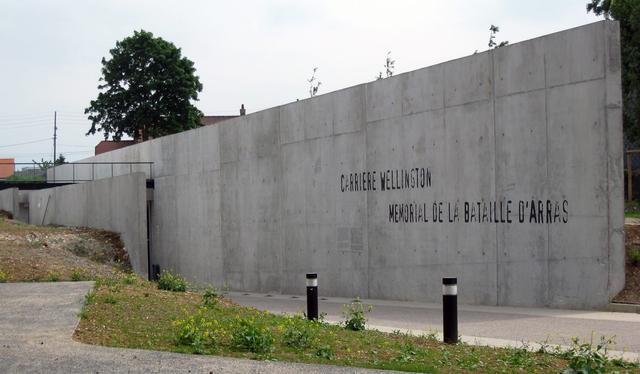
The Wellington Quarry. In Arras, this network of underground quarries sheltered thousands of British and New Zealand soldiers before the offensive of April 1917, launched at the same time as the attack on Vimy. See also: Wellington Quarry
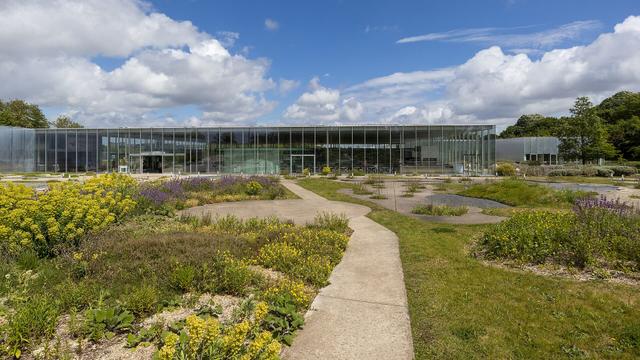
Louvre-Lens. A quarter of an hour away, the museum offers a complete change of mood after a morning on the battlefields. See also: Louvre-Lens
To go further into the memory of the Great War, the Historial de Péronne tells the story of the Battle of the Somme, and La Coupole at Helfaut covers the Second World War. See also: Historial de la Grande Guerre, Péronne, La Coupole, Amiens Cathedral, Hauts-de-France
Where to eat and stay
There is no food on site apart from the vending machines at the visitor centre. The nearby villages of Givenchy-en-Gohelle, Vimy and Souchez have a few brasseries, but there is more choice in Arras.
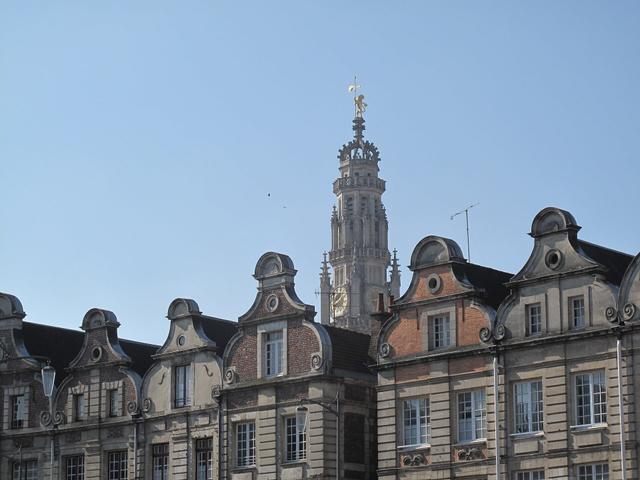
Arras is the best base for an overnight stay. Its two large arcaded squares, its belfry and its restaurants make it a pleasant stop, and the town sits at the centre of the Artois remembrance sites. Lens and Lille are the other options.
FAQ
Is the Vimy Memorial free?
Yes. The park, the monument, the visitor centre and the guided tour of the tunnels and trenches are all free.
Do you need to book the Vimy tunnel tour?
No. Individual visitors cannot book: you sign up at the visitor centre on a first-come, first-served basis. Come early from April to November.
What are the Vimy Memorial opening hours?
The park is open every day. The visitor centre is open 10:00 – 18:00 from April to September and 9:00 – 17:00 from October to March, opening later on Mondays, and it closes for several weeks in winter.
How long does it take to visit Vimy?
Allow up to 2 h for the monument, the guided tour, the visitor centre and the cemeteries, and a full day with Notre-Dame-de-Lorette and the Ring of Remembrance.
How many names are on the Vimy Memorial?
11,285 names of Canadian soldiers who died in France and have no known grave.
Can I bring my dog to Vimy?
No, only assistance dogs and guide dogs are allowed.
Practical information
Official ticket-office prices 2026
Free admission
Address
Mémorial national du Canada à Vimy, 62580 Givenchy-en-Gohelle, France
Directions
On site and nearby
- On site: Toilets, picnics allowed, and wifi
- Nearest shops and pharmacy: Souchez, 3 km away Straight-line distance, based on OpenStreetMap.
- Emergencies: 112 (all emergencies, free from any phone), 15 (SAMU, medical emergency)
Around the site, on Google Maps
With children
Family days out nearby: Louvre-Lens (6 km), Arras Belfry and Boves (10 km), Wellington Quarry (11 km)
Swimming pools and play areas nearby, on Google Maps
Facts checked on 11 November 2026. Sources: veterans.gc.ca, veterans.gc.ca, veterans.gc.ca, en.artois1418.com, en.wikipedia.org, veterans.gc.ca
Map
In the same region