Eperlecques Blockhaus: visiting the V2 bunker in the forest
Eperlecques Blockhaus at a glance
- Full price
- €11.50
- Time needed
- about 1 h 45 min
- Visitors per year
- about 45,000 (2009)
- Where
- Éperlecques
Official ticket-office prices, checked on 12 November 2026. Full opening hours, reduced prices and access
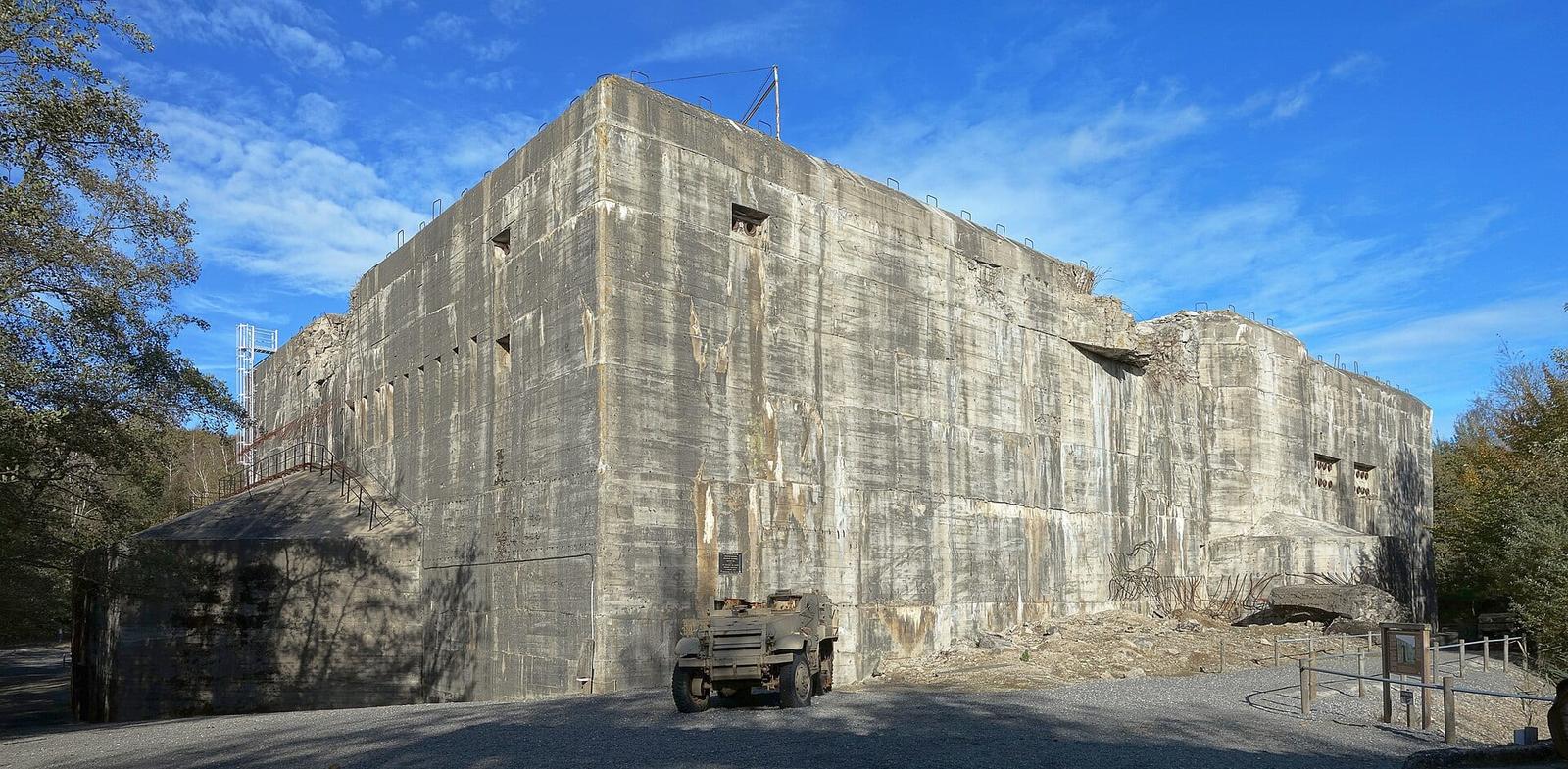

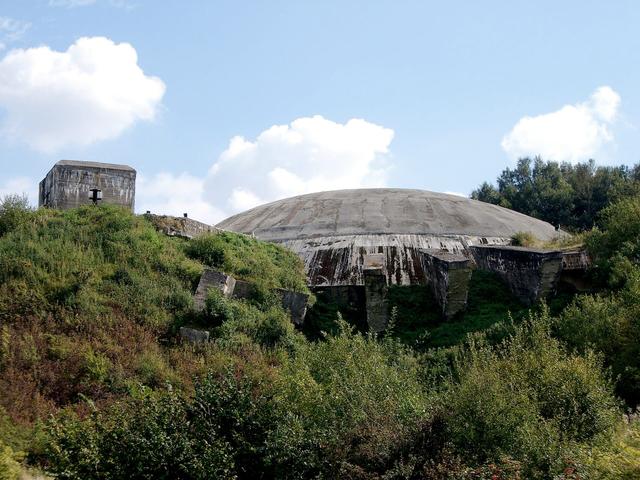
Hidden in a forest near Saint-Omer stands the largest bunker in northern France. The Germans began building it in 1943 to launch V2 rockets at London. Bombed before it could ever be used, it is now reached along a trail lined with audio points, a V1 launch ramp and wartime equipment. Here are the prices, the season's opening hours, how much time to allow and our tips.
Eperlecques Blockhaus at a glance
- Where: in Éperlecques (Pas-de-Calais), in the forest, between Saint-Omer, Calais and Dunkirk.
- Price: €11.50 per adult, €6.50 for ages 7 to 14, €34.50 for the family ticket.
- Season: from March (weekends only) to the end of October. The site is closed from November to February.
- Time needed: allow 1 hour 45 minutes; the last tour starts 105 minutes before closing time.
- The visit: outdoors, in the forest, with audio points and an audio guide in 8 languages.
- Dogs: allowed on a lead.
- Parking: free, according to the Saint-Omer tourist office.

What is the Eperlecques Blockhaus?
It is a giant Second World War bunker hidden in the Éperlecques forest. The Germans started building it in March 1943 as the first self-contained launch base for V2 rockets. The "V" stands for Vergeltung, German for "retaliation". The targets were London and southern England, within range of the Pas-de-Calais coast.
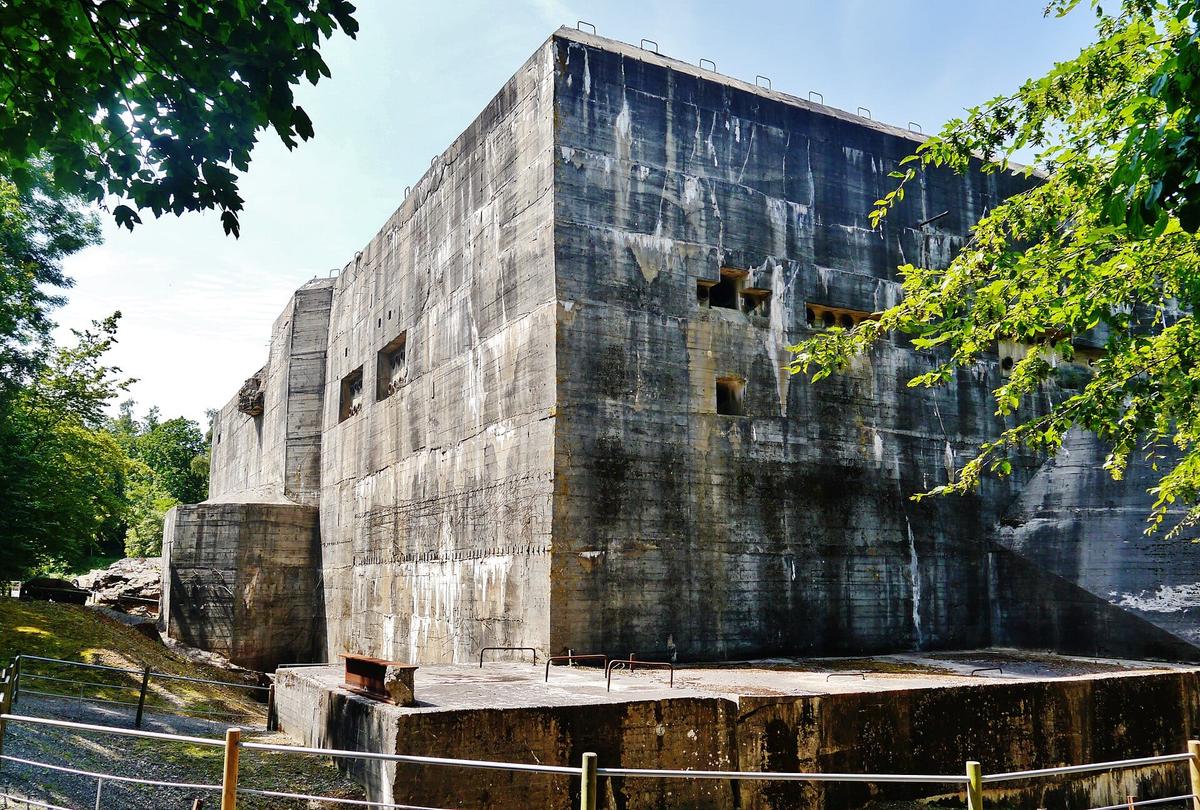

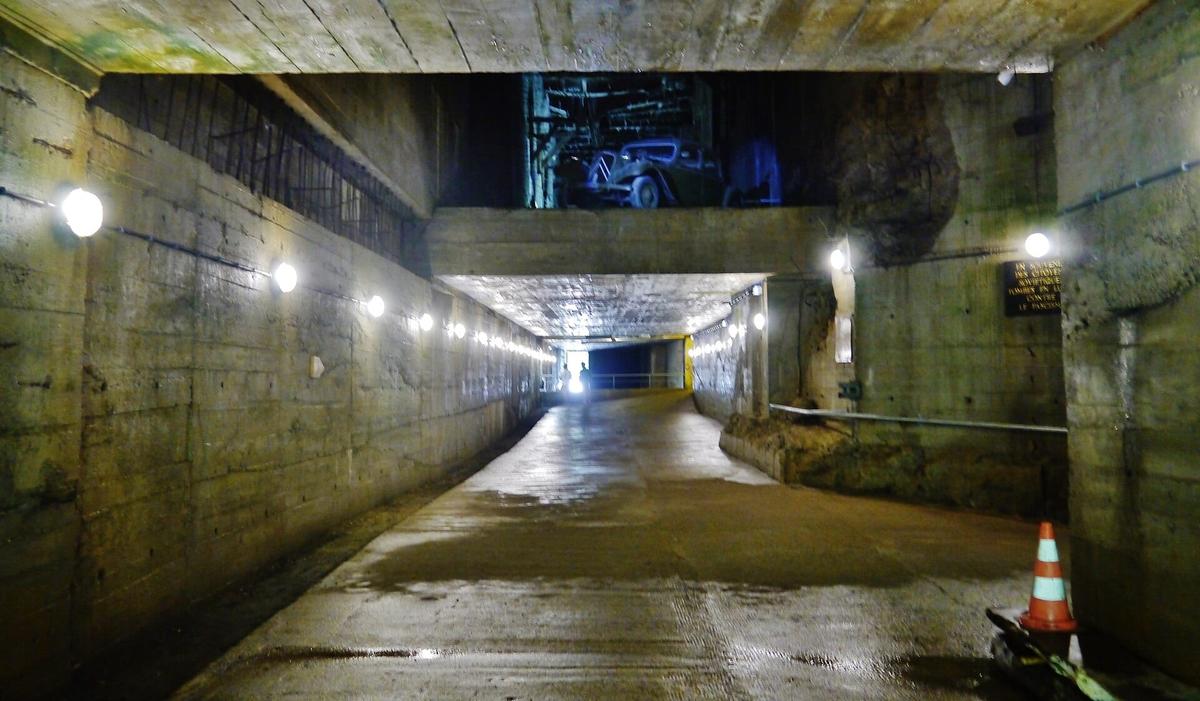
The scale of the project was enormous. The southern part is about 90 metres wide and 28 metres high. Its walls are 7 metres thick. The plan called for 200,000 tonnes of concrete. The building was meant to be a liquid oxygen factory (the V2's fuel), a store served by rail and a launch pad all at once.
The official website describes it as the largest bunker in northern France. It has been open to the public since 1973 and is a listed historic monument. According to Wikipedia, it received about 45,000 visitors in 2009.
A history of forced labour and giant bombs
Building round the clock. About 6000 workers from a construction battalion started the work in March 1943. Teams of 3,000 to 4,000 men took over from each other every twelve hours, non-stop. They were German specialists, French men conscripted under the compulsory labour service (STO), and Belgian, French, Dutch, Polish, Soviet and Czechoslovak prisoners of war. Many were French political prisoners and Spanish Republicans. According to Wikipedia, more than 35,000 foreign workers passed through the site in six months.
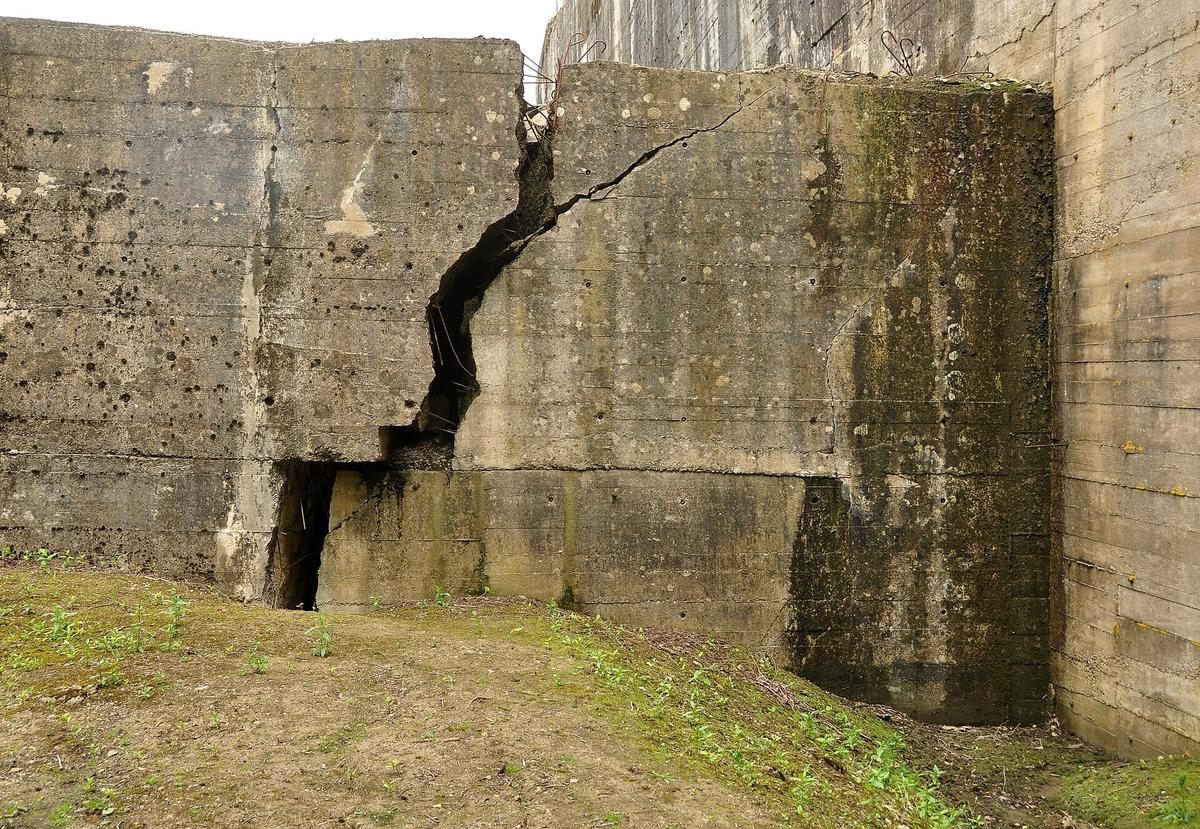

The raid of 27 August 1943. The Allies quickly spotted the site. That day, 187 B-17 bombers of the US Eighth Air Force attacked. The fortified railway station to the north was badly hit, and several hundred forced labourers were killed or injured. The Germans then changed their plans: the base would no longer launch rockets and would mainly become a liquid oxygen factory.
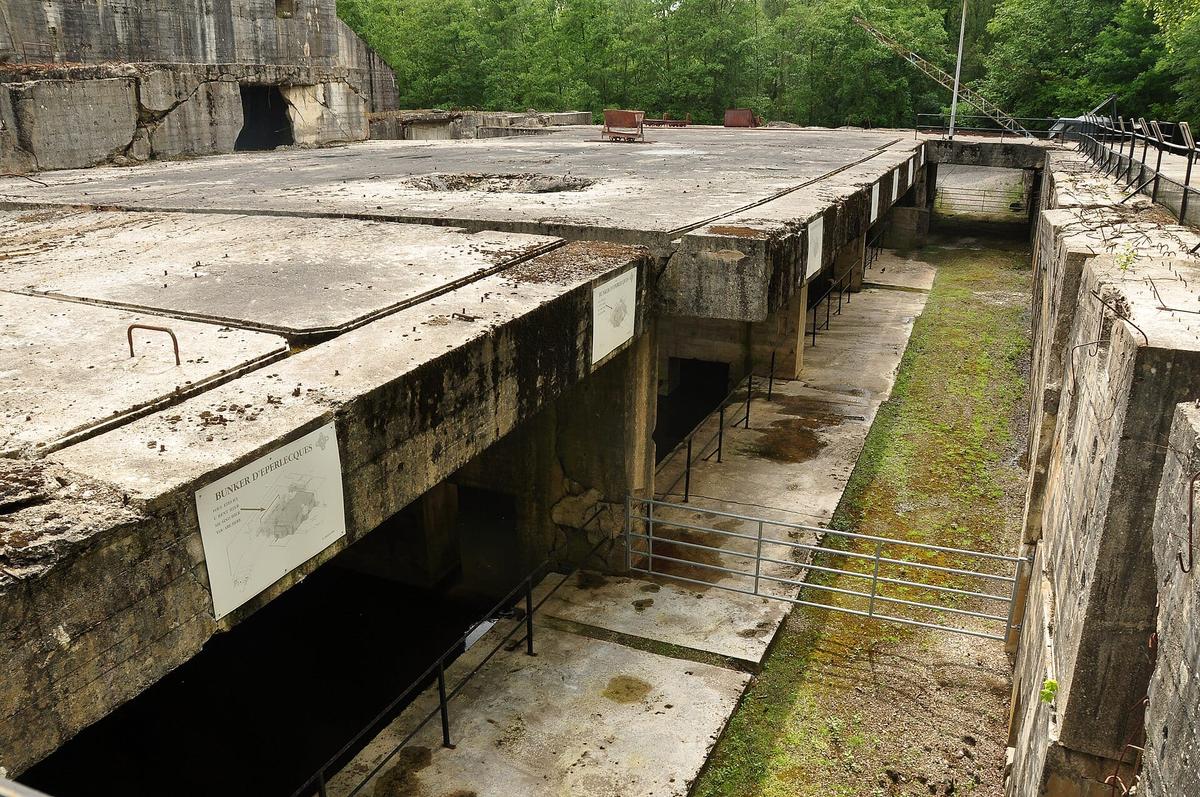
The roof raised by jacks. To protect the northern part, the engineers cast a roof 5 metres thick, weighing about 37,000 tonnes. It was first cast on the ground, then raised little by little with hydraulic jacks. This technique allowed building work to continue under cover of the roof.
The Tallboys. In 1944, the Royal Air Force dropped Tallboys on the site: bombs weighing more than five tonnes, designed to pierce concrete. The official website explains that a salvo of 17 bombs dug a crater 30 metres across. The shock wave shook the floating slab that carried the compressors. German officers dismantled them and abandoned the bunker. Another Tallboy hit the roof: the impact can still be seen on the northern edge. Work stopped in early July 1944.
An anecdote: the bunker as a test target. After the war, the Allies used the bunker to test new weapons. From February to July 1945, they dropped the "Disney" bomb on it, designed by a Royal Navy officer. Released at high altitude, it fired a rocket motor on the way down and struck at 720 metres per second, more than twice the speed of sound. A sign from January 1945 warned local people: when the red flag was raised, all land within 500 metres of the building became dangerous. In January 2009, bomb disposal experts from the French civil defence were still working on the roof.
Liberation. Canadian troops took the site on 4 September 1944. The Germans had left a few days earlier, taking the pumps with them, and much of the bunker was flooded.
How much does it cost to visit the Eperlecques Blockhaus?
Prices published by the Blockhaus for the 2026 season:
- Adult: €11.50.
- Child aged 7 to 14: €6.50.
- Student (with card): €9.
- Family ticket: €34.50 for 2 adults and 2 to 5 children aged 7 to 14.
The family ticket is worth it from two children: otherwise, two adults and two children would pay more at the standard rates. The official website does not publish a price for under-7s, so ask at the front desk.
Groups. For 15 to 35 adults, the ticket drops to €9.50, then to €8.50 for larger groups. Secondary school pupils pay €6, primary school pupils €5.50. Groups must book, with a deposit of €54.
Payment. Cash and card. Cheques are accepted for groups only.
The free game. Since summer 2026, the Blockhaus has offered a free interactive quiz, playable even without a smartphone, for families or friends. It covers history from 1942 to the first steps on the Moon in 1969.
Do you need to book?
No, not for an individual visit: you buy your ticket at the front desk. Booking is required for groups. A guide can accompany groups of 15 people or more, and school visits are adapted to the pupils' age, from 8 years old. For a group visit, the Blockhaus asks you to get in touch by email.
The Blockhaus is not sold on the major online ticketing platforms. If you are looking for a guided outing in the area, look at tours organised around Saint-Omer and the Opal Coast.
Partner links: if you book through these links, we earn a commission at no extra cost to you. Partner links · Learn more
Guided tours and day trips on GetYourGuide
Opening hours 2026: when is the Blockhaus open?
The Blockhaus opens from March to October. Opening hours for the 2026 season, as published on the official website:
- March: weekends only, 14:00 – 17:00, last entry at 15:15.
- April, May, June: every day, 11:00 – 17:30, last entry at 15:45.
- July and August: every day, 10:00 – 18:30, last entry at 16:45.
- September: every day, 11:00 – 17:30.
- October: every day, 13:00 – 17:00, last entry at 15:00.
Closed in November and over the winter. The 2026 season ended on 31 October 2026. The site announces a closure from November to February. The dates of the 2027 season have not yet been published, so check the official website before coming in spring.
Watch the time. Last entry is well before closing: arriving an hour before closing time is already too late. The Saint-Omer tourist office publishes slightly different opening hours (closed on Tuesdays outside summer) and says they are not guaranteed. If in doubt, call +33 3 21 88 44 22.
Our tip: come in the morning in July and August, when there are fewer groups, or on a weekday in May and June. The trail is outdoors in the forest: in wet weather, wear closed shoes and bring something warm. Inside the bunker, it is cold and dark, even in summer.
How long does it take to visit?
The official website recommends allowing 1 hour 45 minutes. That is the time it takes to follow the forest trail, listen to the audio points and go into the bunker for the film. With the quiz and a picnic break, allow half a day. If you are also visiting La Coupole on the same day, do the Blockhaus in the morning and La Coupole in the afternoon, or the other way round: the two sites complement each other.
What to see at the Eperlecques Blockhaus
The forest trail. The visit follows a marked route through the wooded park. Audio points, in several languages, tell the story step by step: the difference between the V1 and the V2, the building of the "concrete giant", the bombing raids, the changes of plan and the effect of the earthquake bombs. Dioramas and Second World War military equipment line the way.

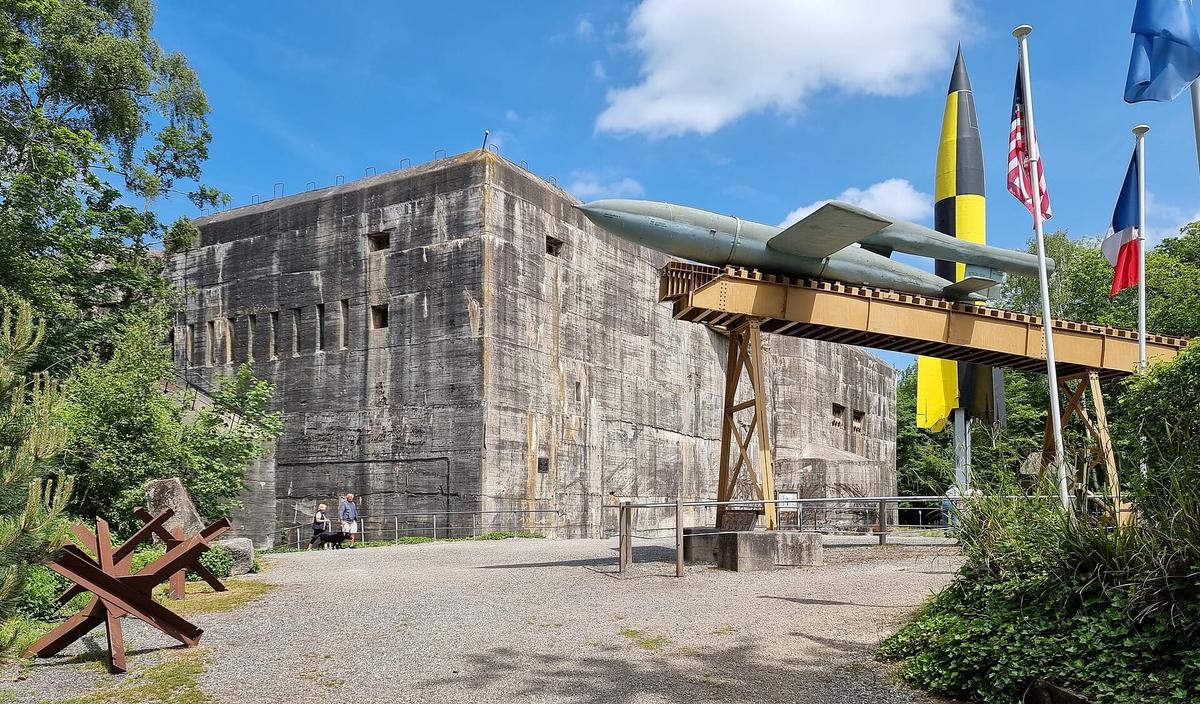
The V1 ramp. The trail features an authentic launch ramp with a V1 ready to go. The site points out that 22,384 V1s were launched from June 1944 to March 1945, mostly at England, including 10,492 at London. About 59% reached their target area; the rest went astray and fell at random.
The V2 rocket. Since 2019, a V2 has stood on its original launch pad. It gives a sense of the scale of the weapon for which all this concrete was poured. V2s were designed at Peenemünde, with the involvement of Wernher von Braun, and mass-produced in the underground Dora factory.
The bunker itself. This is the highlight. You get a sense of the thickness of the walls, the height of the building and the scars left by the bombs. Inside, an audiovisual show plunges you into the cold and the dark. Look for the Tallboy impact on the northern edge of the roof.
The final message. The visit ends with the link between the V2 and the space race, and a call for peace.
Visiting with children
The site welcomes families, provided you adapt the story to their age. It is about war and forced labour: school visits start at 8, which is a good guide. The free quiz helps keep children's attention along the trail, and the V1 ramp and the V2 make a strong impression.

Practical tips:
- The trail runs through the forest: an all-terrain pushchair copes better than a city one.
- Bring a jumper for inside the bunker.
- The tourist office lists a picnic area, toilets and a snack bar.
Accessibility
The official website says the park is accessible by wheelchair with a companion. The route is outdoors, on forest paths, so ask at the front desk about the ground after heavy rain. Tours are also available in sign language. Dogs are allowed on a lead.
How to get to the Eperlecques Blockhaus
By car. This is the easiest option. The Blockhaus is about fifteen kilometres north-west of Saint-Omer, on rue des Sarts in Éperlecques. From Calais or Dunkirk, allow about three quarters of an hour. Parking is free according to the tourist office; there is also a listed area for campervans.
By train. Saint-Omer is the nearest main station. From there it is still about twenty minutes by road: plan on a taxi, as no convenient regular bus serves the site.
From England. The Blockhaus is less than an hour from Calais, which makes it an easy stop at the start or end of a Channel crossing.
Renting a car. To combine the Blockhaus, La Coupole and the Opal Coast, a car picked up in Lille or Calais is the most flexible option.
What to see nearby on the same day
| Also worth seeing | Distance | Travel time |
|---|---|---|
| La Coupole | 18 km | 20 min by car |
| Nausicaá | 60 km | 50 min by car |
Approximate road distances and travel times.
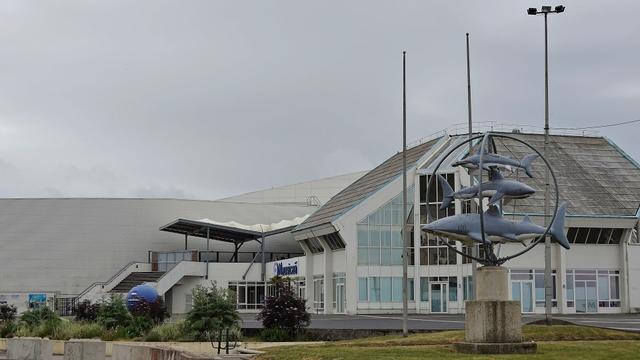
La Coupole at Helfaut, about twenty minutes away, is the logical next stop: it is the other major V2 site around Saint-Omer, with a history centre and a planetarium. See also: La Coupole Towards the coast, Nausicaá in Boulogne-sur-Mer is a complete change of scene and a hit with children. See also: Nausicaá
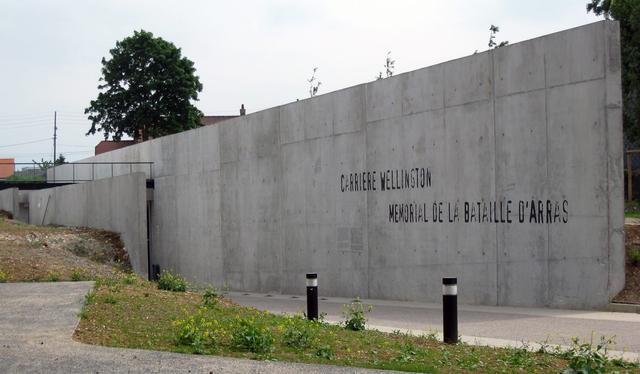
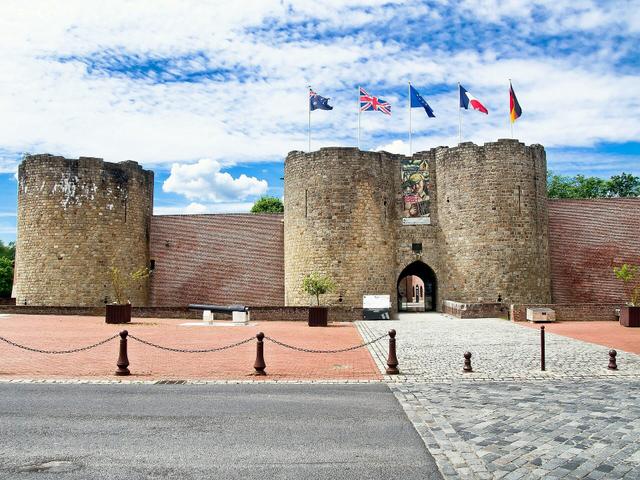
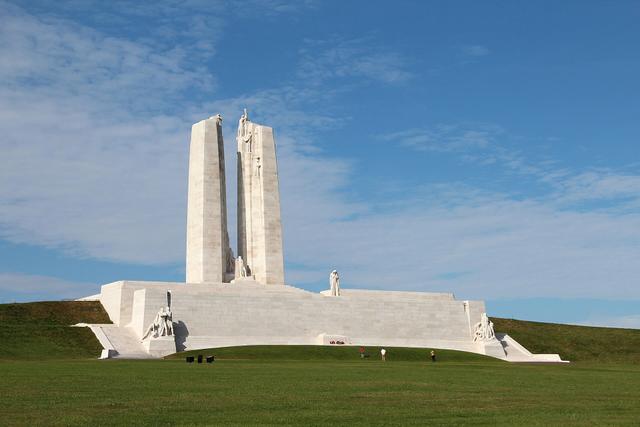
For a wider remembrance tour of the Pas-de-Calais, the Canadian National Vimy Memorial and the Wellington Quarry in Arras tell the story of the First World War. See also: Canadian National Vimy Memorial, Wellington Quarry In the Somme, the Historial de Péronne completes the trip. See also: Historial de la Grande Guerre, Péronne
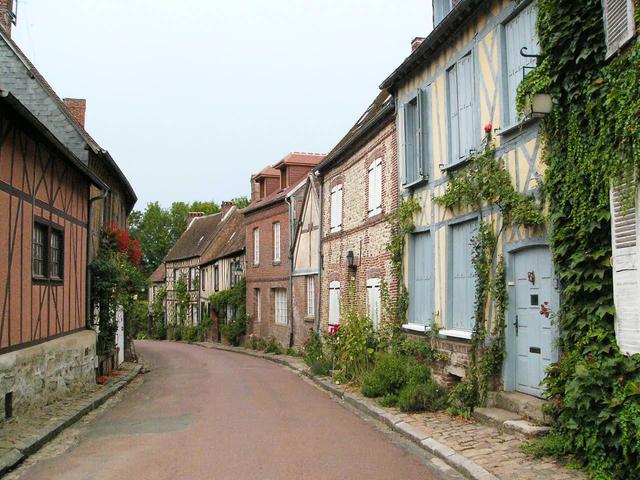
Further south, in the Oise, the flower-filled village of Gerberoy makes for a very different outing in the region. See also: Gerberoy, Hauts-de-France
Where to eat and stay
On site, the tourist office lists a snack bar and a picnic area, handy for a break during the trail. For a proper meal, Saint-Omer is about twenty minutes away.
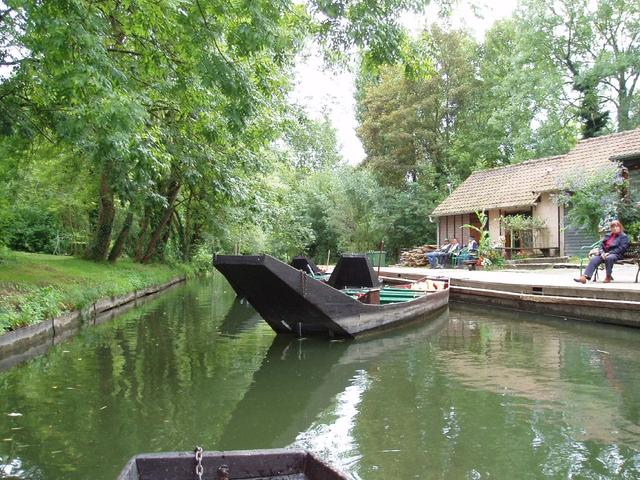
To stay, Saint-Omer is the best base: the town lies halfway between the Blockhaus and La Coupole, and you can explore the Audomarois marshes by boat. Calais and Dunkirk work well if you are crossing the Channel.
Places to stay near Saint-Omer
FAQ
How much is a ticket to the Eperlecques Blockhaus?
€11.50 per adult, €6.50 for ages 7 to 14, €9 for students and €34.50 for the family ticket.
Is the Blockhaus open in November?
No. The site opens from March to October and closes from November to February. In March, it is only open at weekends.
How long does the visit take?
The site recommends 1 hour 45 minutes. The last tour starts about 105 minutes before closing time.
What is the difference with La Coupole?
Both sites were meant to launch V2s at London. The Blockhaus is an outdoor visit around a bunker left as it was in 1944; La Coupole is an indoor history centre under a concrete dome, with a planetarium.
Can I bring my dog?
Yes, on a lead.
Is the Blockhaus suitable for children?
Yes, from about 7 or 8. The free quiz, the V1 ramp and the V2 hold their attention, but the subject is still war and forced labour.
Practical information
Opening hours 2026
| 1 March 2026 to 31 March 2026 | 14:00 – 17:00 (Closed: Monday, Tuesday, Wednesday, Thursday, and Friday) |
|---|---|
| 1 April 2026 to 30 June 2026 | 11:00 – 17:30 |
| 1 July 2026 to 31 August 2026 | 10:00 – 18:30 |
| 1 September 2026 to 30 September 2026 | 11:00 – 17:30 |
| 1 October 2026 to 31 October 2026 | 13:00 – 17:00 |
Official ticket-office prices 2026
| Full price | €11.50 |
|---|---|
| Student | €9 |
| Child (aged 7–14) | €6.50 |
| Family ticket | €34.50 |
Address
71 rue des Sarts, 62910 Éperlecques, France
Directions · Phone+33 3 21 88 44 22
On site and nearby
- On site: Toilets, picnics allowed, and food and drink
- Nearest shops and pharmacy: Watten, 2 km away Straight-line distance, based on OpenStreetMap.
- Emergencies: 112 (all emergencies, free from any phone), 15 (SAMU, medical emergency)
Around the site, on Google Maps
With children
Family days out nearby: La Coupole (14 km), Château de Boulogne-sur-Mer (42 km), Nausicaá (43 km)
Swimming pools and play areas nearby, on Google Maps
Facts checked on 12 November 2026. Sources: leblockhaus.com, leblockhaus.com, en.tourisme-saintomer.com, fr.wikipedia.org, leblockhaus.com, cheminsdememoire.gouv.fr, leblockhaus.com
Map
In the same region