Familistère de Guise: planning your visit
Familistère de Guise at a glance
- Where
- Guise
Facts checked on 29 October 2026. Full opening hours, reduced prices and access
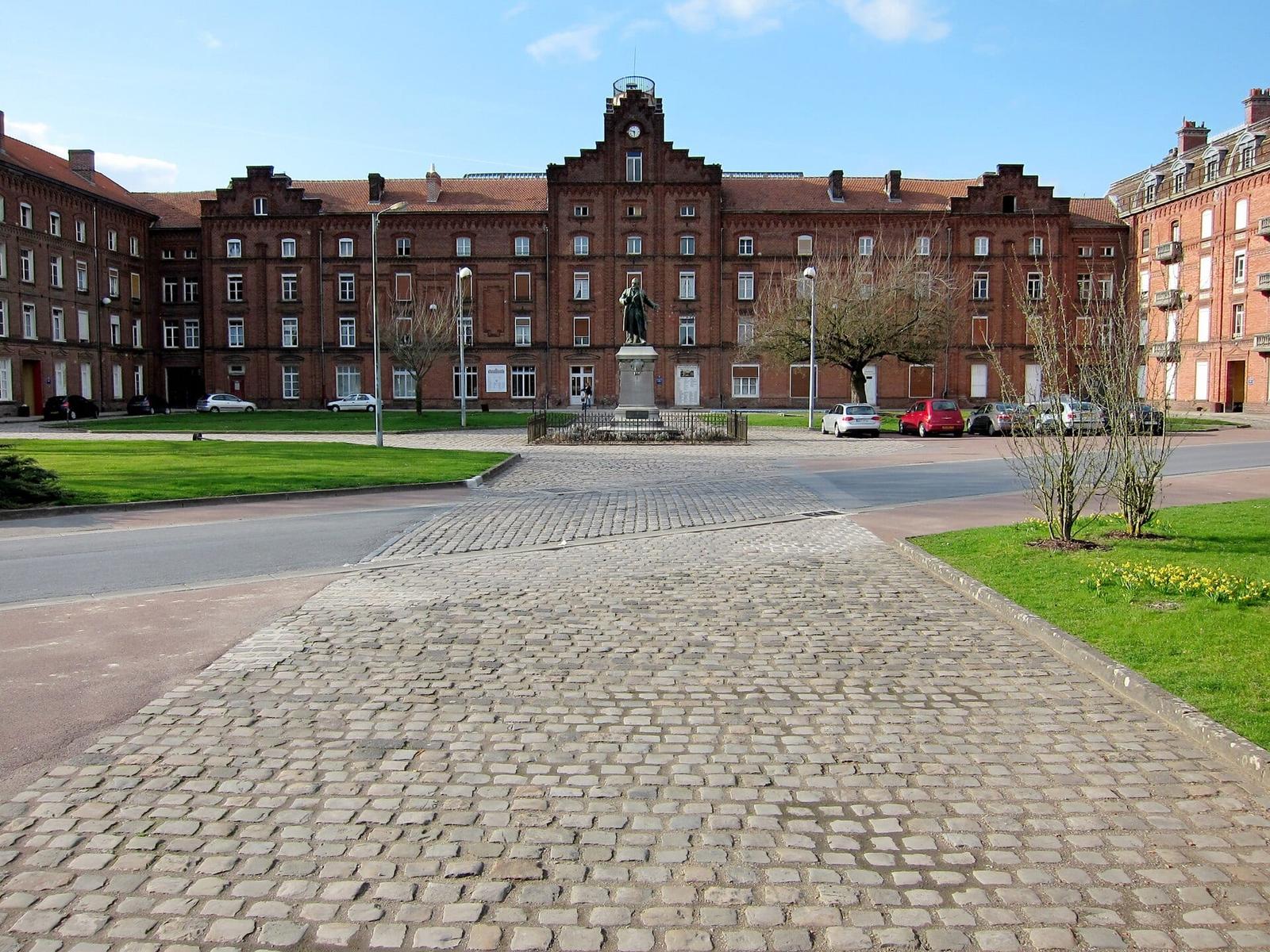

In the Aisne, on the banks of the Oise, the industrialist Jean-Baptiste André Godin, inventor of the cast-iron stoves that bear his name, built a "social palace" in the 19th century to house the workers of his factory. Apartments, shops, school, theatre and swimming pool: everything was on site. Now a museum, the Familistère is open to visitors. Here is what you need to know to get there, what there is to see and how to plan the day.
The Familistère at a glance
- Where: in Guise, in the north of the Aisne, in the Thiérache area, about thirty kilometres from Saint-Quentin.
- What: the former workers' housing complex built by Godin between 1858 and 1884, a museum since 2010.
- Tickets and opening hours: they change with the season; check the Familistère's official website before you set off.
- Getting there: by car is easiest. Allow about an hour and a half from Lille.
- Time needed: half a day on site, more if you linger in the garden.
- Best for: anyone curious about social history, architecture and industry, and families with children old enough to read.
What is the Familistère de Guise?
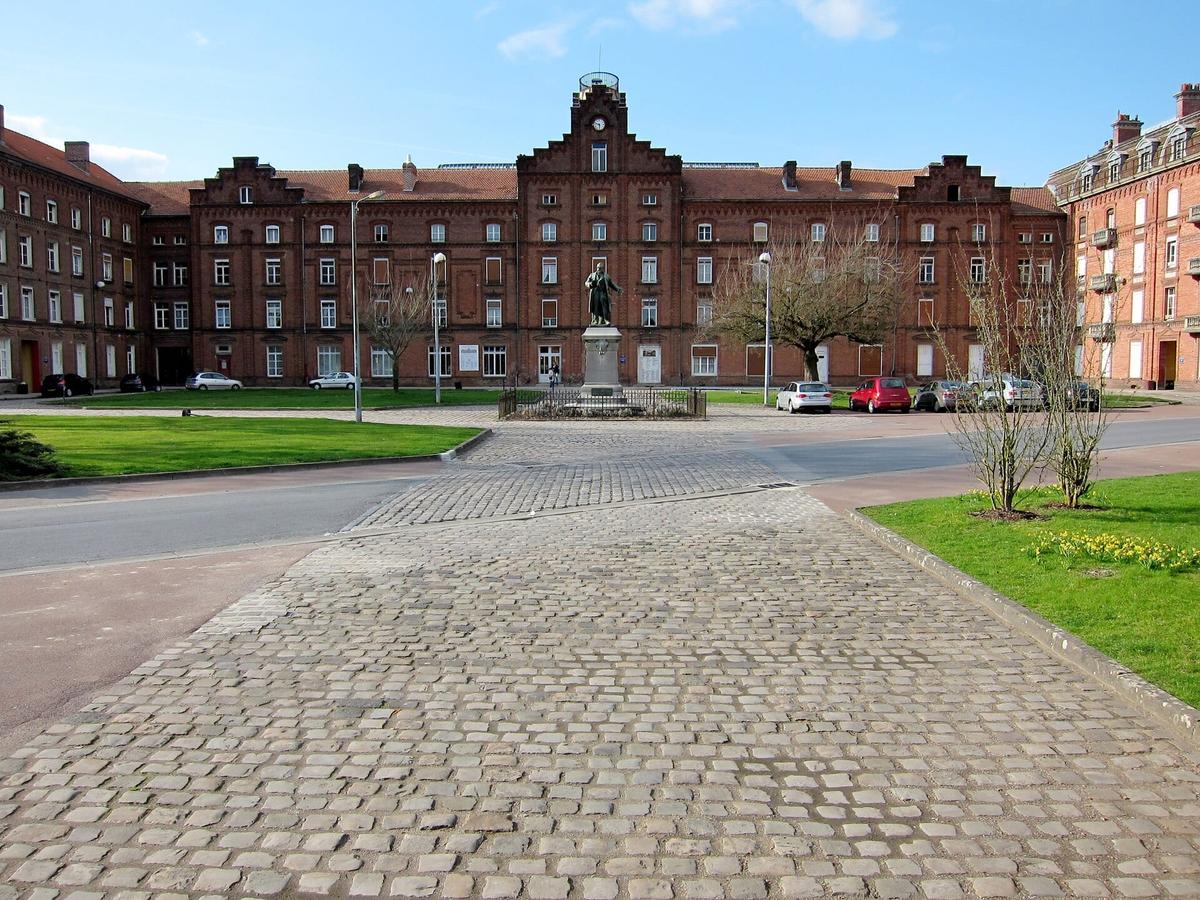
Jean-Baptiste André Godin was born in 1817 into a modest family in the Aisne. In 1840, at Esquéhéries, he patented stoves made of cast iron rather than sheet metal: cast iron spreads heat better. Success was immediate. In 1846, he set up his factory in Guise, on the banks of the Oise.
Godin was an unusual employer. A reader of Charles Fourier and his ideas on the phalanstery, he wanted to give his workers what he called the "equivalents of wealth": healthy housing, water, light, school for the children and leisure. From 1858, he built a group of collective housing blocks opposite the factory, which he called the Familistère.
Building went on until 1884. Before the First World War, the Familistère had 495 apartments spread over five pavilions. In 1889, 1748 people lived there. Around the homes, Godin added economats (cooperative shops), a nursery for the very young, schools, a theatre, a laundry with a swimming pool and a large pleasure garden.
In 1880, he went further: the company became a production cooperative, the Association of Capital and Labour, which the workers gradually came to own. Godin died in 1888. His partner Marie Moret, who had worked with him on the project, carried on his work. The association ran until 1968, when the company became a public limited company, later absorbed into the Le Creuset group.
The buildings were listed as historic monuments in 1991. In 2000, the "Utopia" programme launched the restoration of the site. The museum, which holds the "musée de France" label, opened in 2010.
Tickets and opening hours: what to know
The Familistère publishes its opening hours and prices on its official website, under "Informations pratiques". They vary with the season and the school holidays: check the opening days before you make the trip, especially in winter, as Guise is off the beaten track and a wasted journey costs you a day.
The ticket gives access to the parts of the social palace open to visitors. Guided tours and events are offered during the year, especially in summer and during the European Heritage Days. The programme is announced on the museum's website.
Partner links: if you book through these links, we earn a commission at no extra cost to you. Partner links · Learn more
Guided tours and day trips on GetYourGuide
How long does it take to visit the Familistère?
Allow half a day. The site is large: several pavilions, the economats, the theatre, the laundry and swimming pool and the garden by the Oise. With two hours, you will see the central pavilion and its apartments. With a whole afternoon, you can add the theatre, the swimming pool and a walk in the garden.
Our tip: start with the central pavilion to understand how the complex worked, then move on to the reconstructed apartments. Keep the garden for the end: it is the best place to relax before the drive home.
How to get to the Familistère de Guise

By car. This is by far the most practical option. Guise is in the north of the Aisne, about an hour and a half from Lille and about thirty kilometres from Saint-Quentin. From Paris, the A26 motorway runs to the west, via Saint-Quentin. From Belgium, the road crosses the Thiérache.
Without a car. It is more complicated. The nearest main station is Saint-Quentin, on the line from Paris. You then still have to reach Guise by road: look into regional coaches before you go, or plan on a taxi.
Renting a car. For a trip around Hauts-de-France, a car picked up in Lille lets you link the Familistère with the Louvre-Lens, Amiens or La Piscine in Roubaix without depending on coach timetables.
What to see at the Familistère de Guise
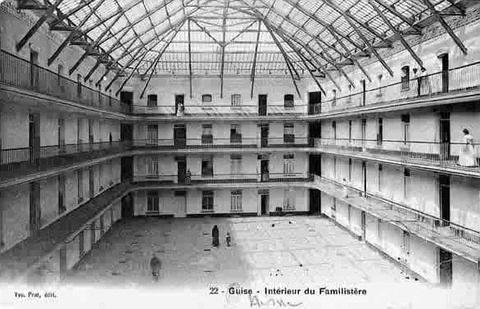
The central pavilion. This is the heart of the social palace. The homes open onto a large inner courtyard covered by a glass roof. Galleries run along each floor: about a kilometre in all across the palace's three pavilions, with 500 windows. Each family had its own apartment, but everyone could see everyone else. Godin wanted the courtyard to be a place for meeting and celebrations.
The apartments. Several homes have been reconstructed with their furniture, to show the life of working-class families at different periods. The apartments had drinking water on every floor, a real luxury for 19th-century workers.
The economats. Residents bought food, clothes and everyday items here.
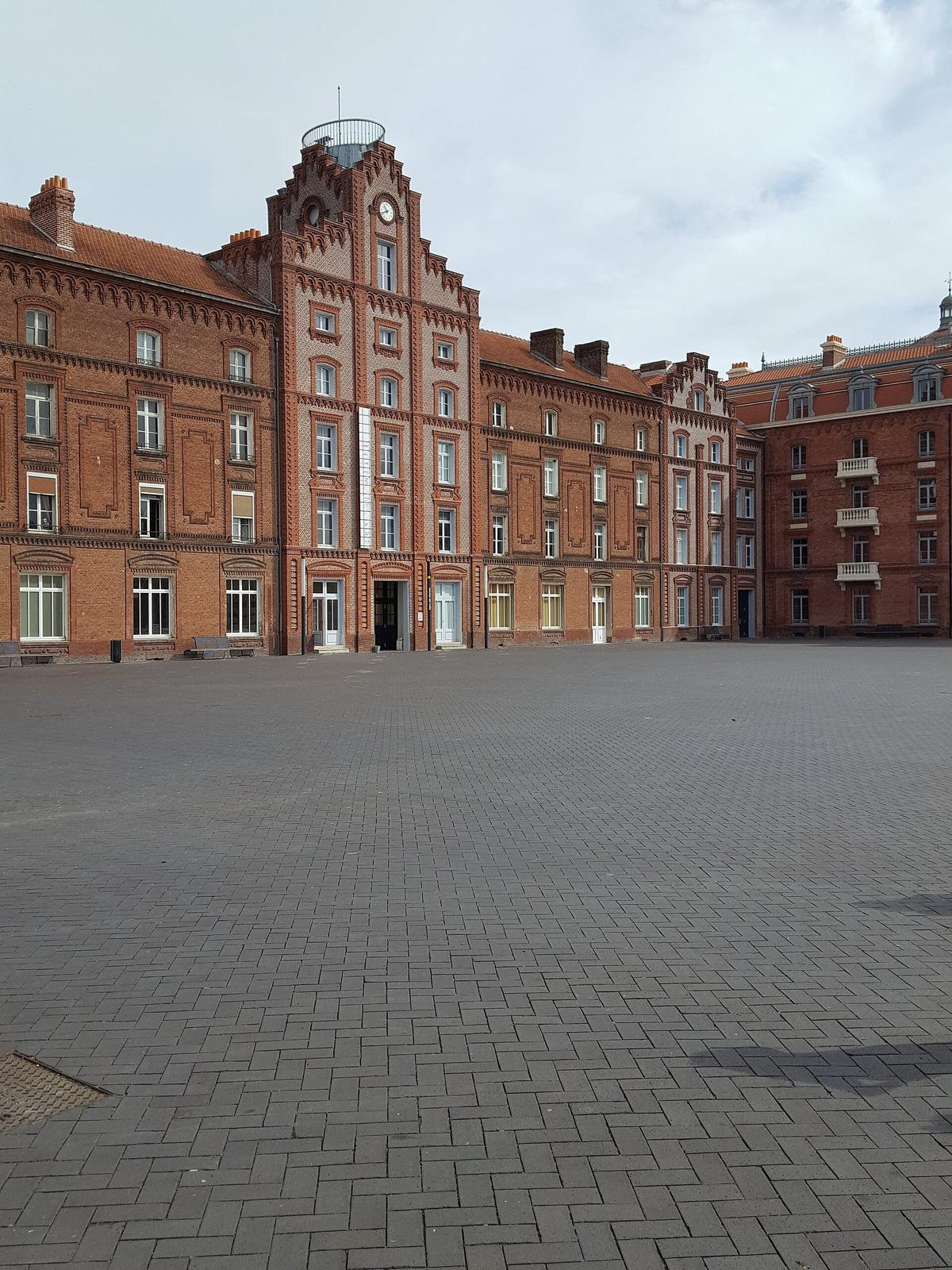

The theatre. Standing opposite the central pavilion, it was used for celebrations, concerts and plays performed by the residents. In 1914, it could seat 1000 spectators. The Familistère's schools were next door: Godin was determined that every child in the complex should be educated.
The laundry and the swimming pool. This is the most surprising spot. The pool had a movable floor that could be raised so that children could swim safely. The water came from the factory next door, where it had been used to cool the machines, and arrived already warm.
Godin stoves. The museum shows the factory's output, the enamelled cast-iron stoves and cookers that made Godin's fortune. On the eve of the First World War, the factory was shipping 210,000 appliances a year.
The garden. Created as early as 1858, the pleasure garden stretches down to the banks of the Oise. It is part of the protected site, along with Godin's mausoleum and the statue of the founder.
Visiting the Familistère with children
The Familistère works well for children from 8 or 10: the pool with the movable floor, life in the apartments, the school and the theatre all make sense without knowing 19th-century history. The museum offers family activities during the school holidays; the programme is on its website.
For younger ones, the garden by the Oise is a good place for a break outdoors between buildings. Dress for the weather: you often go from one pavilion to another outside.
What is changing on the site
The restoration programme is not finished. A hotel and an international centre, the "Familistère Campus", are due to open on the site; their opening is announced for 2027. Works may therefore limit access to some buildings: check the news on the official website before you come.
What to visit near the Familistère
| Also worth seeing | Distance | Travel time |
|---|---|---|
| Amiens Cathedral | 110 km | 80 min by car |
| Louvre-Lens | 115 km | 85 min by car |
Approximate road distances and travel times.
Guise is a little out of the way from the region's major sites. The Familistère fits better into a trip of several days than into a single day.
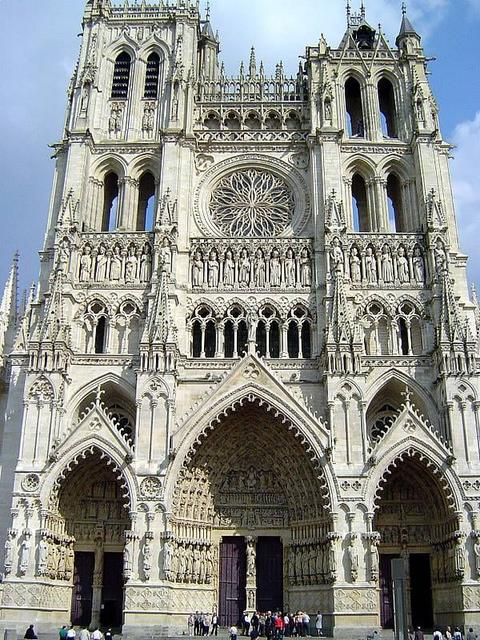
Amiens. Notre-Dame Cathedral, the largest in France, and the hortillonnages floating gardens are about an hour and a quarter's drive away. See also: Amiens Cathedral, Hortillonnages of Amiens
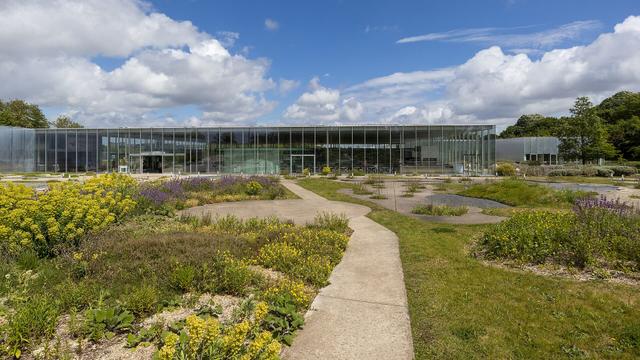
The Louvre-Lens. For a museum day in the former mining basin, another major chapter in the working-class history of northern France. See also: Louvre-Lens
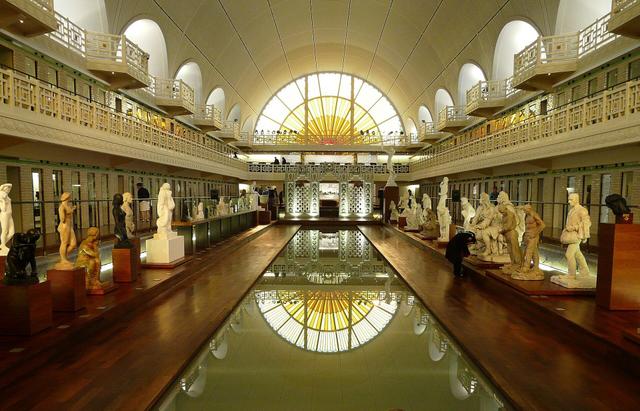
La Piscine in Roubaix. Another social history story: the Art Deco swimming pool built for the hygiene of textile workers, now a museum. See also: La Piscine museum, Roubaix
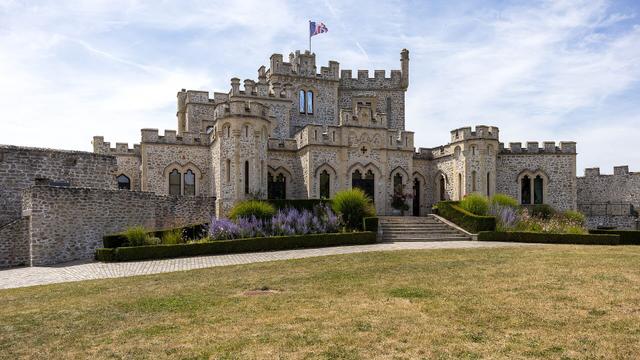
Pierrefonds. Heading south via Laon and Soissons, the castle restored by Viollet-le-Duc. See also: Château de Pierrefonds, Hauts-de-France
Facts and figures
- A fortune lost in Texas. In 1854, Godin invested in "La Réunion", a Fourierist colony founded in Texas. The venture failed and he lost a third of his personal fortune. That failure is partly what drove him to build his own project in Guise, next to his factory.
- Engels changed his mind. In 1872, Friedrich Engels cited the Familistère as a unique socialist experiment. By 1886, he saw it as just another place where workers were exploited.
- A banquet in the courtyard. In 1872, a Labour festival seated 796 guests at table in the courtyard of the central pavilion.
- 1526 employees in 1887. At its peak, the factory employed up to 1,500 people in Guise; with the Brussels factory, the record of 2,500 employees was reached in 1930.
- A film set. The Familistère was used as a setting for the film "Louise-Michel" (2008) and "La Guerre des Lulus" (2022), and for the graphic novel "De briques et de sang" (2010).
Where to eat and stay
On site. The Familistère offers food at lunchtime, described on its website under "Déjeuner au Familistère". Check the opening days, especially out of season.
In the area. The Thiérache, further east, is known for its cheese, maroilles, and its fortified churches.
Staying. Saint-Quentin, about thirty kilometres away, has the widest choice of hotels nearby and a railway station. You can stay in town and visit the Familistère the next morning.
Places to stay near Saint-Quentin
FAQ
Where is the Familistère de Guise?
In Guise, in the north of the Aisne department, on the banks of the Oise, about thirty kilometres from Saint-Quentin and about an hour and a half from Lille by car.
How long does it take to visit the Familistère?
Allow half a day to see the central pavilion, the apartments, the theatre, the swimming pool and the garden.
Can you get to the Familistère without a car?
It is possible but complicated: the nearest main station is Saint-Quentin, and you then have to reach Guise by road.
Who was Jean-Baptiste André Godin?
An industrialist from the Aisne, born in 1817, inventor of Godin cast-iron stoves. He built the Familistère to house his workers and turned his company into a cooperative in 1880.
Is the Familistère open all year?
Opening hours change with the season. Check the official website before you go, especially between November and March.
Are Godin stoves still made in Guise?
The Guise factory still makes heating appliances under the Godin brand, next to the Familistère.
Practical information
Address
Familistère de Guise, Cité Familistère, 02120 Guise, France
Directions
On site and nearby
- Nearest shops and pharmacy: Guise, less than 1 km away Straight-line distance, based on OpenStreetMap.
- Emergencies: 112 (all emergencies, free from any phone), 15 (SAMU, medical emergency)
Around the site, on Google Maps
With children
Family days out nearby: Matisse Museum, Le Cateau-Cambrésis (23 km), Vaucelles Abbey (35 km), Château de Coucy (48 km)
Swimming pools and play areas nearby, on Google Maps
Facts checked on 29 October 2026. Sources: familistere.com, fr.wikipedia.org
Map
In the same region