Jacques Cartier, the man from Saint-Malo who sailed up the St. Lawrence
- Born
- 1491
- Died
- 1 September 1557
- Active years
- 1534 – 1557
- Family
- Artists, saints and favourites
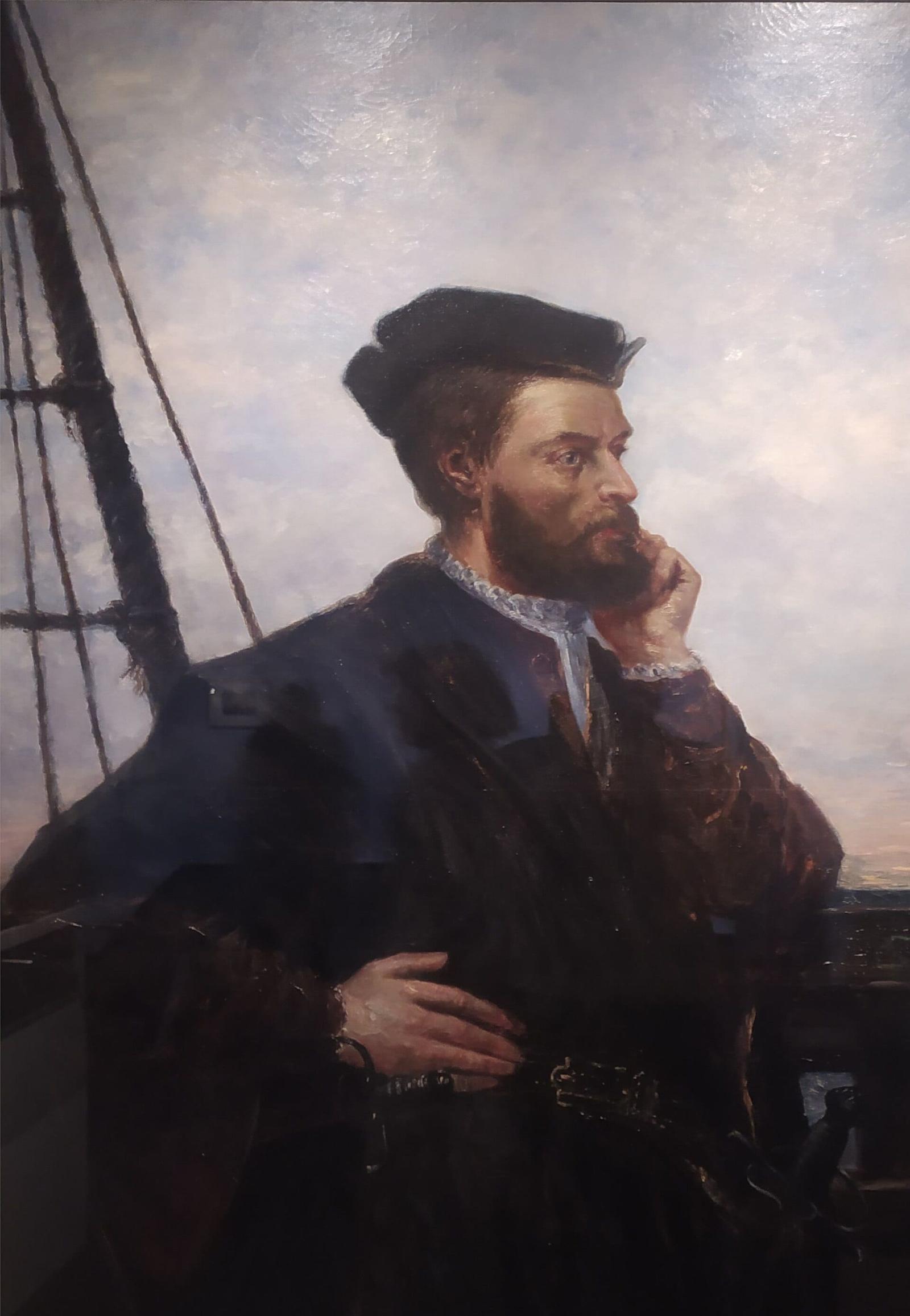
Francis I asked him to find a passage to Asia, gold and spices. Jacques Cartier brought back a name, Canada, which he took for the name of the country when it meant a village, a handful of stones he believed were precious, and the first description of the St. Lawrence. He set out three times from Saint-Malo, came back there to end his days, and lies in the cathedral of the walled town.
Jacques Cartier in dates
| Date | Event |
|---|---|
| 1491 | Born in Saint-Malo |
| 1520 | Marries Catherine des Granches, from a prominent Saint-Malo family |
| 20 April 1534 | First voyage, on the orders of Francis I |
| 24 July 1534 | Plants a cross in Gaspé Bay |
| 19 May 1535 | Second voyage, with three ships |
| 2 October 1535 | Reaches Hochelaga, present-day Montreal |
| 1535-1536 | Winters at Stadacona, present-day Quebec City; scurvy ravages the crew |
| 16 July 1536 | Returns to Saint-Malo with Chief Donnacona |
| 23 May 1541 | Third voyage, under the authority of the Sieur de Roberval |
| 1542 | Returns to France with gold and diamonds that turn out to be fake |
| 1 September 1557 | Dies in Saint-Malo |
A pilot from Saint-Malo
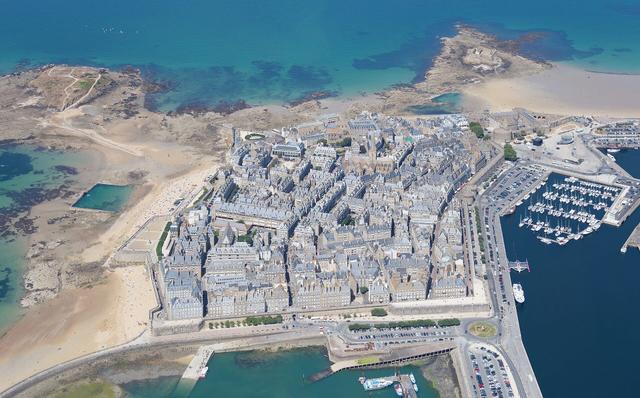
Jacques Cartier was born in 1491 in Saint-Malo, a port of privateers and fishermen who were already sailing to the Grand Banks of Newfoundland. Little is known of his youth; he probably sailed to Brazil. In 1520, his marriage to Catherine des Granches, the daughter of a prominent family in the town, made him a man of standing. See also: Saint-Malo Ramparts
1534: the cross at Gaspé
In 1534, Francis I commissioned him to look beyond Newfoundland for a passage to Asia and for lands rich in gold. Leaving Saint-Malo on 20 April with two ships, Cartier explored the Gulf of St. Lawrence. On 24 July, in Gaspé Bay, he planted a large cross bearing the words “Long live the King of France” (“Vive le roi de France”). He took two sons of the Iroquoian chief Donnacona back to France. See also: Francis I
1535: Hochelaga and the terrible winter
In the spring of 1535, he set out again with three ships, the Grande Hermine, the Petite Hermine and the Émérillon. Guided by the two young men, he sailed up the river to Stadacona, Donnacona's village, then to Hochelaga, a large fortified village at the foot of a mountain he named Mount Royal. That is where the name Montreal comes from.
The winter at Stadacona was terrible. The ships were trapped in the ice and scurvy killed part of the crew. The Iroquoians showed the French a remedy, an infusion made from a tree they called annedda, probably the white cedar. In the spring of 1536, Cartier took Donnacona to France so that he could tell the king about the riches of the “Kingdom of the Saguenay”. The chief never saw his homeland again.
It is in the account of this voyage that the word Canada first appears; it meant “village” in the Iroquoians' language.
1541: the diamonds of Canada
The third voyage, in 1541, was meant to found a colony under the command of a Protestant nobleman, Jean-François de La Rocque de Roberval. Cartier went ahead, settled near Stadacona and gathered what he thought were gold and diamonds. Back in France in 1542, they turned out to be pyrite and quartz. The French saying “as fake as Canadian diamonds” (“faux comme des diamants du Canada”) comes from this.
Back in Saint-Malo
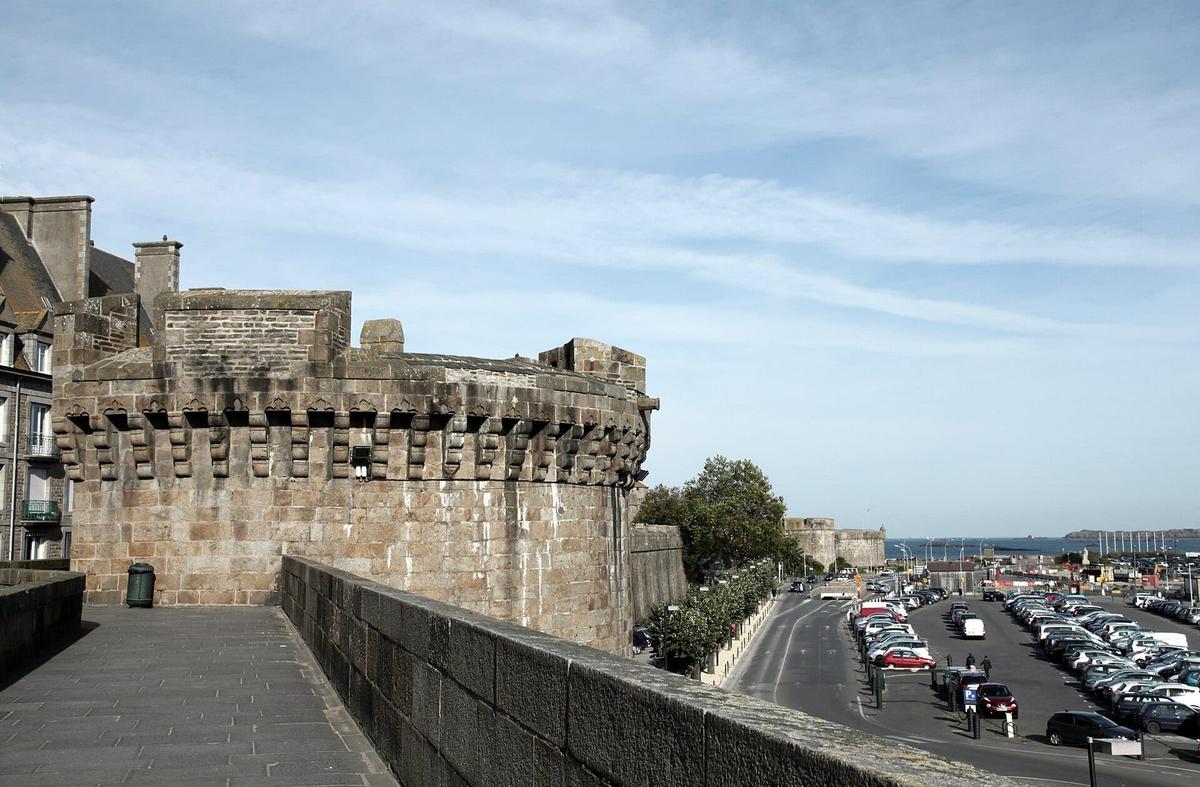
Cartier spent the rest of his life in Saint-Malo, where he often acted as a Portuguese interpreter and as a witness. He died on 1 September 1557, probably during an epidemic, and was buried in the Cathedral of Saint-Vincent.
What to see: in the walled town, the Cathedral of Saint-Vincent, where a plaque marks the spot where Cartier knelt before setting sail in 1535, and his tomb; the walk around the ramparts; his statue on the Bastion de la Hollande, facing the open sea. In Rothéneuf, the Manoir de Limoëlou, believed to be his country house, holds the Jacques Cartier Museum.
In his footsteps: Saint-Malo
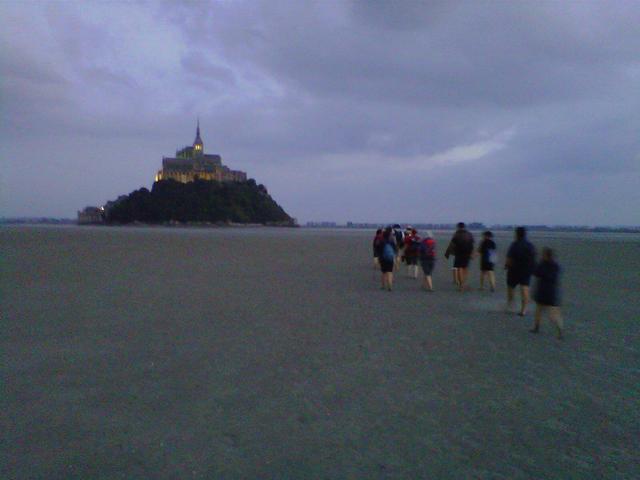
The walled town of Saint-Malo is best explored on foot. The ramparts, 1754 metres long, go almost all the way round and look out over the Grand Bé and the forts. The Manoir de Limoëlou is about ten minutes away by car, in Rothéneuf. Mont-Saint-Michel is an hour's drive away. See also: Mont-Saint-Michel
Partner links: if you book through these links, we earn a commission at no extra cost to you. Partner links · Learn more
Places to stay near Saint-Malo
FAQ
Who sent Jacques Cartier to Canada?
Francis I, who in 1534 gave him the task of finding a passage to Asia and lands rich in gold beyond Newfoundland.
How many voyages did Jacques Cartier make?
Three: in 1534, in 1535-1536 and in 1541-1542, all from Saint-Malo.
Where does the name Canada come from?
From an Iroquoian word meaning “village”. Cartier wrote it down in the account of his second voyage and took it for the name of the country.
Where is Jacques Cartier buried?
In the Cathedral of Saint-Vincent in Saint-Malo.
Can you visit Jacques Cartier's house?
The Manoir de Limoëlou, in Rothéneuf near Saint-Malo, presented as his country house, holds a museum devoted to him.
Sources: fr.wikipedia.org (Jacques Cartier)