Pont Valentré: visiting the Devil's Bridge in Cahors
Pont Valentré at a glance
- Admission
- Free
- Visitors per year
- about 226,000
- Where
- Cahors
Facts checked on 10 November 2026. Full opening hours, reduced prices and access
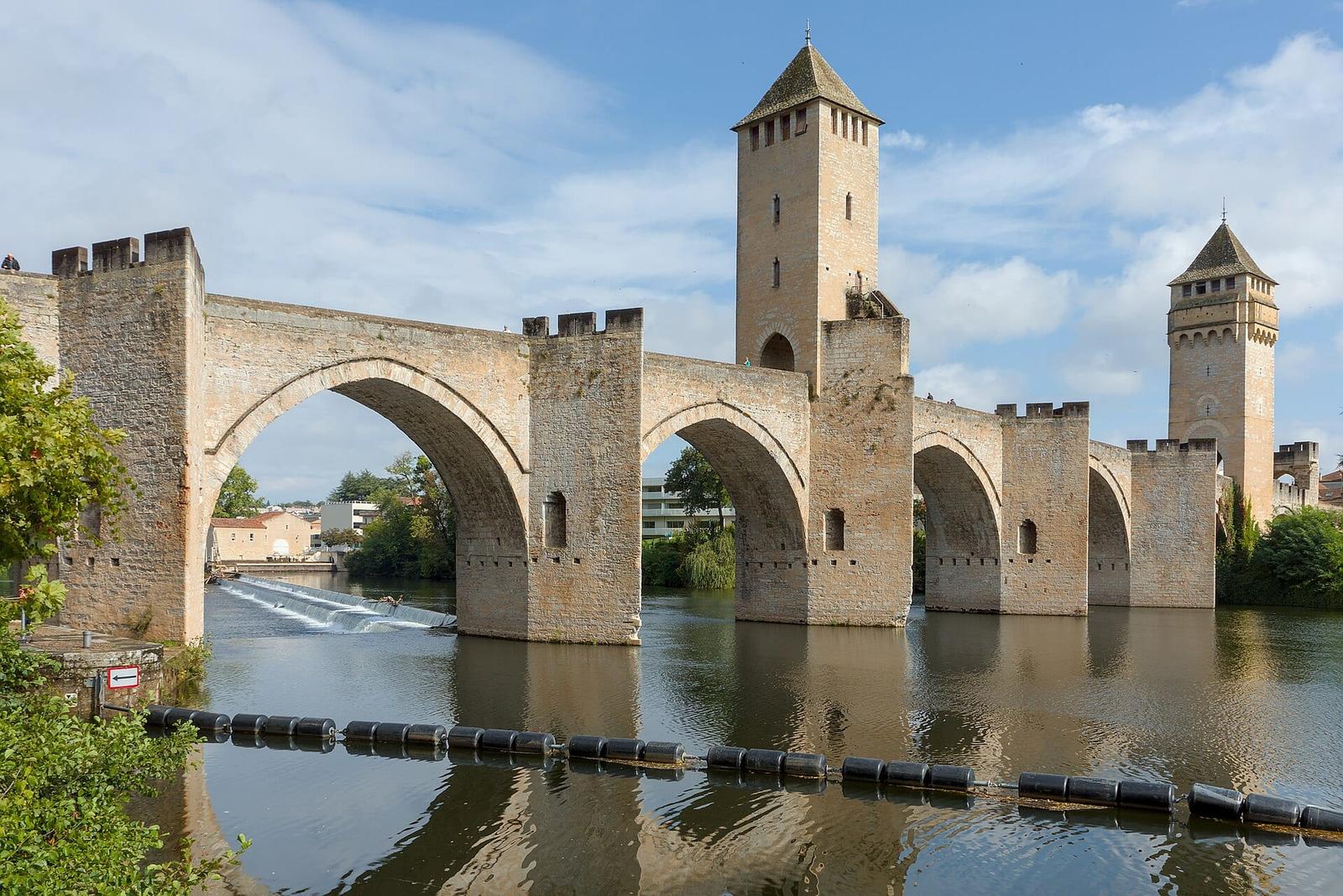
On the west side of Cahors, the Pont Valentré and its three towers have crossed the Lot river for more than 700 years. It is one of the best preserved fortified medieval bridges in Europe, and a UNESCO World Heritage Site as part of the Routes of Santiago de Compostela in France. You can walk across it freely, at any time. Here is how to get there, where to park, what to look for and the story of its little devil.
Pont Valentré at a glance
- Where: in Cahors, in the Lot department, west of the town centre, about 10 minutes on foot.
- Price: free. The bridge is open all year, day and night.
- Car-free: reserved for pedestrians and bikes since 1995.
- The tower: official information does not mention any visits inside the towers.
- Guided tours: run by the Cahors tourist office, with torchlight tours in summer.
- Visitors: about 226,000 a year, according to the bridge's official website.
Is the Pont Valentré free?
Yes. The bridge is a public structure, open "24/7" according to the official website. There is no ticket, no opening hours and no ticket office. You can cross it on foot or by bike, in both directions, as many times as you like.
Only the guided tours and the cruises on the Lot are paid for.
Can you go inside the Pont Valentré tower?
This is one of the most common questions. The bridge's official website, run by the town of Cahors, mentions no visits inside the towers, and no opening hours or prices for them. When we checked, no regular opening of the tower had been announced.
What you see is the outside: the three square towers, with battlements and machicolations, and the little devil carved at the top of the central tower. For a detailed explanation, a guided tour is the best option.
Pont Valentré guided tours
The Cahors Vallée du Lot tourist office runs guided tours of the bridge and its surroundings, covering its history and its legend. In summer, night tours take place by torchlight. Dates are published in the events calendar on the bridge's website and at the tourist office. If you are looking for a tour in English, ask the tourist office.
One example of a themed tour on the town of Cahors programme is "Le pont Valentré et ses abords" (the Pont Valentré and its surroundings): it leaves at 10:30 from the tourist office on place François-Mitterrand. The tour takes in the weir, the lock, the resurgence of the Chartreux spring and the Maison de l'eau, the town's first drinking water plant. Price shown on the programme: €8 at full price, €6 at the reduced rate, which includes ages 8 to 18, students, visitors with reduced mobility and jobseekers.
On the water. From April to October, cruises on the Lot leave from Cahors: an hour-and-a-half trip around the Cahors meander, or a day out with a meal in the valley.
How long does it take to see the Pont Valentré?
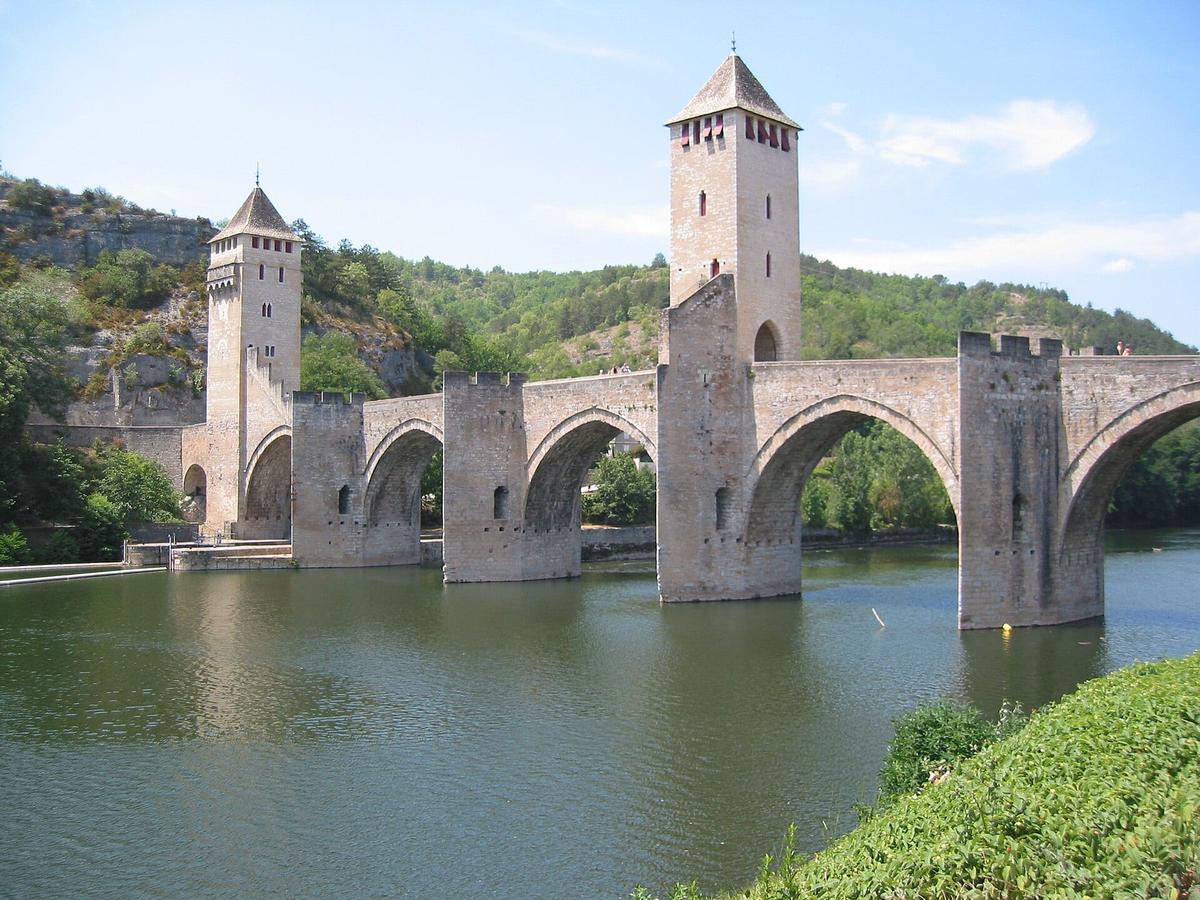
It only takes a few minutes to cross the bridge: it is 172 metres long, about 125 of them over the river, and 6 metres wide. The official website gives no visiting time. Allow for a walk there and back, time to look at the towers, the piers and the little devil, and then to step back for the view from each bank.
With a guided tour or a cruise, plan on half a day.
What to see on the Pont Valentré
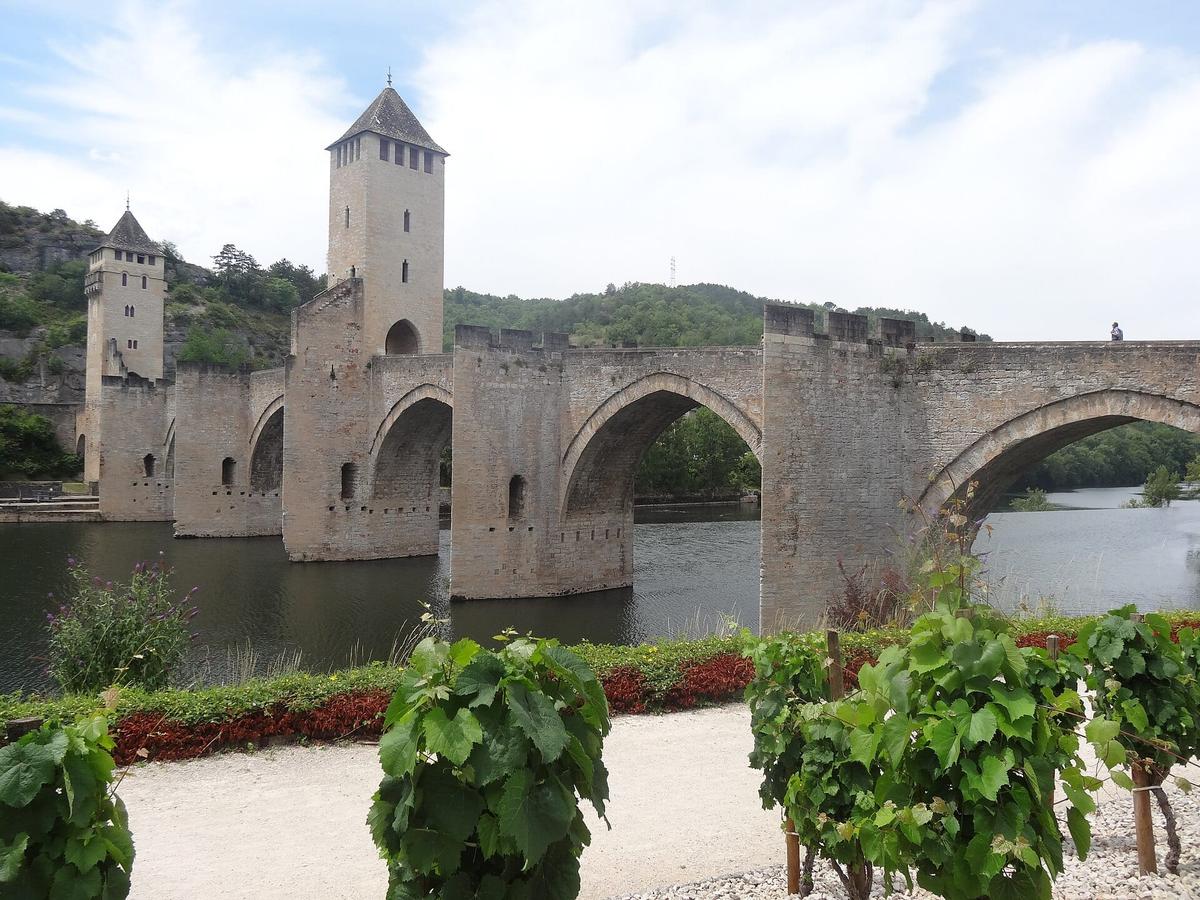
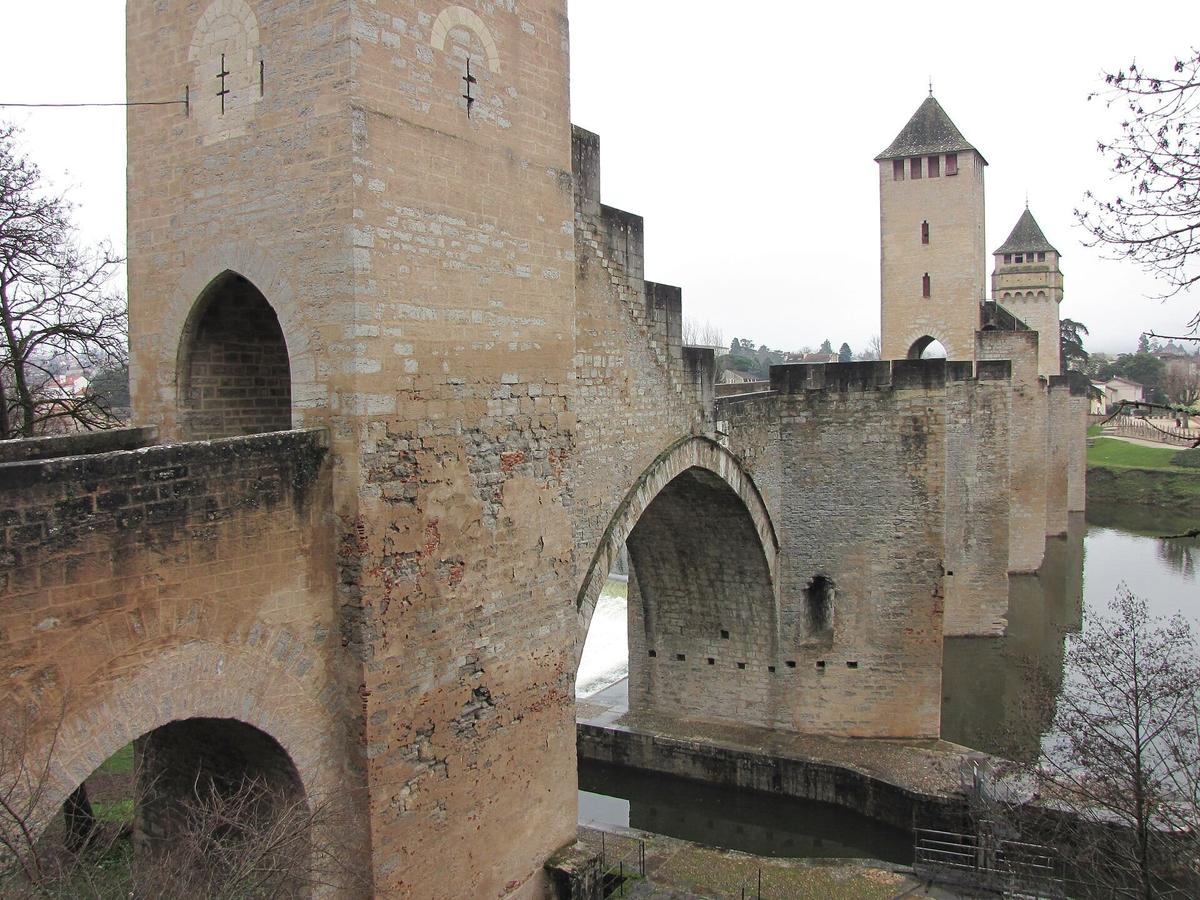
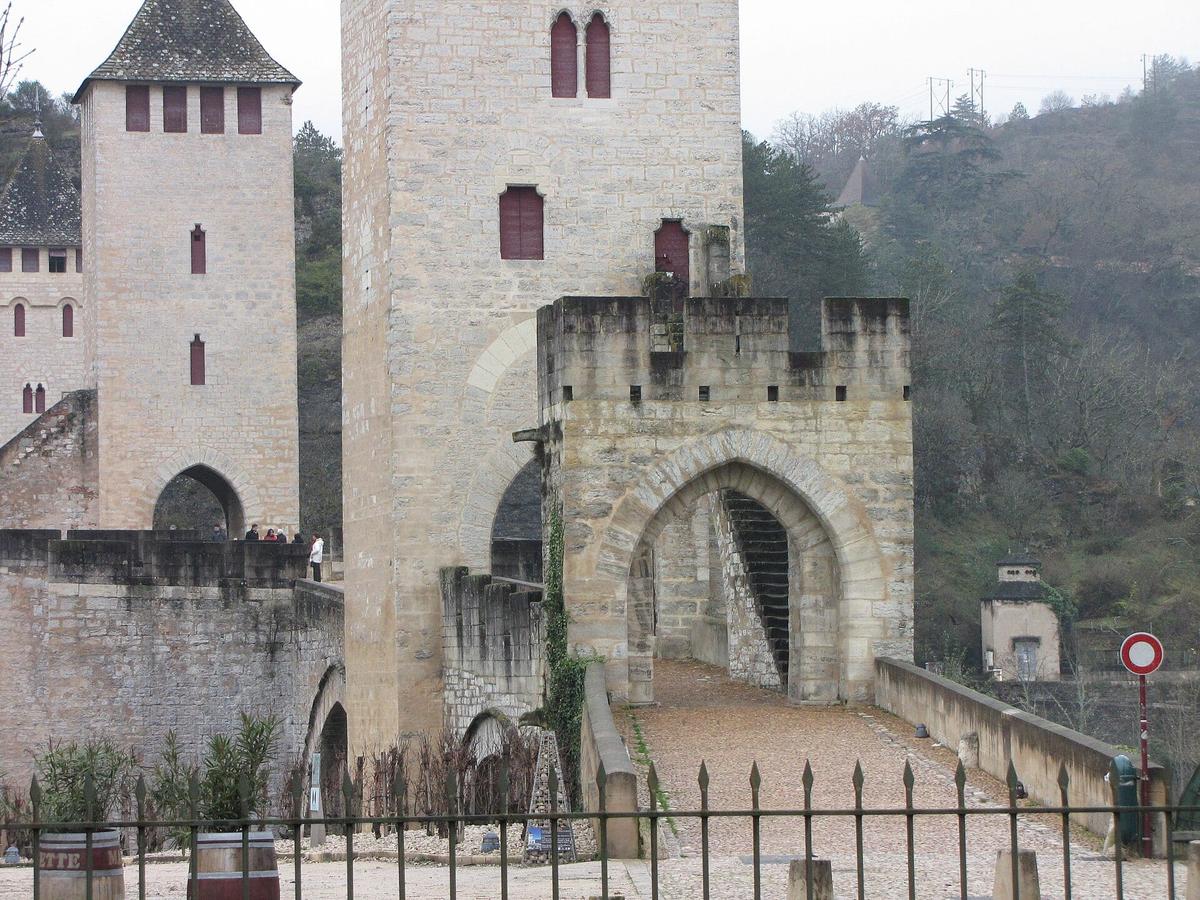
The three towers. The bridge is defended by three square towers with battlements and machicolations. According to the Occitanie tourist board, they rise more than 40 metres above the water. Two gatehouses closed off the entrances.
The little devil. Look up to the top of the central tower, the "Devil's Tower". A small carved devil clings to it. It tells the legend of the bridge (see below).
The arches and piers. The bridge stands on six arches with a span of 16.4 metres, built of local limestone, and five piers set in the river. Each pier is protected by cutwaters upstream and downstream, and has an opening to let debris through during floods.
The hump. The bridge rises slightly towards the middle. According to the official website, this shape protected it from the floods that swept away Cahors' two other medieval bridges, the Pont Vieux and the Pont Neuf.
The barbican. Wikipedia says there were originally two. One remains, on the town side.
In the evening. The bridge is lit up at nightfall.
The legend of the Pont Valentré devil
The building work dragged on. In despair, the master builder made a pact with the devil: the devil would finish the bridge in exchange for the architect's soul. When the bridge was almost finished, the architect wanted to save his soul. He asked the devil to fetch water from the Chartreux spring with a colander (a sieve, in other versions). The devil failed and lost the bet.
Furious, he sent a little devil every night to pull out the last stone of the central tower, so that the bridge would never be truly finished.
The devil of 1879. During the major restoration, from 1879 to 1882, the architect Paul Gout, a former pupil of Viollet-le-Duc, had a little devil carved at the top of the central tower, where the missing stone should be. Wikipedia credits the carving to the sculptor Calmon. So the devil you see dates from this restoration, not from the Middle Ages.
A short history of the Pont Valentré
In the early 14th century, Cahors was a great trading town, whose bankers worked all over Europe. The bridge was the project of a group of powerful merchants who rivalled the authority of the bishop-count. Work began in 1308. The completion date is uncertain: the official website puts it around 1385, Wikipedia in 1378.
The work took a long time. In 1316, John XXII, a native of Cahors, was elected pope, and part of the town's elite left for Avignon. The Hundred Years' War and the plague of 1348 slowed the town down further.
The bridge was a deterrent fortress, meant to protect the town against attacks from the south. Wikipedia notes that neither the English nor Henry IV ever attacked it.
In the 19th century, the bridge was used as an aqueduct for the town's drinking water. That was when Paul Gout restored it. It appeared on the first list of French historic monuments, in 1840. In 1998, it was added to the UNESCO World Heritage List as part of the "Routes of Santiago de Compostela in France".
Restoration work on the bridge
The official website announces a restoration programme carried out by skilled craftspeople from 2026 to 2031. The problems reported are loosening stones, waterproofing faults and loss of stone. A fundraising campaign with the Fondation du patrimoine aims to raise 100,000 euros, and the bridge was selected by the Mission Bern heritage programme in 2025.
The website does not say how the work affects crossing the bridge: check the news section of the bridge's website before your visit.
Visiting the Pont Valentré with children
The bridge is an easy outing with children: free, car-free, with a devil legend to tell and a little devil to spot at the top of the tower. The summer torchlight tour also appeals to older children. A cruise on the Lot takes you under the arches.
Keep an eye on children near the banks of the Lot and on the parapets.
The Pont Valentré with a wheelchair or a dog
Wheelchairs. The official website says the bridge is accessible to visitors with reduced mobility, including wheelchair users. It advises coming with someone: the bridge slopes slightly and the stone surface makes crossing difficult in places.
Dogs. The bridge is a public right of way. The official website gives no specific rules.
How to get to the Pont Valentré
On foot. Allow about 10 minutes from the centre of Cahors.
By train. Cahors station is about 8 minutes on foot, according to the Occitanie tourist board. Several liO coach lines also stop at the station.
By car: where to park? The official website lists four car parks:
- Roquebillière, on the left bank, chemin de l'Ermitage: free, 3 minutes on foot.
- Les Soupirs, on the right bank: paid, 3 minutes on foot, with electric charging points.
- Le Périé, on the right bank: free, 5 minutes on foot.
- Quai Valentré, on the right bank: free, 2 minutes on foot.
The Roquebillière car park, on the left bank, lets you arrive from the side opposite the town and walk across the bridge towards Cahors.
Renting a car. Cahors is a good stop between the Lot valley and the Périgord. A car lets you reach Pech Merle, Rocamadour or Bonaguil Castle. Many rental cars in France are manual, so book early if you need an automatic.
Partner links: if you book through these links, we earn a commission at no extra cost to you. Partner links · Learn more
What to combine on the same day
| Also worth seeing | Distance | Travel time |
|---|---|---|
| Pech Merle Cave | 33 km | 35 min by car |
| Château de Bonaguil | 55 km | 60 min by car |
| Rocamadour | 60 km | 60 min by car |
Approximate road distances and travel times.
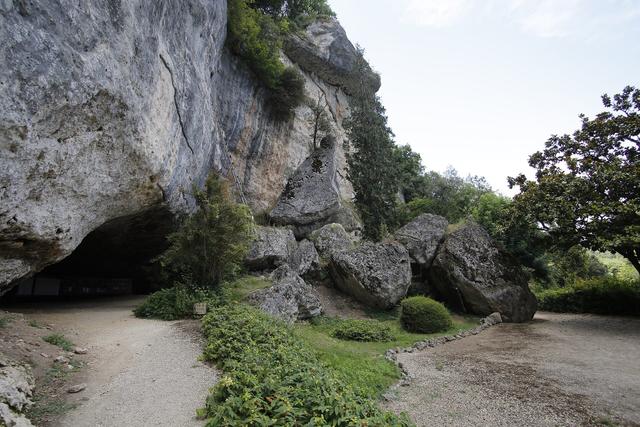
Pech Merle cave. Half an hour from Cahors, a prehistoric painted cave near Saint-Cirq-Lapopie. See also: Pech Merle Cave
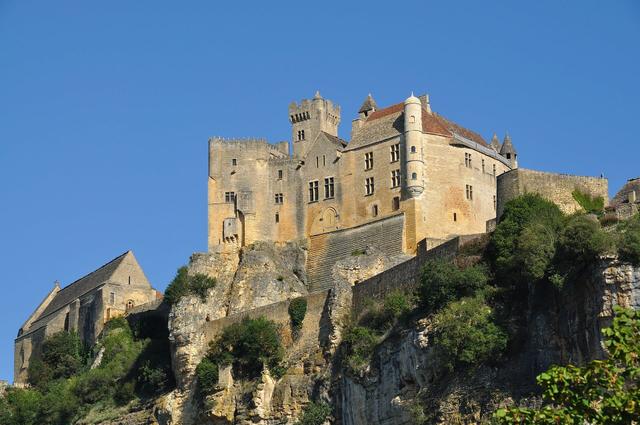
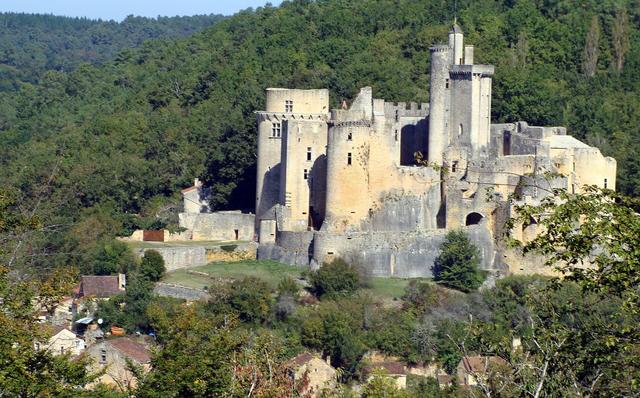
Bonaguil Castle. West of Cahors, a fortified castle on the edge of the Lot-et-Garonne. See also: Château de Bonaguil
Rocamadour. In the north of the department, the medieval village and its sanctuary. See also: Rocamadour
Further afield: See also: Gouffre de Padirac, Dordogne and Lot
Where to eat and stay
Eating. The bridge is a few minutes from the centre of Cahors, where most of the restaurants are.
Staying. Staying in Cahors lets you see the bridge early in the morning, then lit up at night. It is also a good base for the Lot valley.
FAQ
Do you have to pay to see the Pont Valentré?
No. It is free and open day and night, all year round.
Can you visit the Pont Valentré tower?
Official information does not mention any visits inside the towers. To learn more about the bridge, join a guided tour run by the tourist office.
Where can I park to see the Pont Valentré?
Three free car parks are close by: Roquebillière, Le Périé and Quai Valentré. The Les Soupirs car park is paid.
Can you drive across the bridge?
No, it has been reserved for pedestrians and bikes since 1995.
Why is there a devil on the Pont Valentré?
Because of a legend about a pact between the architect and the devil. The little devil carved at the top of the central tower was added during the restoration of 1879.
Is the Pont Valentré wheelchair accessible?
Yes, according to the official website, but it is best to come with someone because of the slight slope and the stone surface.
Practical information
Official ticket-office prices 2026
Free admission
Address
Pont Valentré, 571 allée des Soupirs, 46000 Cahors, France
Directions
On site and nearby
- Nearest shops and pharmacy: Cahors, less than 1 km away Straight-line distance, based on OpenStreetMap.
- Emergencies: 112 (all emergencies, free from any phone), 15 (SAMU, medical emergency)
Around the site, on Google Maps
With children
Family days out nearby: Pech Merle Cave (18 km), Château de Cénevières (26 km), Château de Bonaguil (35 km)
Swimming pools and play areas nearby, on Google Maps
Facts checked on 10 November 2026. Sources: pontvalentre.fr, pontvalentre.fr, cahorsagglo.fr, pontvalentre.fr, tourisme-occitanie.com
Map
In the same region
- Le Thotfrom €11.50Free under 5