Marais Poitevin: visiting the Green Venice from Coulon
Marais Poitevin at a glance
- Admission
- Free
- Time needed
- half a day to a full day
- Visitors per year
- about 1,400,000
- Where
- Coulon
- Nearest station
- Niort
Facts checked on 29 October 2026. Full opening hours, reduced prices and access
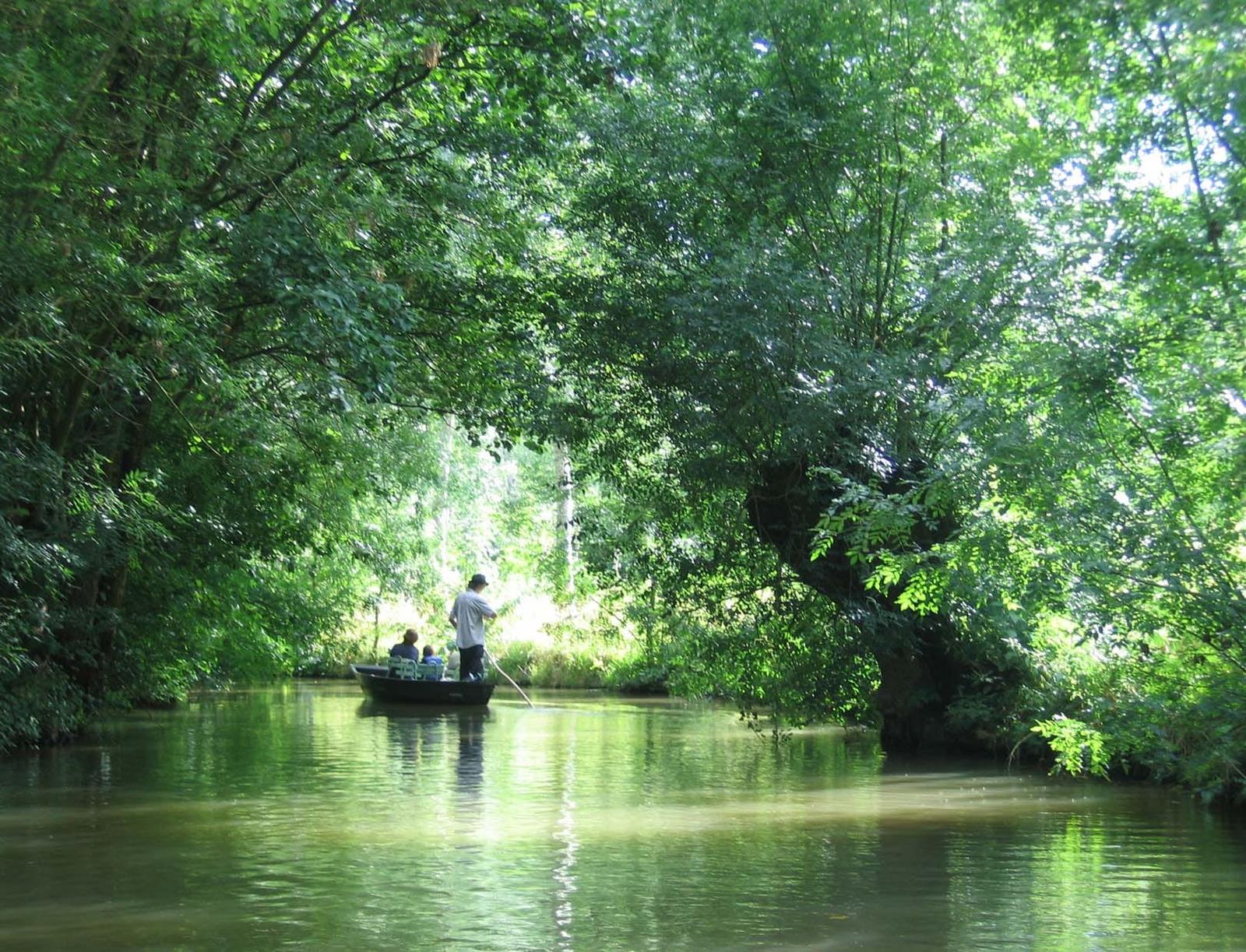
The Marais Poitevin is the second largest wetland in France after the Camargue: around 100,000 hectares between Niort and the Atlantic. Its eastern part, known as the Green Venice (Venise verte), is explored by flat-bottomed boat along canals lined with ash trees, from Coulon and the neighbouring villages. Here is how to choose a landing stage, when to come, how long to allow and how to combine it with La Rochelle.
Marais Poitevin at a glance
- Where: spread across the Deux-Sèvres, Vendée and Charente-Maritime departments. Coulon, the gateway to the Green Venice, is 12 km from Niort.
- Price: the marshes themselves are free and open to all. Boat trips are paid; each landing stage sets its own prices.
- Season: landing stages open in spring and close, or cut their hours sharply, from November to March.
- Time needed: allow half a day to a full day for a boat trip, a walk round Coulon and a bit of cycling.
- Best for: families, nature lovers, cyclists.
What is the Green Venice?
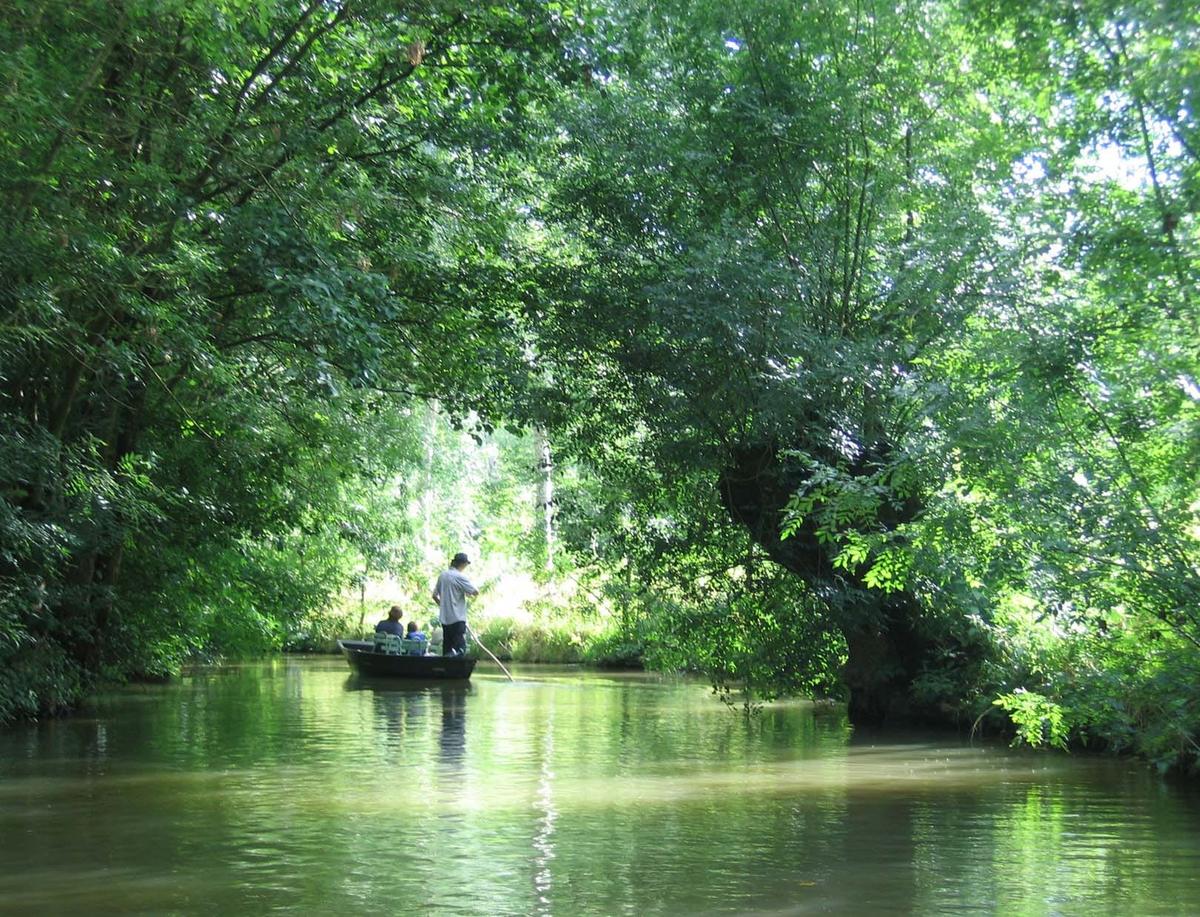
The Marais Poitevin covers around 100,000 hectares, including the Aiguillon bay. It falls into two main areas. To the west, towards the sea, the drained marshes are farmland reclaimed from the water and protected by dykes. To the east, the wet marshes still flood in winter: this is the Green Venice, around 29,000 hectares of meadows, gardens and woods criss-crossed by canals.
The name comes from duckweed, a tiny floating plant that carpets the canals in summer and gives them their colour. The narrow channels, known locally as "conches" and "rigoles", are lined with pollarded ash trees: their branches are cut back regularly, which gives them their stocky trunks. The roots hold the banks together, and the wood was used for heating.
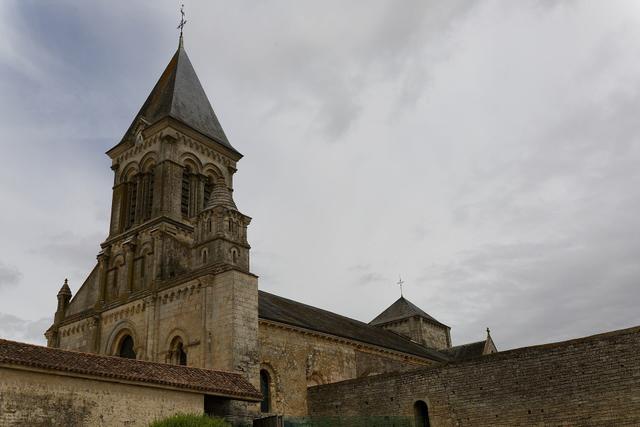
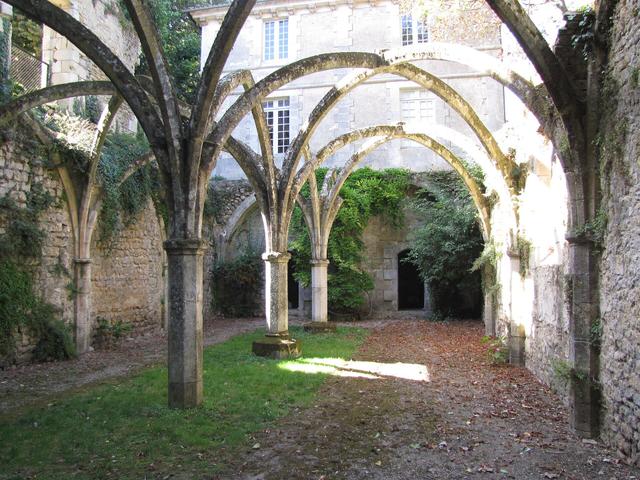
The marshes are not a wilderness: this landscape has been shaped by people since the Middle Ages. Monks from the abbeys of Maillezais, Nieul-sur-l'Autise, Saint-Michel-en-l'Herm and others dug the first large canals to drain and farm the land. Today there are around 8200 km of waterways.
The marshes are a regional nature park and hold the Grand Site de France label, renewed in 2026 until 2033.
How to take a boat trip in the Marais Poitevin
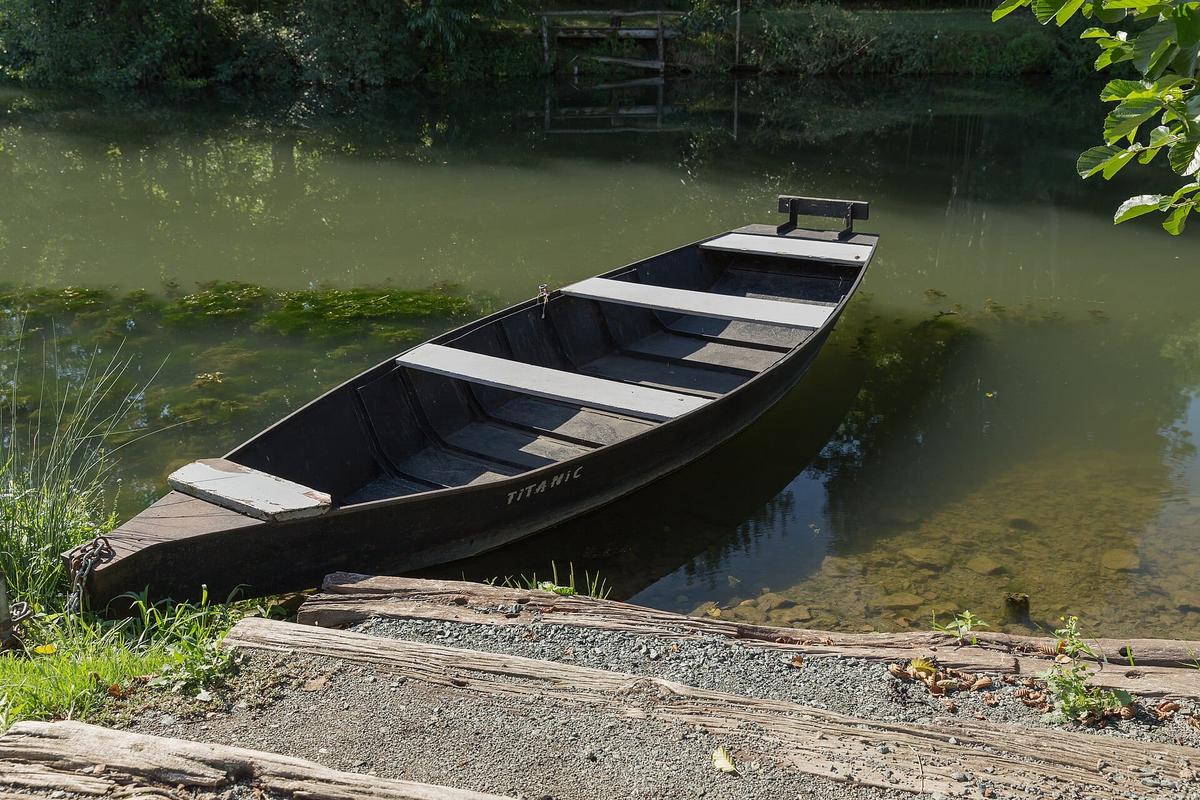
This is the main reason to come. The local boat is a flat-bottomed punt pushed along with a "pigouille", a long wooden pole with a forked tip that you plant in the canal bed, or with a paddle. Until the 1960s, it was the only way to get around parts of the marshes.
Landing stages usually offer three options:
- A shared trip with a boatman. A boatman steers the punt and tells you about the history of the marshes, the wildlife and the plants. At the Prada landing stage in Coulon, the shared boat takes up to 8 people.
- A private trip with a boatman. The boat is just for your group, from two people. It costs more, but you set the pace.
- Self-guided boat hire. You get a map of the route and do the punting yourself. Cheaper and more energetic. The routes are signposted, but the pole takes some getting used to.
Many landing stages also rent out canoes, kayaks and bikes.
Prices. They vary by landing stage, length of trip (often one hour, an hour and a half or two hours) and option. We have not been able to check an official 2026 price list: look at the booking page of the landing stage you choose. At the Prada landing stage, tickets booked online are non-refundable.
Which landing stage to choose? Coulon has several landing stages on the Sèvre Niortaise river, including Prada, on place de la Coutume opposite the Maison du Marais Poitevin. It is the most convenient for a first visit, with parking, restaurants and toilets nearby. La Garette, Arçais, Damvix and Magné are quieter in summer and lead onto narrower canals.
Partner links: if you book through these links, we earn a commission at no extra cost to you. Partner links · Learn more
Guided tours and day trips on GetYourGuide
Do you need to book a boat trip?
In July and August, yes. Boats with a boatman leave at set times and fill up fast, especially in the afternoon and at weekends. Book the day before or a few days ahead on the landing stage's website. Out of season you can often just turn up, but call ahead to check the landing stage is open.
Our tip: in summer, go early in the morning or late in the afternoon. The light is better, it is cooler and the canals are quieter. Bring mosquito repellent.
When is the best time to visit?
- June: the best time according to travel guides. All the landing stages are open, the vegetation is lush and the summer crowds have not yet arrived.
- July and August: high season, with the most duckweed, but Coulon gets very busy.
- September and October: another good time, quieter, with autumn colours.
- November to March: most landing stages close or cut their hours, and the wet marshes may be flooded. Best avoided for a first visit.
How long do you need?
A boat trip usually lasts one to two hours. Add a walk round Coulon, lunch and some cycling along the towpaths and half a day soon goes. To see a quieter village as well, such as Arçais or La Garette, allow a full day.
Cycling in the Marais Poitevin
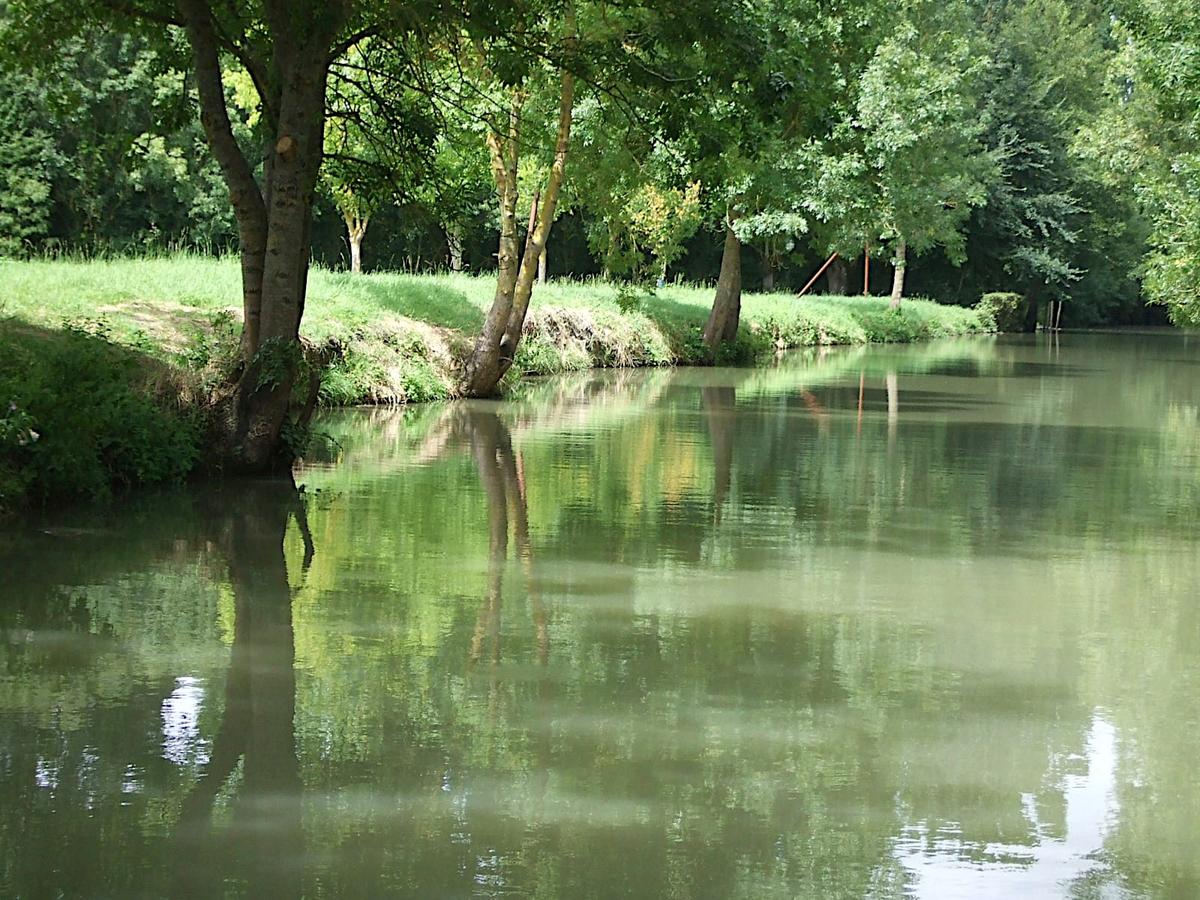
The marshes are flat, and hundreds of kilometres of paths run along the canals. Several landing stages rent out bikes, so you can combine a boat trip and a ride from the same place. The Niort Marais Poitevin tourist office publishes signposted routes, such as the loop linking the marsh villages around Coulon. Paths are often unpaved, so a hybrid bike is better than a road bike.
Visiting the Marais Poitevin with children
This is a great family day out. Children enjoy the boat as soon as they can sit still, and the boatman tells the story of the marshes along the way. With young children, choose a one-hour trip with a boatman rather than self-guided hire.
A few tips:
- Safety: ask at the landing stage about life jackets for little ones.
- Mosquitoes and sun: bring repellent, hats and water, especially in summer.
- Wildlife: look out for herons, coypus and dragonflies. More than 250 bird species are found in the marshes.
- Picnics: the Prada landing stage has a shady picnic area.
Can you bring a dog?
Yes, the tourist office says pets are welcome at the Prada landing stage. Ask at the landing stage whether your dog can get into the boat, especially on a shared trip. The towpaths are easy to walk with a dog on a lead.
How to get to the Marais Poitevin
By train. The TGV runs from Paris-Montparnasse to Niort in about 2 h 15. From Niort, Coulon is 12 km away: allow 20 to 30 minutes by car or taxi.
By car. From Niort, follow signs for Coulon. From La Rochelle, allow about an hour. The marsh villages are easy to reach by car. In summer Coulon is very busy in the afternoon, so mornings are more pleasant.
A car is almost essential to see several marsh villages and then go on to La Rochelle or Rochefort. There are rental companies in Niort and La Rochelle. Remember that most rental cars in France have manual gearboxes, so book an automatic in advance if you need one.
What to visit near the Marais Poitevin
| Also worth seeing | Distance | Travel time |
|---|---|---|
| Towers of La Rochelle | 70 km | 60 min by car |
| Corderie Royale Rochefort | 75 km | 60 min by car |
| Notre-Dame-la-Grande, Poitiers | 90 km | 65 min by car |
Approximate road distances and travel times.
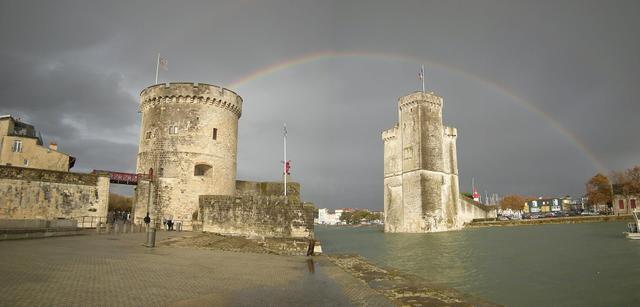
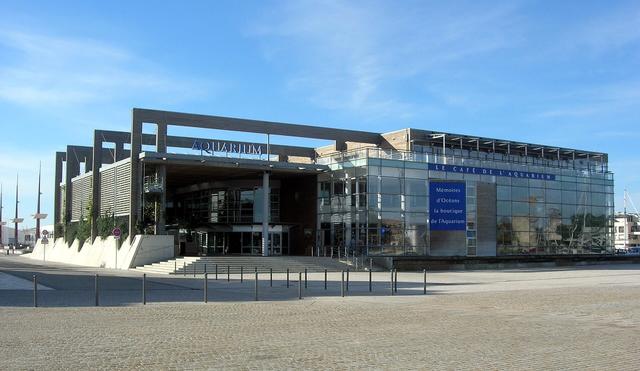
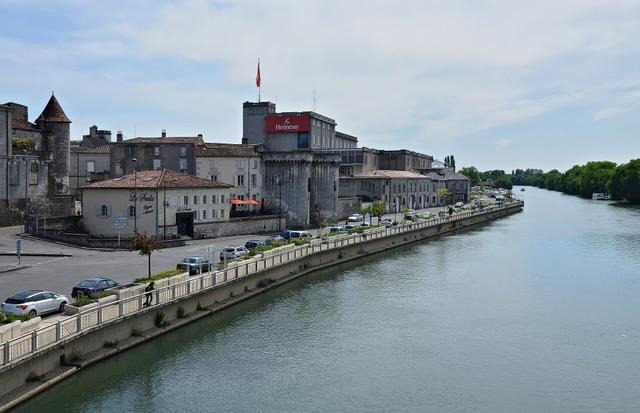
La Rochelle. An hour's drive away, the Old Port and its medieval towers make a good follow-on to a morning on the water. The aquarium is another option for children. See also: Towers of La Rochelle, La Rochelle Aquarium
Rochefort. The Corderie Royale tells the story of Louis XIV's naval dockyard, on the banks of the Charente. See also: Corderie Royale Rochefort
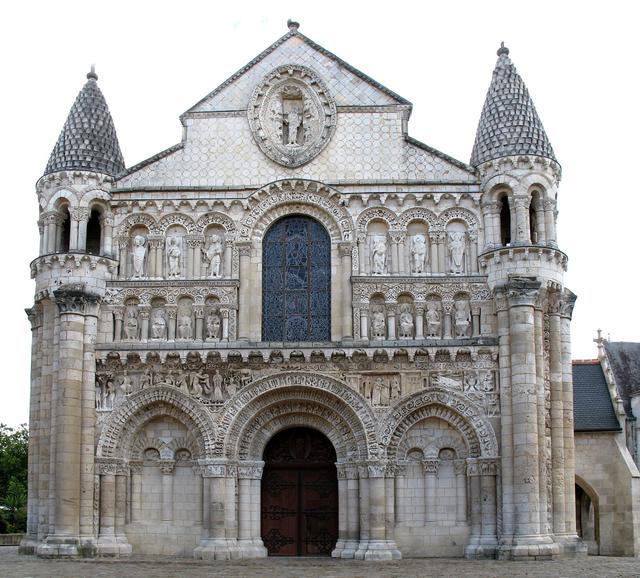
Poitiers and Futuroscope. By motorway, Poitiers is just over an hour away. The church of Notre-Dame-la-Grande and its Romanesque facade can be seen in an hour. See also: Notre-Dame-la-Grande, Poitiers, Futuroscope
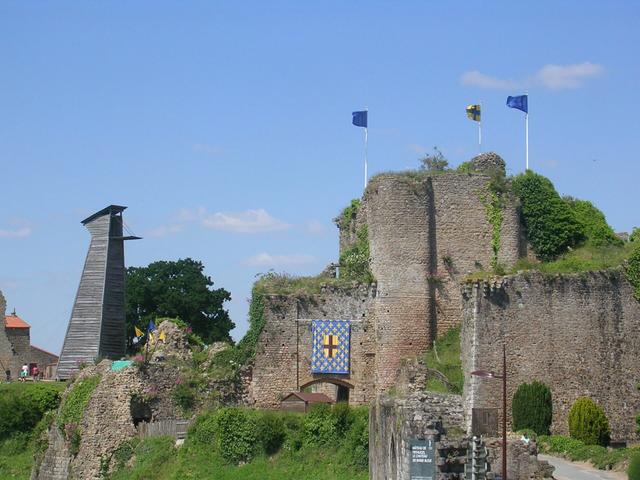
The Vendée. To the north, the Puy du Fou and the Château de Tiffauges make another getaway. See also: Puy du Fou, Château de Tiffauges
To plan a stay in the region: See also: Vendée, Poitou and Charentes
Facts and figures
- Around 1,400,000 visitors a year come to the regional nature park, according to a 2026 press article.
- The Five Abbots' Canal. In 1217, a charter allowed five abbeys to dig a canal together to drain the marshes. It still bears the name Canal des Cinq-Abbés.
- The first landing stage opened at La Garette in 1928. It was the start of boat tourism in the marshes.
- The coypu, which you will probably see swimming along the banks, is not native. It was brought over in the 19th century for its fur, and today it damages the banks by digging burrows.
- Sick ash trees. Since 2016, ash dieback has meant replanting other pollarded trees along the canals.
- A Ramsar site. Since 23 November 2023, 69,034 hectares of the marshes have been on the list of wetlands of international importance.
Where to eat and stay
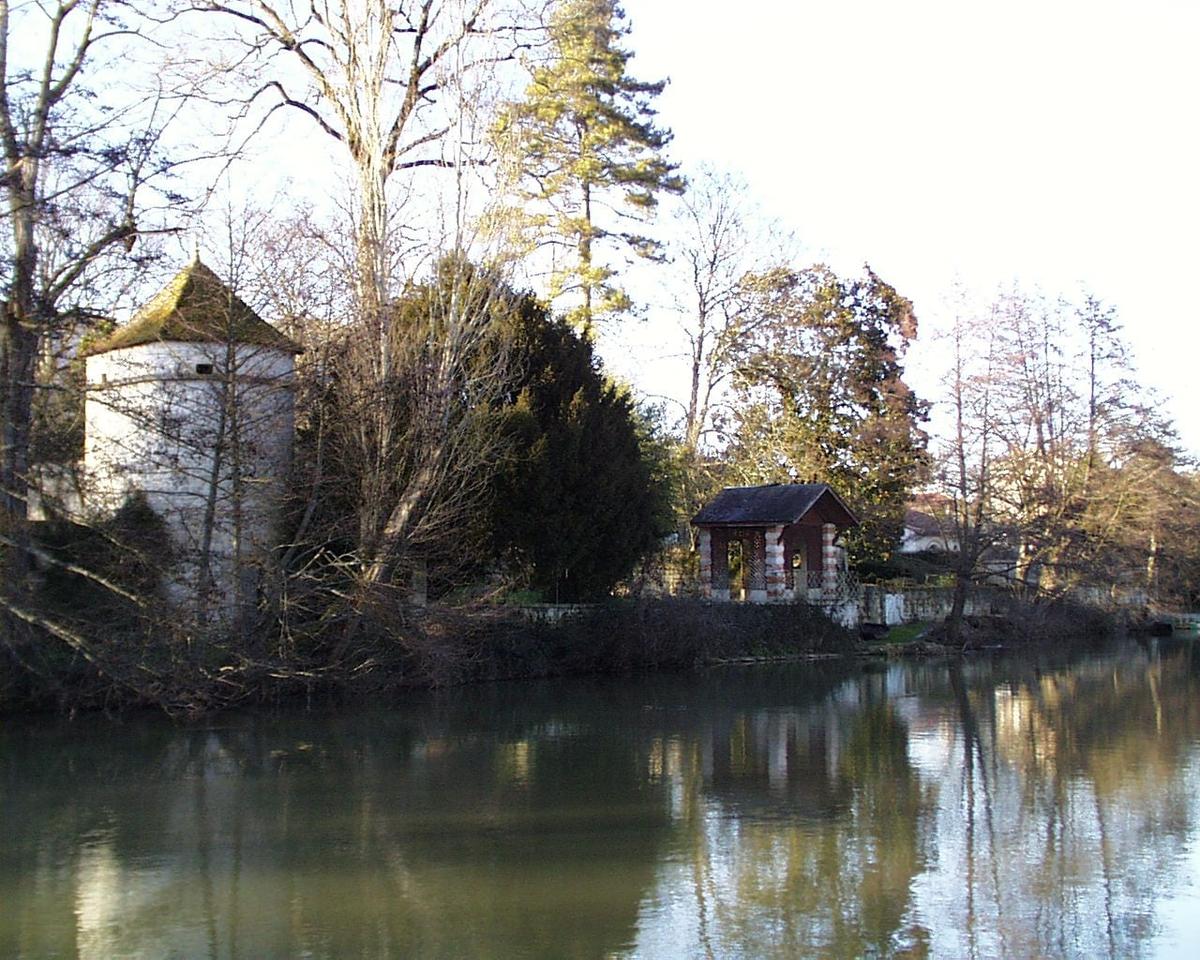
Eating. Coulon has several waterside restaurants near the landing stages. Local specialities are eel, mojettes (white beans) and farci poitevin, a herb and vegetable stuffing. For a picnic, the area at the Prada landing stage is shady.
Sleeping. Coulon and the marsh villages have B&Bs and holiday cottages, often right by the canals. Niort has a wider choice of hotels and the TGV station, which makes it the most practical base without a car.
FAQ
How much is a boat trip in the Marais Poitevin?
The price depends on the landing stage, the length of the trip and the option (shared with a boatman, private or self-guided). Check the landing stage's price list before booking.
Which is the best village for a boat trip?
Coulon is the most convenient for a first visit. Arçais, La Garette and Magné are quieter in summer.
When should I visit the Marais Poitevin?
From June to October. June and September are the most pleasant months. From November to March, most landing stages close or cut their hours.
Do I need to book the boat?
In July and August, yes, especially for a trip with a boatman. Out of season, call to check the landing stage is open.
Can I visit the Marais Poitevin without a car?
Yes, by taking the train to Niort, then a taxi or a bike to Coulon. To see several villages, a car is easier.
Why is it called the Green Venice?
Because of its canals and the duckweed that covers them in summer.
Practical information
Official ticket-office prices 2026
Free admission
Address
Embarcadère Prada, place de la Coutume, 79510 Coulon, France
Directions · Phone+33 5 49 35 97 63
On site and nearby
- On site: Toilets, picnics allowed, and food and drink
- Nearest shops and pharmacy: Coulon, less than 1 km away Straight-line distance, based on OpenStreetMap.
- Emergencies: 112 (all emergencies, free from any phone), 15 (SAMU, medical emergency)
Around the site, on Google Maps
With children
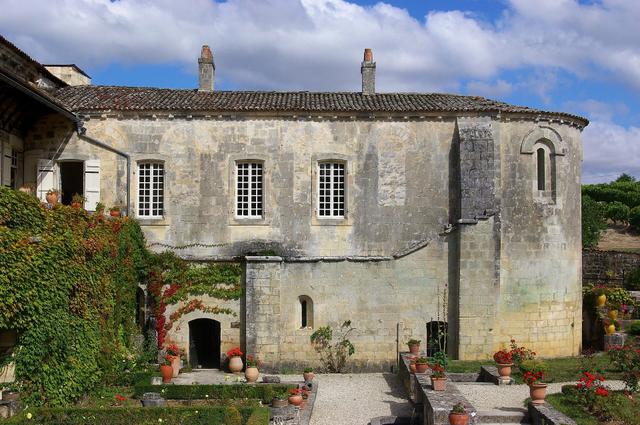
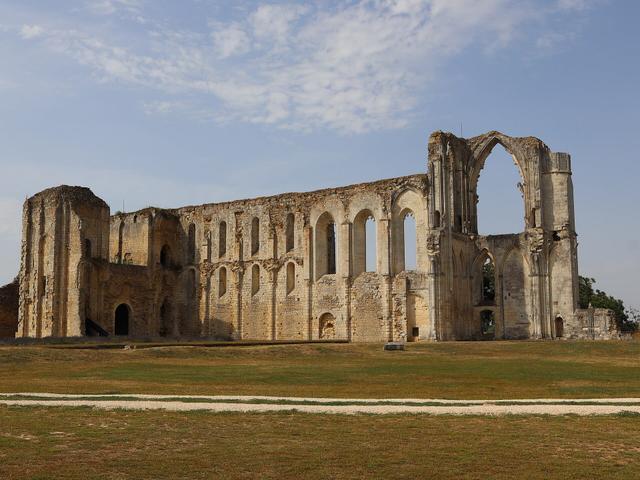
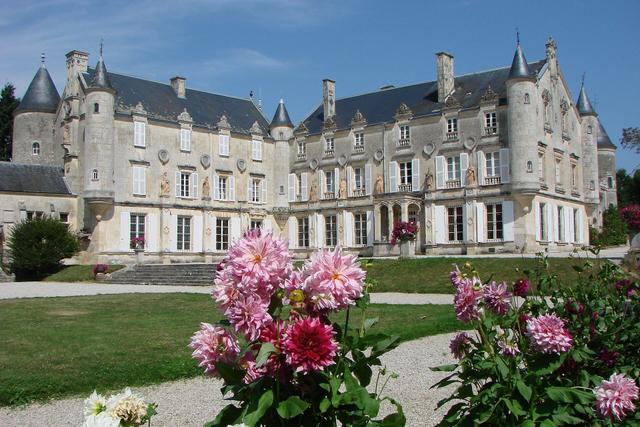
Family days out nearby: Maillezais Abbey (13 km), Nieul-sur-l'Autise Abbey (13 km), Château de Terre-Neuve (23 km)
Swimming pools and play areas nearby, on Google Maps
Facts checked on 29 October 2026. Sources: niortmaraispoitevin.com, niortmaraispoitevin.com, embarcadere-prada.fr, marais-poitevin.com, ulysse.com, fr.wikipedia.org
Map
In the same region

- Planet ExoticaFree under 3