Talleyrand, the prince of Valençay
- Born
- 2 February 1754
- Died
- 17 May 1838
- Family
- Artists, saints and favourites
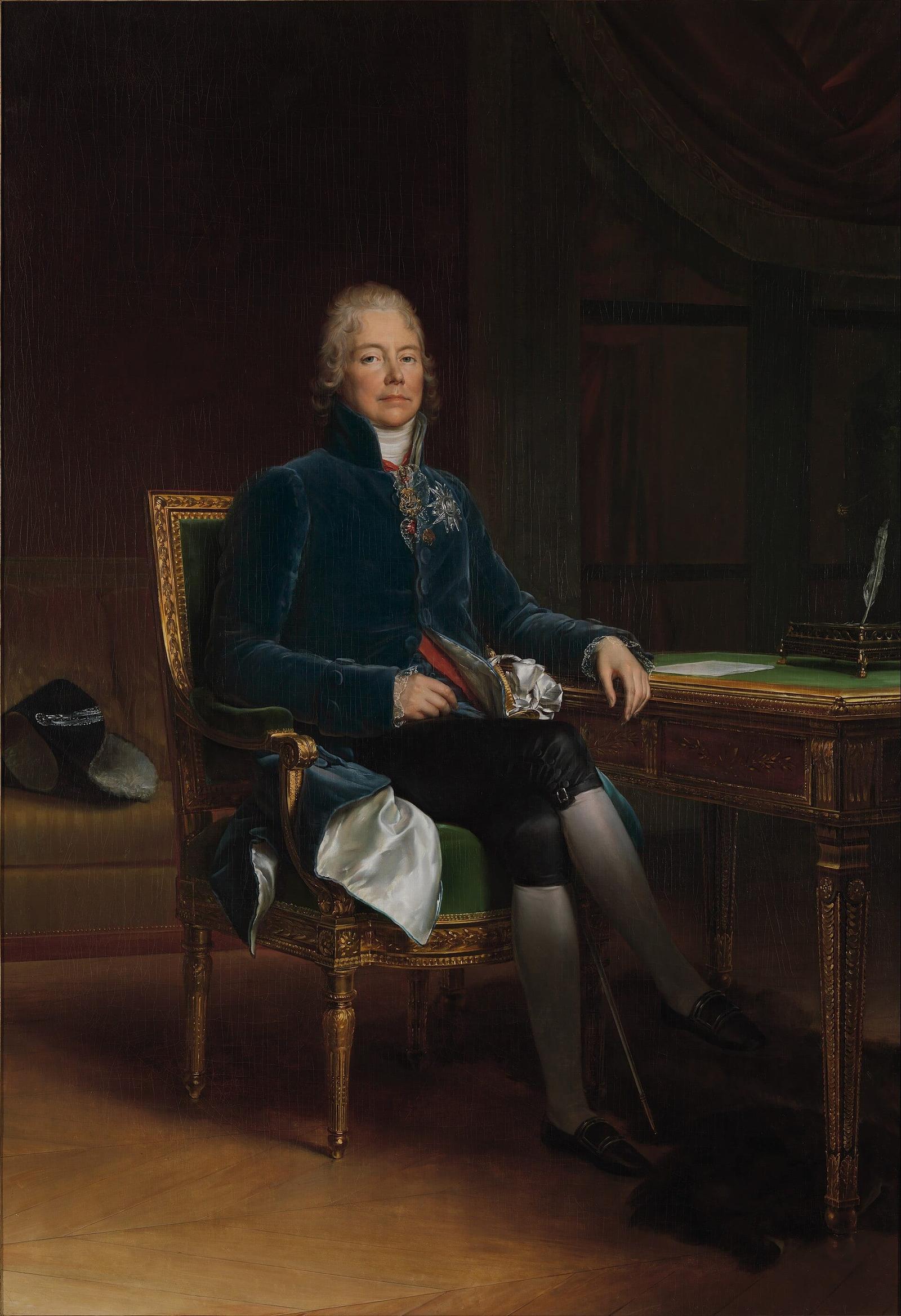
He served Louis XVI, the Revolution, the Directory, Napoleon, Louis XVIII and Louis-Philippe, and fell with none of them. Some saw him as a traitor, others as the greatest diplomat of his time. Talleyrand needed a stage on which to entertain Europe: Bonaparte helped him buy Valençay, in the Berry, where he lies today.
Talleyrand in dates
| Date | Event |
|---|---|
| 2 February 1754 | Born in Paris, into a great noble family |
| 1788 | Appointed Bishop of Autun |
| 14 July 1790 | Celebrates Mass at the Festival of the Federation, on the Champ-de-Mars |
| 1797 | Minister of Foreign Affairs under the Directory |
| 1799 | Helps Bonaparte seize power on 18 Brumaire |
| 1803 | Buys the Château de Valençay |
| 1806 | Napoleon makes him Prince of Benevento |
| 1807 | Leaves the ministry |
| 1808-1814 | Keeps the Spanish princes, Napoleon's prisoners, at Valençay |
| 1814-1815 | Represents France at the Congress of Vienna |
| 1830-1834 | Ambassador in London for Louis-Philippe |
| 17 May 1838 | Dies in Paris; buried at Valençay |
The bishop who did not believe
Charles-Maurice de Talleyrand-Périgord was born into one of the oldest families in France. A club foot, which made him limp all his life, ruled out a military career, so he was intended for the Church. He became Bishop of Autun in 1788, with no vocation. As a deputy to the Estates General, he proposed placing the clergy's property at the nation's disposal, then celebrated Mass at the Festival of the Federation before hundreds of thousands of Parisians. He then left the Church.
Bonaparte's minister
Exiled to England and then to the United States during the Terror, he came back in 1796 and the following year became Minister of Foreign Affairs. He prepared the coup of 18 Brumaire with Bonaparte and remained minister under the Consulate and the Empire. He drifted away from Napoleon after 1807, then negotiated his replacement by Louis XVIII in 1814. At the Congress of Vienna, he won defeated France a seat at the table of the great powers. His enemies called him the “lame devil”. See also: Napoleon
Valençay, the diplomatic showcase
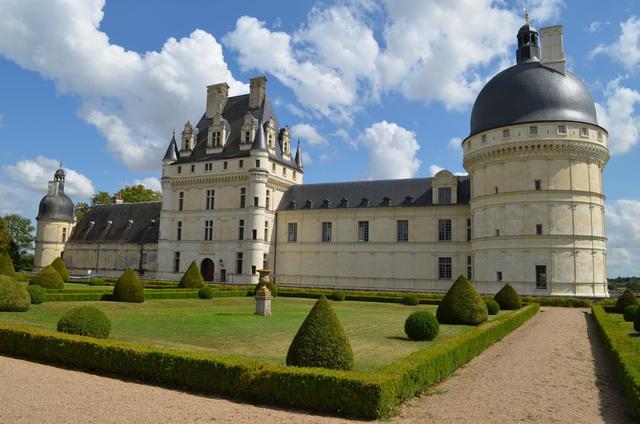
In 1803, Talleyrand bought Valençay, a Renaissance château in the Berry, with an estate of about 12000 hectares. Bonaparte contributed to the purchase: he wanted his minister to be able to receive foreign diplomats in a fine property. The table mattered as much as the drawing rooms. Talleyrand's chef was Antonin Carême, the most famous cook of his time; a garden in the park, the Jardin d'Antonin, is named in his honour.
From 1808 to 1814, Napoleon forced guests on Talleyrand: the Spanish princes, including Ferdinand VII, the King of Spain made to abdicate, were held at Valençay while the Emperor put his brother Joseph on the Spanish throne.
Talleyrand died in Paris in 1838. He lies in the crypt of the château's chapel; his family kept the château until the 20th century. See also: Château de Valençay
What to see: the drawing rooms and Talleyrand's bedroom, the small theatre, the crypt of the chapel, the park and the Jardin d'Antonin.
In his footsteps: the Berry and the Loire
Valençay is 25 km from the ZooParc de Beauval and 57 km from Blois, so it fits easily into a stay in the Cher valley. See also: ZooParc de Beauval Chenonceau is on the road to Tours. See also: Château de Chenonceau At the château, the shop sells the goat's cheese shaped like a truncated pyramid that bears the name Valençay.
Partner links: if you book through these links, we earn a commission at no extra cost to you. Partner links · Learn more
Guided tours and day trips on GetYourGuide
FAQ
Why did Talleyrand buy Valençay?
To receive foreign diplomats on a large estate, at the request of Bonaparte, who contributed to the purchase in 1803.
Where is Talleyrand buried?
In the crypt of the chapel of the Château de Valençay, in the Indre department.
Why is Talleyrand called the “lame devil”?
He limped because of a club foot, and his enemies thought him unscrupulous. The nickname combines both charges.
Which regimes did Talleyrand serve?
The monarchy of Louis XVI, the Revolution, the Directory, the Consulate, the Empire, the Restoration and the July Monarchy.
Who were the prisoners of Valençay?
The Spanish princes, including King Ferdinand VII, whom Napoleon had kept at the château from 1808 to 1814.
Sources: fr.wikipedia.org (Charles-Maurice de Talleyrand-Périgord), chateau-valencay.fr