Saint Martin, the soldier who cut his cloak in two
- Born
- c. 316
- Died
- 397
- Active years
- 371 – 397
- Family
- Artists, saints and favourites
Thousands of villages and churches in France bear his name. Martin was a Roman soldier from what is now Hungary when, in Amiens, during a freezing winter, he cut his cloak in two and gave half to a poor man. He became a monk, then bishop of Tours, and travelled the countryside of Gaul. He died at Candes, on the banks of the Loire, and the people of Tours carried his body away by night, by boat.
Saint Martin in dates
| Date | Event |
|---|---|
| c. 316 | Born at Savaria, in Pannonia (now Szombathely, in Hungary) |
| c. 334 | Soldier in the Roman cavalry, stationed in Amiens; shares his cloak |
| c. 361 | Founds a hermitage at Ligugé, near Poitiers, with Bishop Hilary |
| 371 | Becomes bishop of Tours |
| 370s | Founds the monastery of Marmoutier, across the river from Tours |
| 8 November 397 | Dies at Candes, where the Vienne meets the Loire |
| 1860 | His tomb is rediscovered in Tours |
| 1925 | The present Basilica of Saint-Martin in Tours is consecrated |
The cloak of Amiens
Martin was born around 316 at Savaria, in Pannonia, the son of a Roman officer. He joined the army in turn and served in the cavalry, in Gaul. One winter evening, while stationed in Amiens, he met a poor man, almost naked, at the town gate. He had nothing on him but his weapons and his cloak: he cut it in two with his sword and gave half away. The following night, says his biographer Sulpicius Severus, Christ appeared to him wearing that half-cloak. Martin asked to be baptised, then left the army: "I am a soldier of Christ; it is not lawful for me to fight."
What to see: in Amiens, the Cathedral of Notre-Dame, the largest in France. See also: Amiens Cathedral
Ligugé, Tours and Marmoutier
A disciple of Hilary, bishop of Poitiers, Martin founded a hermitage at Ligugé around 361, one of the first monasteries in Gaul. In 371 the people of Tours came for him and, almost by force, made him their bishop. He kept living like a monk: he founded Marmoutier, on the other bank of the Loire, where he lived with his followers in caves dug into the hillside. He travelled the countryside, destroying pagan temples and founding churches.
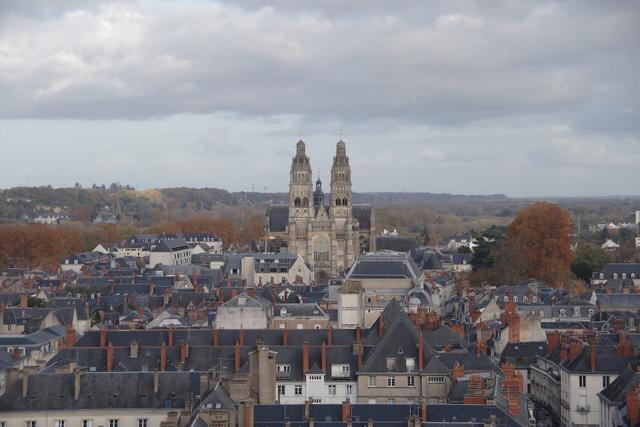
Tours Cathedral is now dedicated to Saint Gatien, the city's first bishop; Martin was the third. See also: Tours Cathedral (Cathédrale Saint-Gatien)
Death at Candes
In November 397, Martin, then over eighty, went to Candes, where the Vienne meets the Loire, to settle a dispute among the parish clergy. He died there on 8 November. The people of Poitiers and of Tours fought over his body. While the Poitiers party slept, the men of Tours passed it through a window and carried it by boat up the Loire to Tours. Tradition says the trees on the banks burst into flower in the middle of November as the procession went by: this is the origin of the French expression "l'été de la Saint-Martin", St Martin's summer.
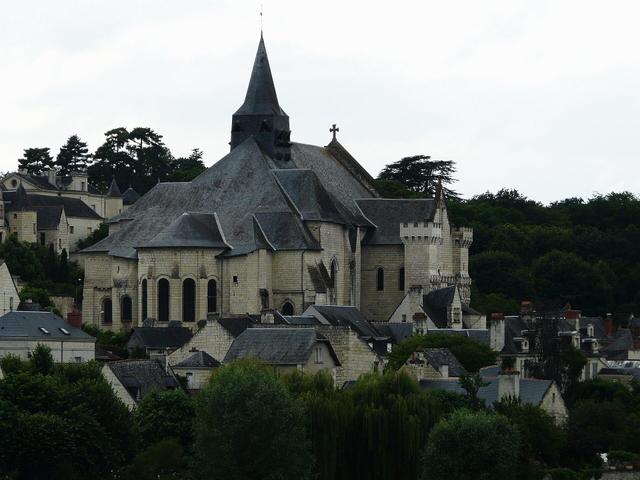
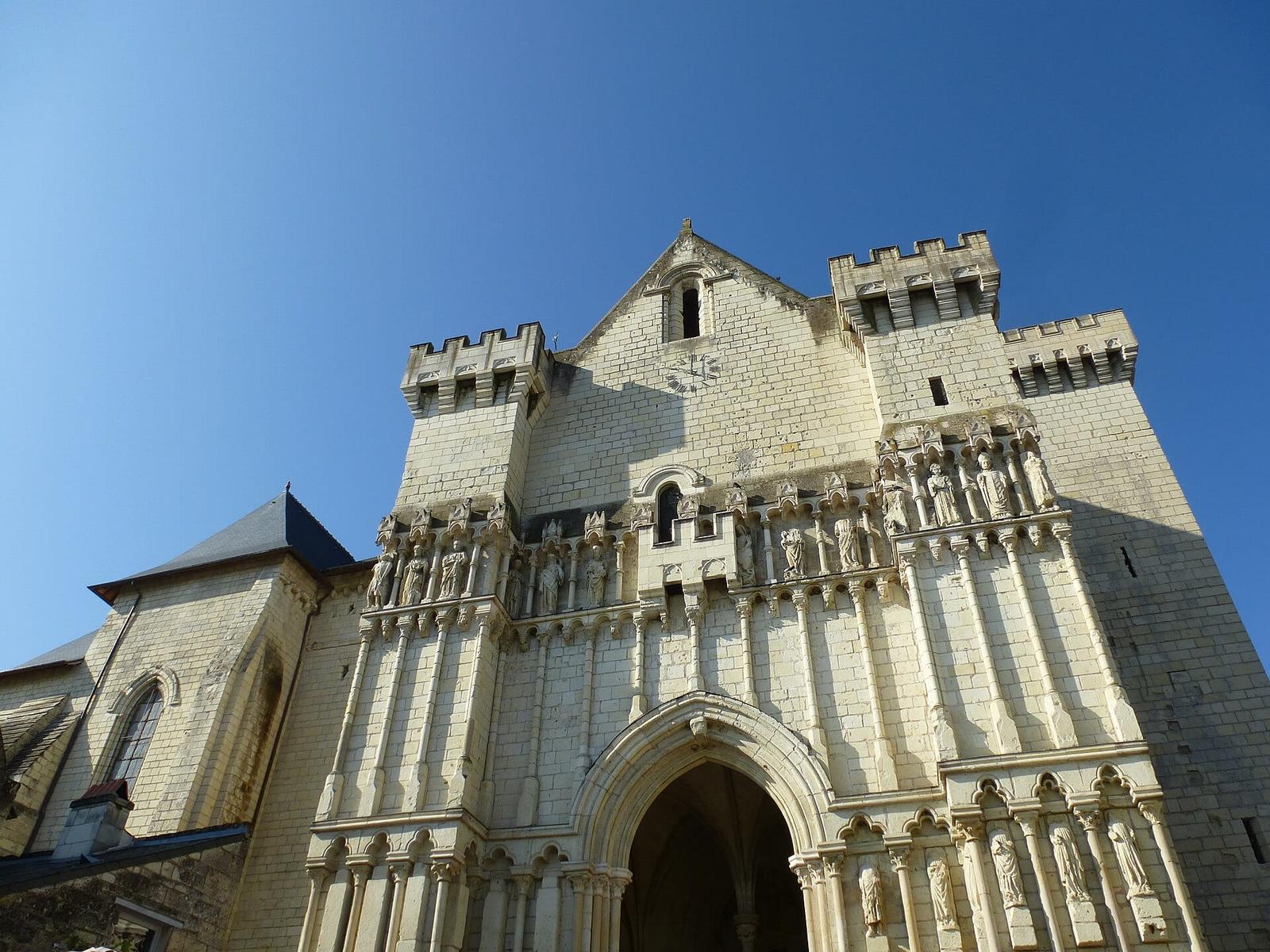
The collegiate church at Candes, built in the 12th and 13th centuries on the spot where he died, is one of the finest Angevin Gothic buildings in the valley. See also: Collégiale Saint-Martin de Candes
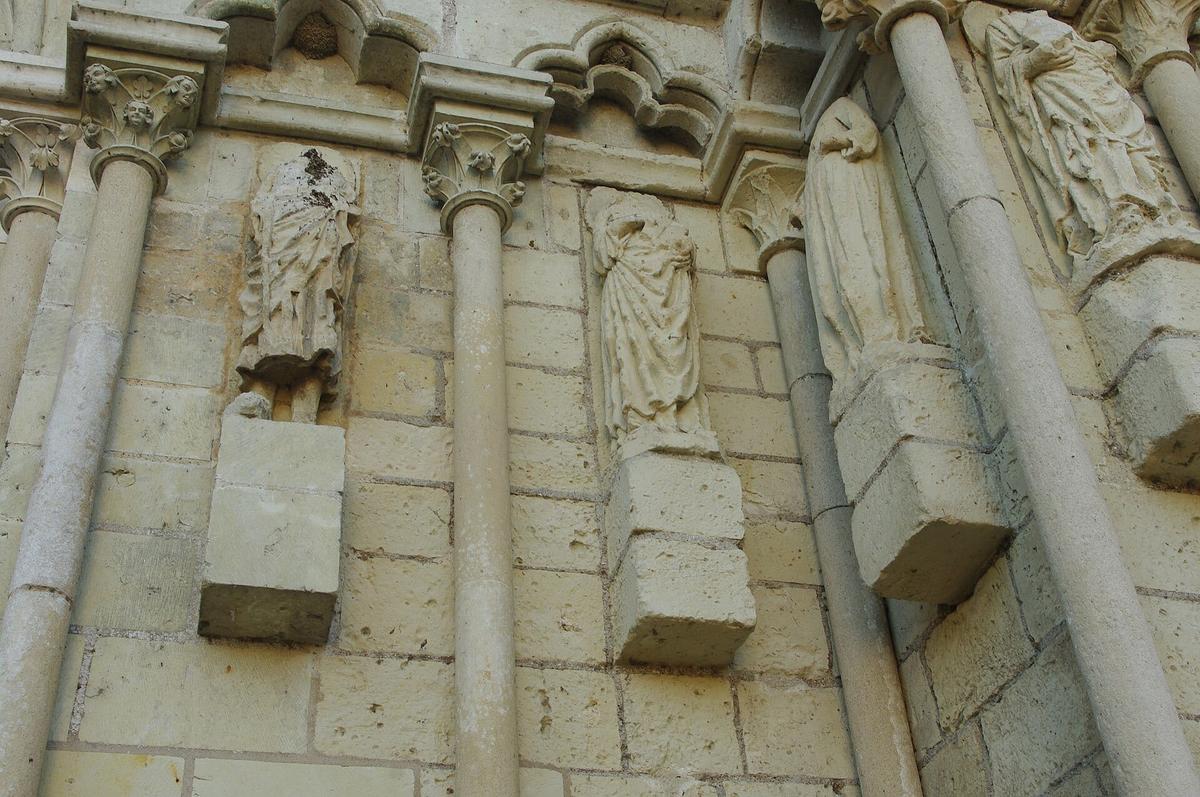
What to see: in Candes-Saint-Martin, the collegiate church and its fortified porch decorated with statues, then the view over the confluence from the top of the village.
The saint of Gaul
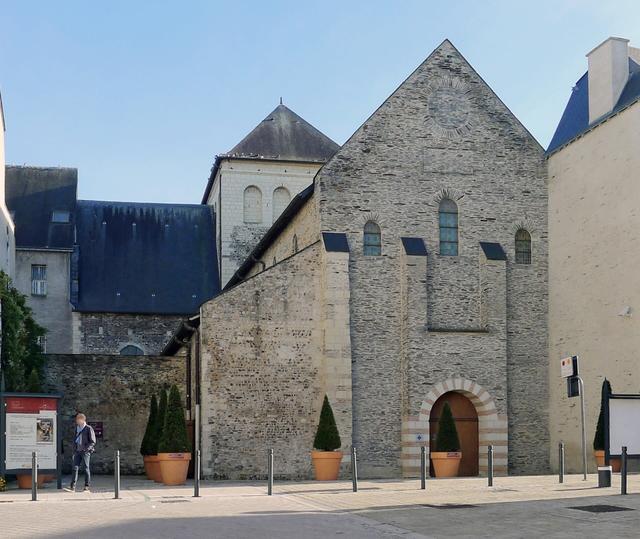
His tomb in Tours became one of the great pilgrimages of Europe. The half of the cloak he had kept, the "cappa", was treasured by the Frankish kings; the place where it was kept came to be called the "capella", and the priest who looked after it the "capellanus". These words gave us "chapel" and "chaplain". Nearly four thousand churches in France are dedicated to him. In Angers, the Collégiale Saint-Martin, one of the oldest churches in the city, bears his name. See also: Collégiale Saint-Martin, Angers
What to see: in Tours, the Basilica of Saint-Martin and the crypt with his tomb, and the Charlemagne Tower and the Clock Tower, remains of the old medieval basilica.
In his footsteps: Touraine and Anjou
Candes-Saint-Martin is next to Montsoreau and about ten kilometres from Fontevraud Abbey. Tours Cathedral and the Basilica of Saint-Martin are within walking distance of Tours station. The Collégiale Saint-Martin in Angers is a 15-minute walk from Angers-Saint-Laud station. See also: Fontevraud Abbey, Château de Montsoreau – Museum of Contemporary Art
Partner links: if you book through these links, we earn a commission at no extra cost to you. Partner links · Learn more
Places to stay near Candes-Saint-Martin
FAQ
Why did Saint Martin cut his cloak?
As a Roman soldier stationed in Amiens, he met a poor man, almost naked, in a freezing winter and gave him half his cloak; under army rules, the other half belonged to the army.
Where did Saint Martin die?
At Candes, now Candes-Saint-Martin, where the Vienne meets the Loire, on 8 November 397. A collegiate church was built on the spot where he died.
What is St Martin's summer?
A spell of mild weather around 11 November, his feast day. According to legend, the trees on the banks of the Loire flowered as his body passed on its way to Tours.
Where is Saint Martin's tomb?
In Tours, in the crypt of the Basilica of Saint-Martin, built at the end of the 19th century on the site of the old basilica.
Where does the word "chapel" come from?
From Saint Martin's cloak, the "cappa". The place where the Frankish kings kept this relic was called the "capella", and its keeper the "capellanus", the chaplain.
Sources: fr.wikipedia.org (Martin de Tours)