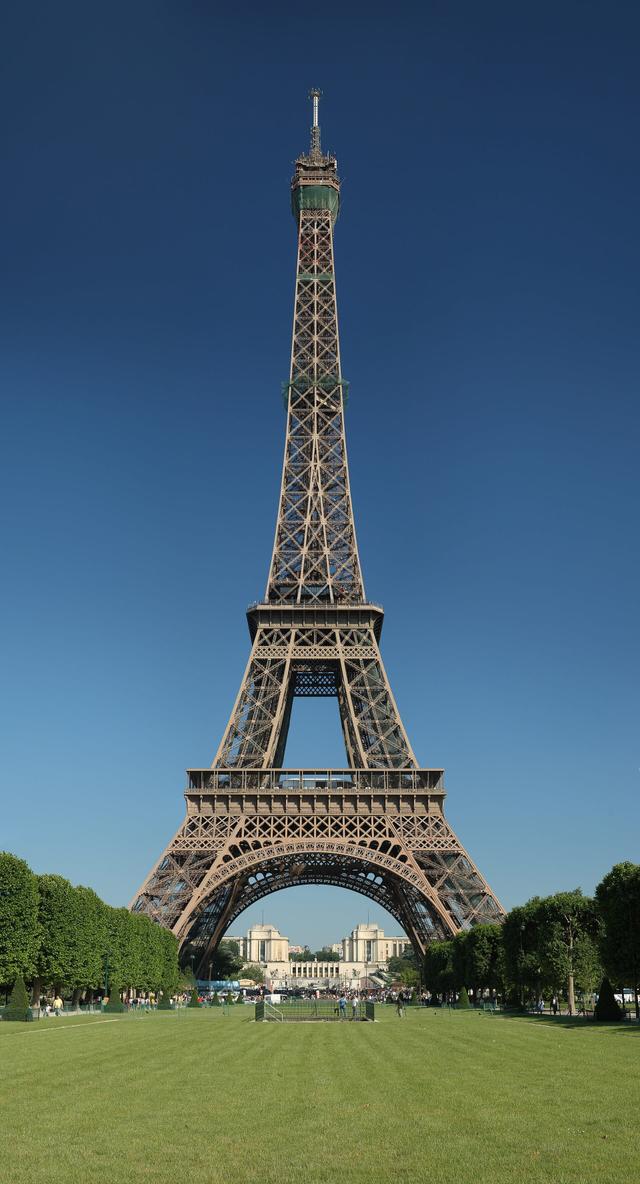
Gustave Eiffel, the engineer who gave the tower his name
- Born
- 15 December 1832
- Died
- 27 December 1923
- Active years
- 1861 – 1923
- Family
- Artists, saints and favourites
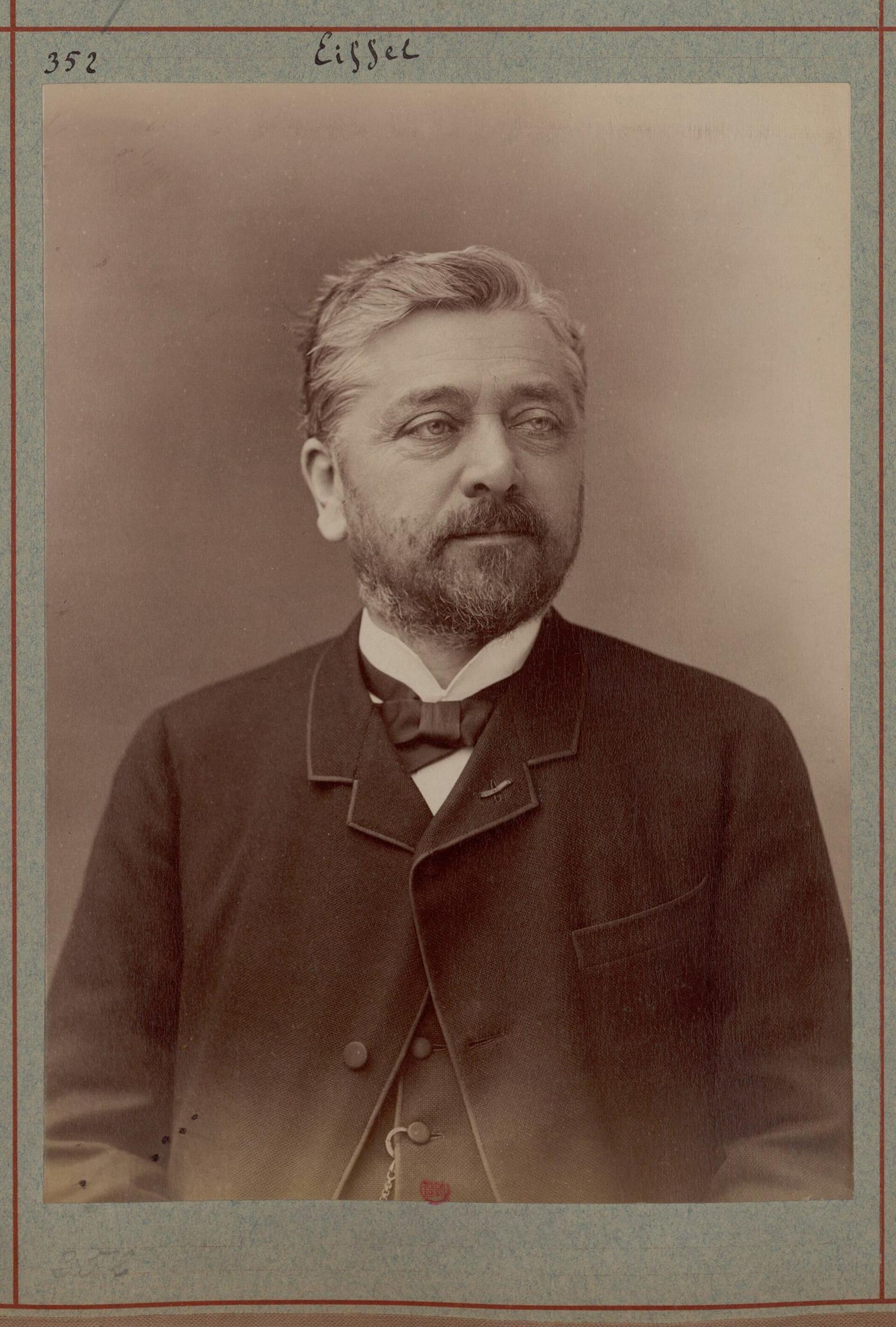
The idea for the tower was not his, but two engineers' in his firm. Gustave Eiffel took it up, bought it, defended it against the artists who found it monstrous, and built it in just over two years for the 1889 World's Fair. Before that, he had already thrown iron bridges across the Garonne, the Douro and the Truyère, and given the Statue of Liberty its frame.
Gustave Eiffel in dates
| Date | Event |
|---|---|
| 15 December 1832 | Born in Dijon |
| 1855 | Graduates from the École Centrale des Arts et Manufactures |
| Around 1860 | Oversees the building of a railway bridge over the Garonne in Bordeaux |
| 1877 | Maria Pia Bridge over the Douro, in Porto |
| 1884 | Garabit Viaduct, in the Cantal; first sketch of the tower by Maurice Koechlin |
| 1886 | The Statue of Liberty, mounted on his frame, is unveiled in New York |
| 28 January 1887 | Work on the tower begins |
| 31 March 1889 | Eiffel raises the flag at the top of the tower |
| 1893 | Convicted in the Panama scandal; the conviction is later overturned |
| 1912 | Sets up his wind tunnel in Auteuil |
| 27 December 1923 | Dies in Paris |
The bridge builder
Gustave Eiffel was born in Dijon in 1832. An engineer from the École Centrale, he made his name in Bordeaux, where, before he was thirty, he oversaw the building of an iron railway bridge over the Garonne, the footbridge that now bears his name. He then set up his own company in Levallois-Perret, near Paris.
His speciality was prefabricated metal structures, assembled on site with rivets. He built the Maria Pia Bridge over the Douro in Porto, opened in 1877, then the Garabit Viaduct over the Truyère, in the Cantal. For the Statue of Liberty, he designed the internal iron frame that holds up Auguste Bartholdi's copper sheets. The statue was assembled in his workshops in Paris, taken apart and shipped to New York.
The 300-metre tower
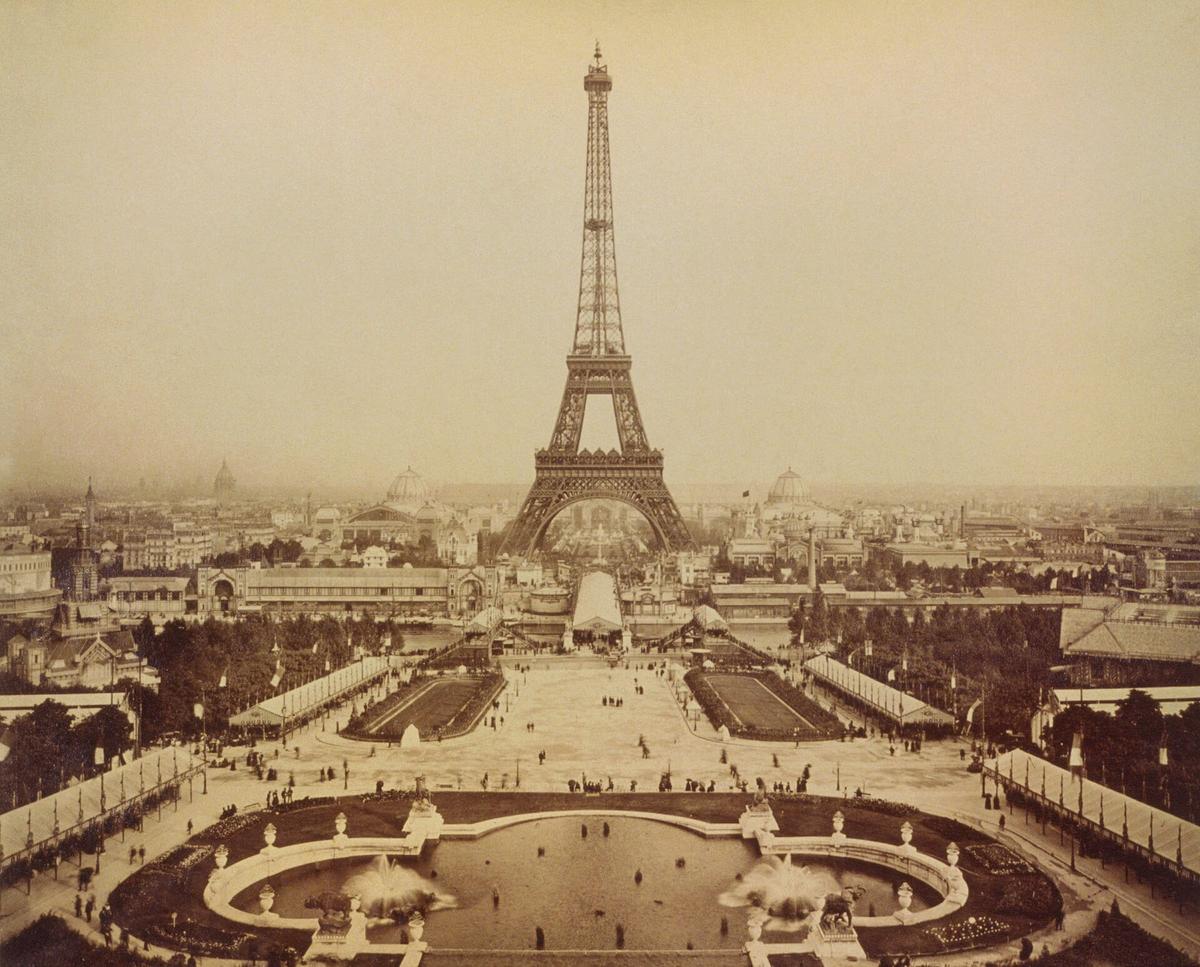
In 1884, two engineers from his company, Maurice Koechlin and Émile Nouguier, drew a giant pylon for the World's Fair planned for 1889. The architect Stephen Sauvestre dressed it with arches and decoration. Eiffel bought the rights to the project and championed it. Work began on 28 January 1887.
A few weeks later, artists and writers, among them Charles Garnier, Guy de Maupassant and Charles Gounod, published a protest in the newspaper Le Temps against this “dizzyingly ridiculous tower” (“tour vertigineusement ridicule”). Eiffel replied that the tower would have its own beauty, the beauty of shapes calculated to withstand the wind. The work moved fast: the tower was finished in just over two years. Today it stands 330 metres tall with its antennas. See also: Eiffel Tower
What to see: at the top, the small office Eiffel fitted out for himself, where he received Thomas Edison in 1889, recreated with wax figures; on the first floor, the exhibition on how the tower was built.
Panama, then the wind
In the late 1880s, Eiffel agreed to build the locks of the Panama Canal. The company went bankrupt. In the scandal that followed, he was sentenced in 1893 to two years in prison and a fine; the conviction was overturned soon after. He withdrew from his company.
He devoted the rest of his life to science, and that is what saved the tower, which was due to be demolished after twenty years. He installed weather instruments on it, carried out aerodynamic experiments by dropping objects along a cable stretched from the tower, and supported the first military radio links from the top. He built a wind tunnel at the foot of the tower, then another in Auteuil in 1912. He died in Paris in 1923, aged ninety-one.
In his footsteps: the Eiffel Tower
The tower is served by the RER C (Champ de Mars-Tour Eiffel station) and by metro line 6 (Bir-Hakeim). You can reach the second floor on foot, up 674 steps, or by lift; the top, at 276 metres, only by lift. Every evening, the tower sparkles for 5 minutes at the start of each hour.
Partner links: if you book through these links, we earn a commission at no extra cost to you. Partner links · Learn more
FAQ
Did Gustave Eiffel design the Eiffel Tower?
Not himself. The first design came from Maurice Koechlin and Émile Nouguier, two engineers in his company, in 1884, and the architect Stephen Sauvestre reworked it. Eiffel bought the project, defended it and built it.
How long did it take to build the Eiffel Tower?
Just over two years: from January 1887 to March 1889, for the World's Fair.
What is the link between Eiffel and the Statue of Liberty?
Eiffel designed the internal iron frame that supports the copper skin sculpted by Bartholdi.
Why wasn't the Eiffel Tower demolished?
It was supposed to be taken down after twenty years. Eiffel's scientific experiments, and then its use for military radio, made it useful.
Where was Gustave Eiffel born?
In Dijon, on 15 December 1832.
Sources: fr.wikipedia.org (Gustave Eiffel)
Tickets to book online
Partner links: if you book through these links, we earn a commission at no extra cost to you. Partner links · Learn more